
Photo Credit: Internet
Clear Cut Livelihood Desk
New Delhi, UPDATED: Sep 06, 2025 12:45 IST
Written By: Antara Mrinal
When devastation strikes via natural calamities, the repercussions are often felt first in the Himalaya. As glaciers melt, floods take on unregulated forms and landslides rumble down hillsides. These become daily experiences for millions as they challenge our very existence. The Himalayas are now also garnering formal attention and acknowledgment in law and policy.
On September 1, 2025, the National Green Tribunal (NGT), took suo motu notice of the timely and serious thematic legal issue of protecting the Higher Himalayan region by declaring it an eco-sensitive zone. This occurred as a result of an impactful article in Current Science last year which reported on the consequences of uncontrolled development activity in these sensitive heights.
NGT’s Regulatory Plan of Action
NGT has laid out a regulatory plan for how to address the vulnerable Himalayan environment :-
Early Warning Systems: One of the most imminent actions set out in the NGT report is establishing early warning systems. These will allow comprehensive monitoring of inter-annual weather anomalies, unusual snowmelt, or picture glacial threats. In a region prone to landslides, cloudbursts, where disasters could strike within minutes, the use of this technology could mean the distinction between catastrophe and safety.
Vigilant Construction: It is equally important to provide cautious oversight of construction activities. Hydropower developments, highways, tunnels, etc., are proliferating throughout the Himalayan region. However, there has been a failure to conduct adequate geotechnical studies on many of these projects. Therefore, geotechnically unsound projects may disturb already degraded slopes. The committee proposed that stringent clearance processes should be implemented prior to any construction, in order to prevent disastrous occurrences from happening in the future.
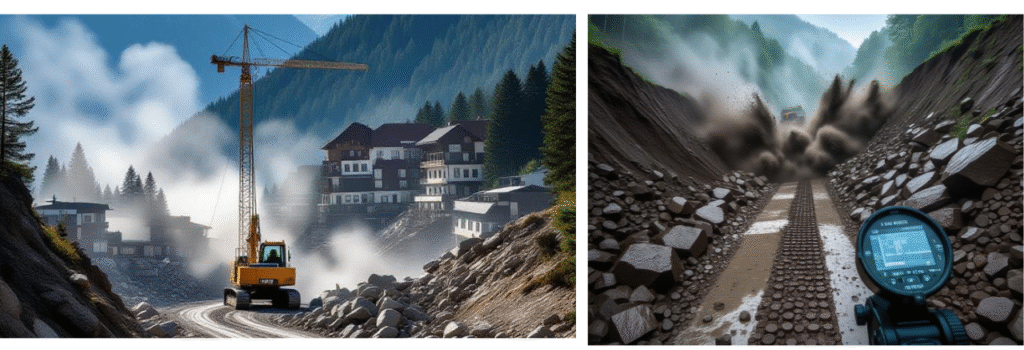
The Himalayas, once nature’s fortress, are now crumbling under the weight of unchecked roads, dams, and hotels, proof that over-construction can turn paradise into peril.
Regulated Toursim : Tourism has become a blessing but also a curse for these states. Visitors offer badly needed income, but unregulated tourism has summarily made guests’ marks with plastic debris, ruined trails, and overcrowded alpine areas. The committee recommended that, because natural beauty should be experienced and not ruined, eco-friendly infrastructure, waste management programs, public education, and strict bans on single-use plastics should be instigated.
Reforestation of Native Tree Species : Another important recommendation was reforestation using native tree species. Plantation drives are habitual; however, they typically favor fast growing but ecologically inappropriate species. By reintroducing broad-leaved trees (such as oaks) that are locally adapted to the Himalayan ecosystem, slopes can be retained, eroded soils can be tamed, and biodiversity can be reinstated.
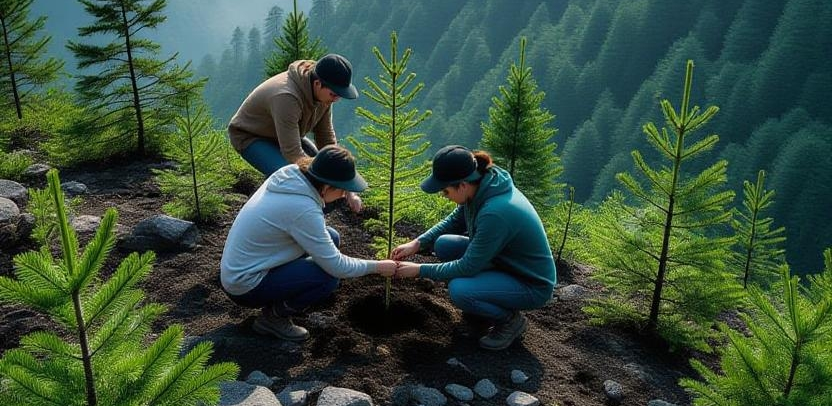
Restoring the Himalayas begins with replanting native oaks and broad-leaved trees, for only roots that belong here can truly hold the mountains together.
Community Engagement: The committee also recognizes the impact of community engagement. Communities – who are often the first to suffer the wrath of disastrous events, should at least be given training in ecological care and disaster response. This will not only mitigate risk at the community level but can create a culture of shared responsibility for the protection of the mountains. Carrying Capacity Studies: Lastly, the report advocates for carrying capacity studies of vulnerable alpine locations. Tourism and development must stay within well-known limits of what both the beaches and mountains can realistically endure.
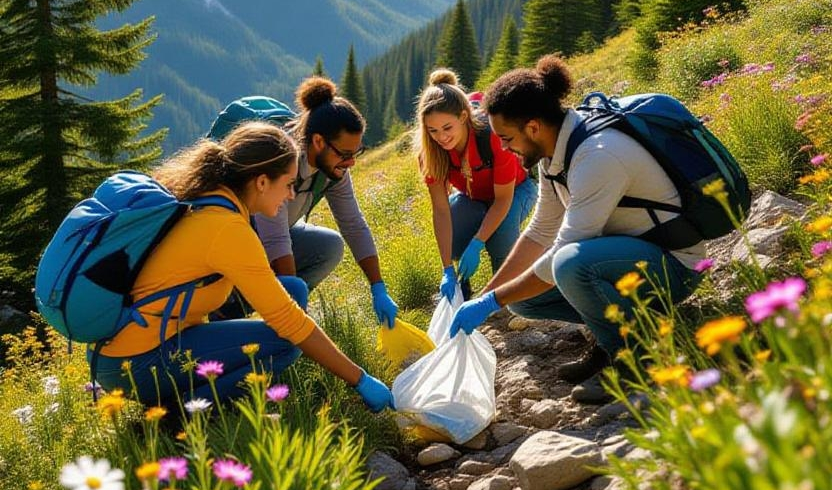
When mountain communities become guardians of their own land, every villager turns into a custodian of the Himalayas’ future.
States React: Actions Taken, Gaps Remain
Uttarakhand took real steps in accordance with the recommendations. On August 26, 2025, the Uttarakhand government in their affidavit recognized that they had put in Doppler radars in Mukteshwar, Lansdowne, and Surkanda which increases precision of the weather predictions. They have subsequently undertaken the establishment of Uttarakhand Landslide Mitigation and Management Centre, which is an institution mandated to monitor landslide areas, and take proactive measures towards mitigation. Uttarakhand implemented the development of master drainage plans, and also improving solid waste management infrastructure (e.g. compost pits and material recovery facilities) through the Swachh Bharat Mission. The most significant step appears to be creating a Digital Refund System in the Char Dham pilgrimage corridor, which National Plan of Action on Protected Areas (NPAP) responded to with a refundable cost for returning used plastic bottles. A total of 20 lakh Polyethylene Terephthalate (PET) bottles have already been retrieved, resulting in less litter and reduced greenhouse gas emissions. Since there was no mention in the affidavit of afforestation to promote native broad-leaved trees, experts suggest this gap is of utmost importance to address immediately.

High in the mountains, Doppler radars act as the Himalayas’ early eyes, spotting storms before they strike.
Likewise, Himachal Pradesh presents its status in the affidavit dated 24 May 2025, for the developments already. The state has also implemented Doppler radars in Shimla (Kufri), Chamba (Jot) and Mandi (Murari Devi) and plans to implement in other remote districts like Kinnaur and Lahaul-Spiti. Moreover, the government has proposed to place 48 automatic weather stations, along with more rain gauges and snow gauges in order to increase or improve their capacity for real-time observations. Sharing the need for commonality, Himachal Pradesh signed an MoU with the Indian Meteorologcial Department (IMD) on 9 September 2024, in order to facilitate the sharing of state and local level weather data. In terms of preparedness for disasters, Himachal Pradesh has sent proposals to the National Disaster Management Authority (NDMA), to develop assessments for certain risks that are associated with glacial lakes. The surveys have already begun in the lakes that are in the Parvati and Baspa valleys, the modeling of flood scenarios has already been completed for Gedang Gath and more work is planned for the Satluj basin. It also has an international aspect, since Himachal launched the Himachal Pradesh Disaster Risk Reduction Programme (HPDRRP) in January 2025, with support from the French Development Agency (AFD) to develop strategies for a long-term and multi-hazard approach to preparedness for earthquakes, landslides, floods and avalanches.
What’s Next? Waiting on the Ministry
The Ministry of Environment, Forest and Climate Change (MoEFCC) has accepted both affidavits and requested four weeks to consider and respond. The matter will be taken up again for hearing on November 28, 2023.
Why Does This Matter?
Protecting the Higher Himalayas is more than a scientific question; it is a question of the survival of millions of practitioners who rely on the mountains for their lives, each and every day. Central to this issue is the fragile nature of the Himalayan system. The land is naturally unstable; it is comprised of loose material, steep slopes, and moving glaciers. The more things are removed either with hasty roads or the removal of forests, the more vulnerable the land becomes to landslides and flash floods. The committee could not have been clearer, this is no longer a question of likelihood, and unchecked development in this context is reckless and dangerous.
Climate change adds a new urgency to the conversation. The Himalayas are warming faster than the global mean, leading to increased glacier melt and more frequent weather extremes. The Himalayan Rivers support millions in India, Nepal, Bhutan and beyond. If glaciers backslide and weather patterns become more extreme, both water security and food security will be jeopardized across much of the subcontinent. This is why experts emphasize the importance of early warning systems and climate-sensitive planning.
A Coincidental Shade of Contention: Glacial Lakes
In tandem, another NGT case is National Institute of Hydrology (NIH) response to its issues about growing concerns about glacial lakes. India has over 100 glacial lakes greater than 10 ha and NIH reports 67 dams in the flood paths of those lakes, 23 in Himachal alone. Every four weeks NIH provides its action plan, with the next one on October 16, 2025.
Shrug of a Deterrent from Dharali
Dharali, Uttarkashi recently had a flash flood, an environmental nudge about root problems. Dharali received much attention because of the felling of 6000 deodar trees in a section of the Bhagirathi Eco-Sensitive Zone link to his being subject of scrutiny due to road widening for the Char Dham. Locals and scientists warn that the moraine-based terrain is disaster-prone, and tree-cutting without terrain assessment is a recipe for disaster.
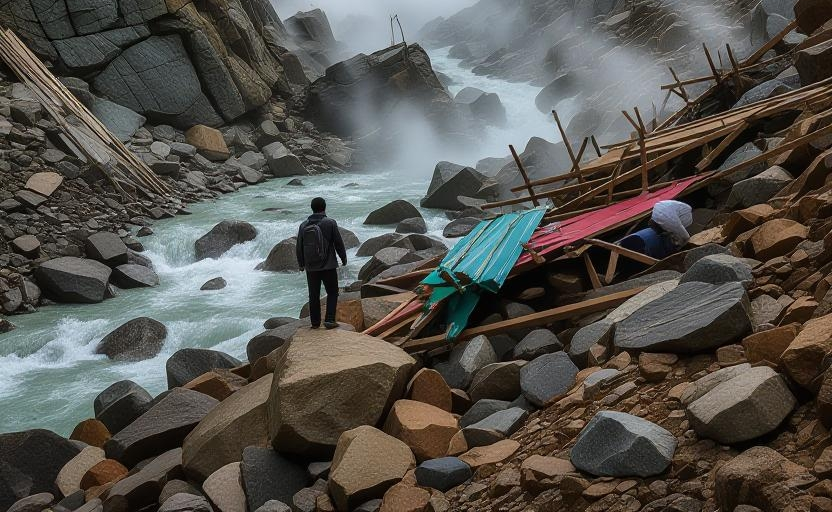
The Dharali flash flood is a stark reminder that when fragile slopes are stripped of their trees, nature reclaims its course with fury.
| Timeline | What to Watch For |
| Now – Nov 2025 | MoEFCC’s review and possible recommendations |
| Nov 28, 2025 | Next NGT hearing on eco-sensitive zone implementation |
| Oct 16, 2025 | NIH’s affidavit on glacial lake threats and mitigation |
| Ongoing | Monitoring local incidents, like Dharali, for compliance and enforcement |
The Higher Himalayas are not only a beautiful sight – but a lifeline for millions downstream. With smart policy, continual and state-of-the-art monitoring, and local engagement, we can still assure the resilience of this region, both to the onslaughts of nature and humanity. While the new legal developments, slowed at times by bureaucracy, may only turn the tide toward protecting these mountains in fits and starts, they may just help save them for future generations.
With inputs from:
- Indian Express
- New Indian Express
- UNI India
- LawBeat Report
- Times of India (Chandigarh edition)
- Times of India (Dehradun edition)
- Current Science Journal (cited in reports)