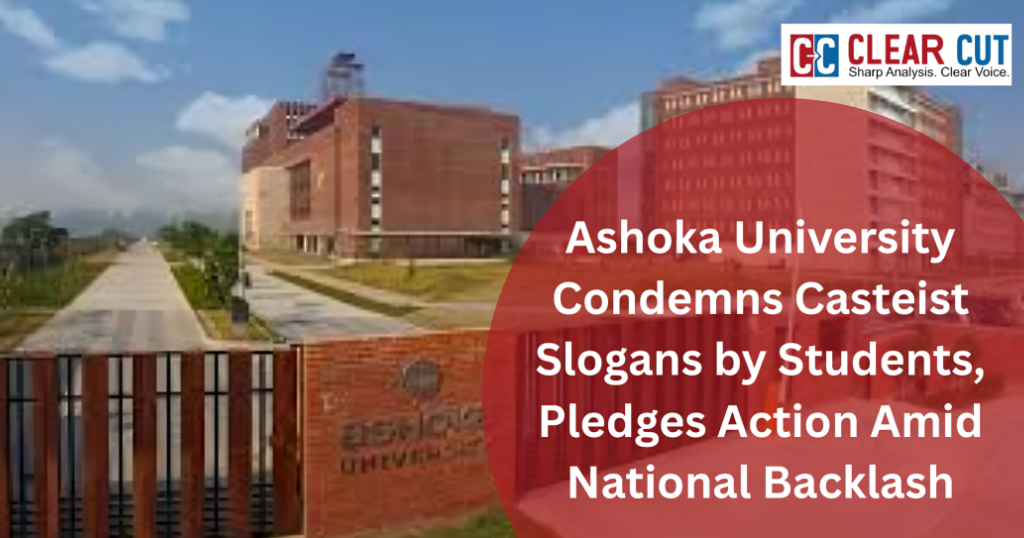
Ashoka University has vowed to act after videos emerged showing students chanting casteist slogans on campus. The clips prompted a fierce debate about freedom of expression, respect, and discrimination at one of India’s leading private universities.
The video shows groups of students shouting phrases such as “We need a caste census” and “Brahmin-Baniyawaad Murdabad” in corridors at the Sonipat campus. These remarks were widely criticised on social media for targeting specific caste identities.
University Statement: Respect and Limits
In an official post on X (formerly Twitter), Ashoka University said it values free speech and vigorous debate. But it added that freedom comes with a duty to respect others. “We deplore expressions of hatred directed against any individual or group,” the statement read.
The administration reminded students of its “Guidelines on Protecting Freedom of Expression”, which say expression must not threaten the dignity or safety of others. The university said any action creating a hostile environment will face disciplinary action.
“Ashoka University attaches great value to freedom of expression and vigorous debate, but it also attaches great importance to mutual respect,” the statement said.
Outrage from Industry Leaders
The footage drew sharp criticism outside academia. Mohandas Pai, former Chief Financial Officer at Infosys, called the chants “very shocking, if true” in a post on X. He questioned why caste hatred seemed present at a reputed institution and urged action. He also tagged Union Education Minister Dharmendra Pradhan, asking the government to intervene if necessary.
“My post was aimed at sparking accountability,” Pai told reporters, stressing that universities should be spaces of inclusion, not division.
Students Demand Structural Change
The protests were not only about slogans. They sprang from longer-running student demands for an Equal Opportunity Cell and a caste census on campus. These calls are led by the Social Justice Forum (SJF), a student group focused on equity for marginalised communities.
SJF members argue that existing admission policies do not reflect India’s social diversity. They point to data showing under-representation of SC, ST, and OBC students compared with national demographics. The forum says a campus census and dedicated support structures would improve access and belonging.

Context: Caste Debate in Higher Education
Caste politics have long reverberated across Indian campuses. Debates over reservation, diversity, and representation have involved institutions such as Jawaharlal Nehru University and Delhi University. Ashoka now finds itself in a similar spotlight.
Some commentators say the slogans were poorly phrased critiques of entrenched caste hierarchies, not direct hate speech. Others see them as harmful regardless of intent. This debate reflects broader national tensions over how caste is discussed in public life.

Next Steps: Reconciliation and Reform
University officials say they will engage with students and alumni to prevent further conflict. They reaffirm their commitment to peace, dialogue, and campus safety.
“We will take all measures necessary to ensure that peace and harmony on campus is not disturbed,” the statement said.
Whether this episode leads to lasting reform or deeper fractures remains to be seen. But the incident has already sparked a wider conversation on respect, diversity, and expression in India’s higher education system.
Clear Cut Education Desk
New Delhi, UPDATED: Feb 05, 2026 09:00 IST
Written By: Ayushman Meena