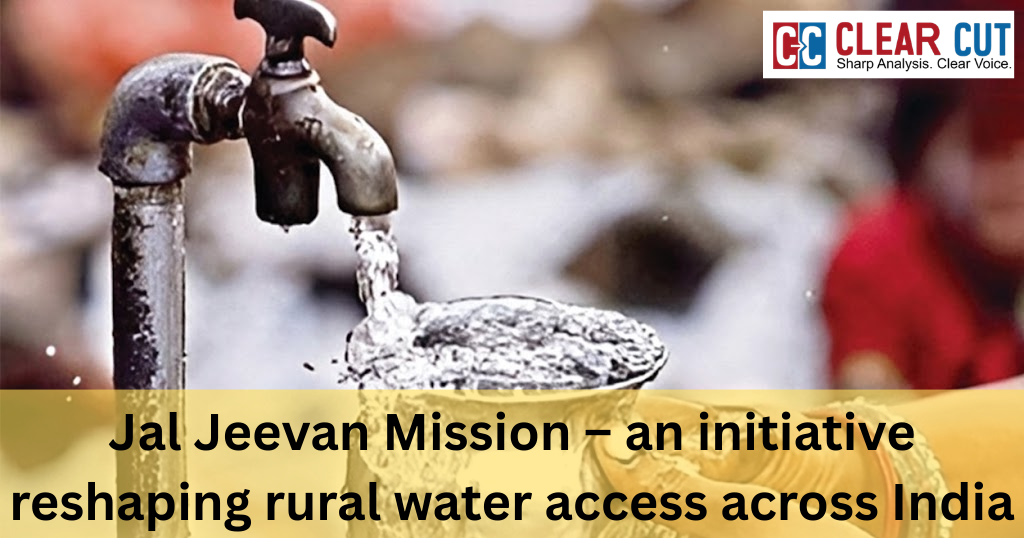
Jal Jeevan Mission (JJM) is transforming rural water access in India by providing tap water to over 12.55 crore households, improving public health, promoting sustainability, and advancing SDG-6.
With the overarching goal of achieving Sustainable Development Goal 6 and ensuring inclusive access to
safe drinking water, Jal Jeevan Mission (JJM) – the flagship programme launched in 2019 has fast-tracked the process of providing individual tap water connection to every household. Conceived to bridge the rural–urban divide and improve public health outcomes, the Mission aims to provide Functional Household Tap Connections to every rural household, ensuring reliable access to adequate and potable drinking water. Since its launch on 15 August 2019, JJM has emerged as one of the impactful rural infrastructure programmes, delivering tap water to over 12.55 crore rural households and raising rural coverage to more than 80 per cent, a remarkable shift from the pre-Mission scenario, when only 16.72 per cent of rural households had tap water access.
Beyond infrastructure, the Mission’s potential public health impact is profound; Nobel Laureate Michael Kremer has noted that universal access to clean and safe water through JJM could significantly reduce child mortality, with studies indicating the possibility of preventing approximately 1.36 lakh under-five deaths annually. The Mission has moved beyond being a purely infrastructure-driven programme to one that emphasises service delivery, sustainability and community ownership. Several States and Union Territories have already achieved 100 per cent rural household coverage under the Har Ghar Jal initiative, while many others are nearing saturation levels. A growing number of Gram Panchayat and villages have been formally certified as Har Ghar Jal, indicating that all households in these areas are being supplied with tap water.
India’s progress under Jal Jeevan Mission is particularly significant if we look at the growing global concern over the intensifying water crisis and the slow pace of progress towards Sustainable Development Goal-6, which seeks universal access to safe water and sanitation by 2030. Global deliberations, including those at the United Nations Water Conference in 2023, have repeatedly highlighted that inadequate access to water, sanitation and hygiene remains a major contributor to disease burden and mortality worldwide. A few years back the COVID-19 pandemic further reinforced the centrality of reliable water services for public health, especially for vulnerable populations. Against this backdrop, India’s steady expansion of rural tap water coverage places the country in a comparatively strong position to advance towards SDG-6.
A key feature of Jal Jeevan Mission has been its emphasis on community participation and decentralised planning. From the design stage to implementation, operation and maintenance of water supply systems, local institutions have been placed at the centre of decision-making. Village Water and Sanitation Committees (VWSCs), also known as Pani Samitis, have been constituted across the country, and Village Action Plans have been prepared to address drinking water supply, source sustainability, greywater management and routine maintenance of in-village infrastructure. This participatory approach has been critical in fostering local ownership and ensuring that schemes remain functional beyond their initial construction phase.
While groundwater continues to be the primary source of drinking water in many rural areas, its long-term availability is under increasing stress due to over-extraction, climate variability and contamination. Recognising this challenge, Jal Jeevan Mission has been closely aligned with broader water conservation and groundwater management initiatives. Programmes such as Jal Shakti Abhiyan: Catch the Rain, Atal Bhujal Yojana and the Amrit Sarovar Mission are complementing household water supply by strengthening source sustainability, promoting recharge and rejuvenating local water bodies. This convergence is essential to securing the longevity of rural water supply systems in a changing climatic context.
The Mission has also made notable progress in addressing regional disparities. In the 112 aspirational districts, which started with very low levels of tap water coverage at the time of the Mission’s launch, access has expanded sharply over the past few years. This progress underscores the role of targeted investments and capacity building in bridging service delivery gaps in historically underserved regions and reflects a deliberate policy focus on equity and inclusion.
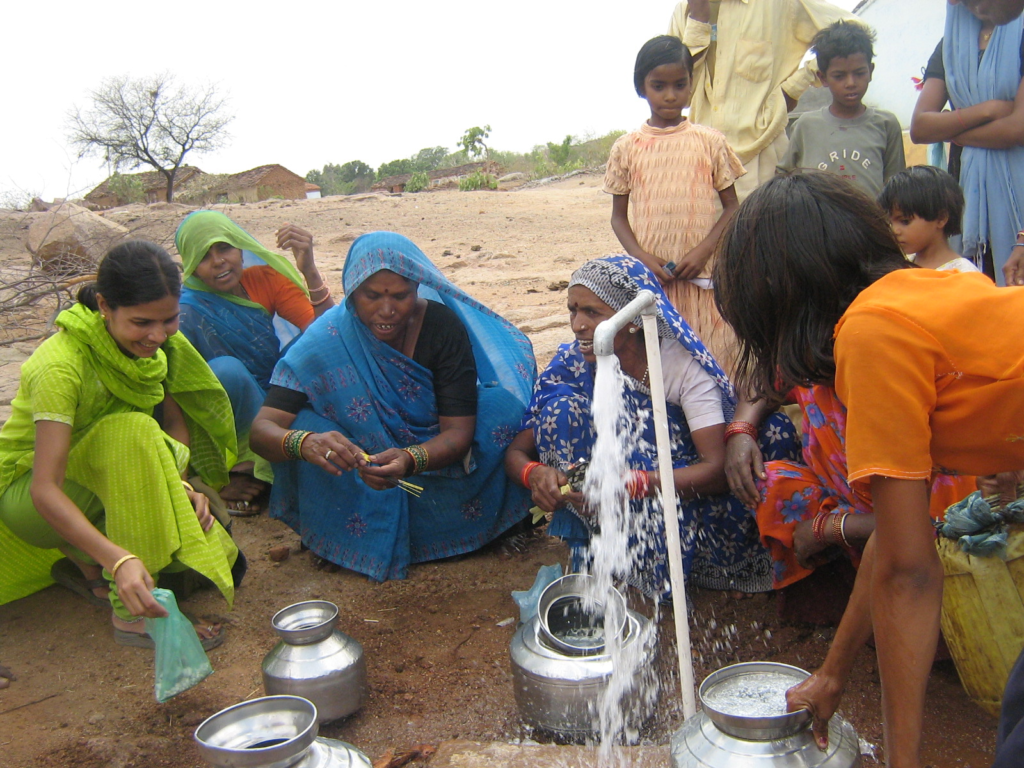
Ensuring water quality has been another core pillar of the programme. Regular testing protocols, expansion of water quality laboratories and the training of women and youth in the use of field-testing kits have strengthened local surveillance systems. The integration of digital monitoring tools and sensor-based technologies is gradually enhancing transparency and enabling real-time tracking of service delivery, helping administrators respond more effectively to operational challenges on the ground.
Beyond infrastructure and service delivery, Jal Jeevan Mission has generated wider socio-economic benefits. Improved access to safe drinking water has reduced the time and physical burden associated with water collection, particularly for women and girls, thereby contributing to better health outcomes and enhanced participation in education and livelihoods. Public investment under the Mission has also stimulated significant employment generation during both the construction and operation phases of water supply schemes, creating local economic opportunities in rural areas.
Despite its notable achievements, sustaining JJM’s impact remains a challenge. As the Mission progresses towards universal coverage, emerging discussions on challenges around source sustainability, grey water management, functionality of connections and reliability of supply and water quality issues raises concerns. Addressing these challenges will be crucial to sustaining services and ensuring that reported coverage translates into real, everyday benefits for households. Nevertheless, the overall trajectory of Jal Jeevan Mission demonstrates is evolving from infrastructure creation to sustainability and integration of technology towards smart management. A policy shift from infrastructure creation to sustainable service delivery with focus on asset management, IoT-based monitoring and focus on long term operational sustainability of rural piped water supply schemes through citizen centric delivery and Jan Bhagidari.
In reshaping rural water access across India, Jal Jeevan Mission is not only advancing a critical development goal but also laying the foundation for long-term public health, social equity and environmental sustainability. Its continued success will depend on maintaining this integrated approach as the country moves from rapid expansion towards consolidation and long-term service delivery of rural water supply.
Clear Cut WASH Desk
New Delhi, UPDATED: March 09, 2026 09:00 IST
Written By: Asad Umar