

The 2026 gender pay gap has widened, with women earning $0.82 for every dollar men make, revealing that progress on pay equity is reversing rather than improving. Structural issues like caregiving penalties, biased pay systems, and weak accountability continue to reinforce inequality over time.
The Number on Equal Pay Day
Every year, Equal Pay Day lands on a date that’s both symbolic and sobering: it marks how far into the new year women have to work just to match what men earned the previous year. In 2026, that day showed up in late March. Payscale picked that very day to drop its 2026 Gender Pay Gap Report, and there’s no hiding the intention. Unfortunately, the news wasn’t great.
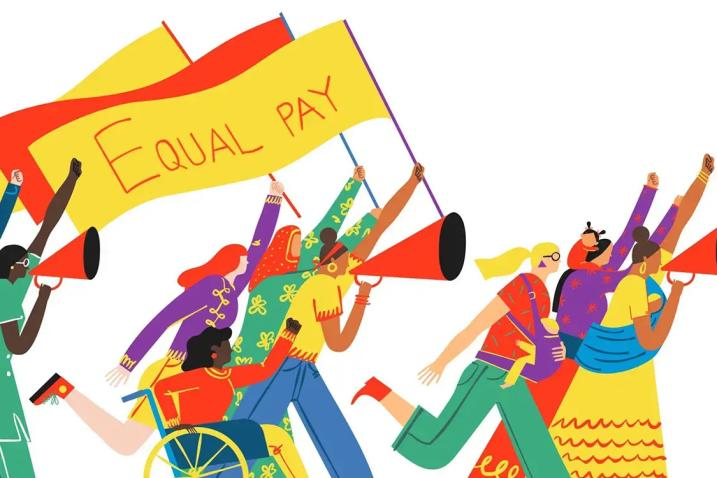
Let’s talk about the headline number. The uncontrolled gender pay gap, the raw difference between what women and men earn, with no adjustments for role, experience, or industry actually got worse this year. Women in the U.S. now make $0.82 for every dollar a man earns.
The year before, it was $0.83. One cent down. Sounds minor, but over a 40-year career, that tiny difference balloons into $1 million less in lifetime earnings, or $14,300 a year. Multiply that by the roughly 80 million women in the U.S. workforce and you get a collective annual loss of about $1.1 trillion.
So, that little penny? It’s not just a small slip. It’s a warning sign that progress is reversing, not stalling.
Let’s get specific. The $0.82 figure is rough, but break it down by age and the story gets sharper and more troubling. Women starting their careers earn closer to their male peers; the gap is still there, but not as wide, probably because entry-level roles usually have more predictable, credential-driven pay.
Fast forward ten years, and the gap widens to 19 percent. At thirty years, it’s 25 percent. By age 45 and up, women earn $0.71 for every male dollar. And at the executive level? $0.69.
This isn’t just a chance. It’s the “career penalty” and “caregiving penalty” rolling together, year after year. Women in their thirties and forties are far more likely to cut back on hours, pass on promotions, or step away for caregiving.
Those choices, totally rational for most families, end up magnifying over time because the workplace rarely shares or softens the blow. By the executive table, women have faced penalty after penalty for decisions the system forced them to make.
Now, raises make it even stickier. Companies usually award raises as a percentage of current pay. If you start out behind, a 5 percent raise doesn’t help you catch up, it just keeps you exactly where you’ve always been, relative to your male coworkers. Hayden Gunnell’s research at the McCombs School of Business spells it out: percentage-based raises actually lock in pay gaps unless someone actively corrects the base salaries.
The report throws one more curveball: remote work. Women using remote options “as needed” face the widest uncontrolled gap of $0.76 on the dollar. Women in non-remote jobs fare better at $0.89. The common assumption has been that remote work helps close gaps; it should cut down office biases and make balancing caregiving easier. But this data flips the script.
Looks like women are getting flexibility in exchange for lower pay, not alongside it. They stay in roles for the flexibility alone, but end up settling for a pay cut as the price. It’s the flexibility trap, an organization appears more accommodating, but in reality offers women a different kind of penalty.
So, what about pay transparency? That’s been the big hope lately. The report shines a dim but important light here: nine U.S. states with transparency laws closed the gap when accounting for job, level, and industry. Six states with similar rules haven’t, showing that transparency isn’t a magic fix. This is especially relevant as the EU rolls out the world’s broadest pay transparency directive, demanding public disclosure and action on gaps over 5 percent.

The data says transparency helps, but it doesn’t get to the root such as occupational segregation, skewed career progression, and the penalties of caregiving don’t vanish just because companies post pay bands.
India, for its part, has its own reporting: the BRSR framework requires public companies to disclose pay ratios, but doesn’t require year-over-year tracking or accountability. It’s just a snapshot, not a story of change.
The figure Payscale uses $1.1 trillion in lost earnings for U.S. women in a single year should stick with us. Not because it’s precise down to the decimal, but because it pulls the conversation away from “this is some women’s problem” to “this is a massive, systemic transfer of wealth.” Workplaces preach meritocracy, but the math says otherwise.
Ruth Thomas, Payscale’s chief compensation strategist, put it simply: persistent or growing pay gaps push women to disengage, to leave, to swap roles. That shrinks the talent pool and cranks up turnover costs for businesses.
Sure, that’s the argument that gets most traction in corporate settings. The other argument that women simply deserve equal pay for equal work, business cost be damned stands on its own. Still, the business case matters too.
In the end, the 2026 Gender Pay Gap Report landed on Equal Pay Day with a fact we shouldn’t ignore: the gap got bigger. For years, the story in corporate circles has been about steady progress. The numbers don’t back that up now. Women are at $0.82. By 45, $0.71. Executives, $0.69. That one-cent drop is no detail.
Over an 80-million-strong workforce and lifetimes of work, it’s a trillion-dollar loss every year, and a million lost per woman. This isn’t just a data point. It’s hard evidence of a system, layer by layer, still deciding women are worth less. And that’s not fate but a choice organizations keep making and a they keep delaying a process they could’ve implemented smoothly in the given time. Reporting rules don’t force anyone’s hand. They should.
Clear Cut Gender Desk
New Delhi, UPDATED: April 23, 2026 01:00 IST
Written By: Jay