

India faces a $180 billion social sector funding gap, and the India Philanthropy Report 2026 warns that private philanthropy must grow by over 25% annually to help meet the country’s 2030 Sustainable Development Goals. The report highlights the key roles of family wealth, CSR, and the Indian diaspora in closing the widening development funding deficit.
India’s social sector is growing fast. But the gap between what the country needs and what it receives is growing even faster. The India Philanthropy Report 2026, released jointly by Bain & Company and Dasra on February 26, 2026, lays out a stark warning: without a dramatic shift in private giving, India’s development ambitions face a serious structural threat.

A Gap Too Big to Ignore
India’s total social sector funding has grown at a 13% compound annual growth rate since FY20, doubling to approximately ₹27 lakh crore ($310 billion) in FY25. Despite this growth, the funding shortfall stands at around ₹16 lakh crore ($180 billion) in FY25 and is projected to widen to ₹18 lakh crore ($210 billion) by FY30.
The numbers come from NITI Aayog’s own norms, which estimate the spending levels needed to meet India’s UN Sustainable Development Goal commitments by 2030. NITI Aayog recommends social sector funding to reach 13% of GDP. India currently falls far short of that benchmark.
Private Giving Is Not Enough
Private philanthropy in India must grow by more than 25% annually to prevent the country’s widening social sector funding deficit from deepening, even as overall giving is projected to rise steadily this decade.
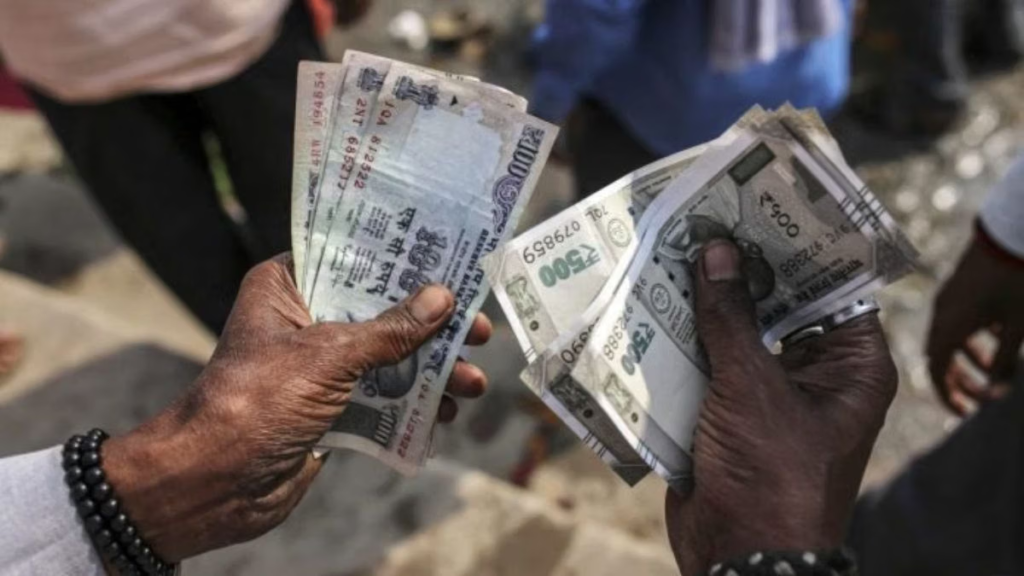
The current trajectory simply does not match the scale of the challenge. Private philanthropy, projected to reach ₹1.43 lakh crore ($16 billion) in FY25, with a 9% to 11% projected CAGR between FY25 and FY30, cannot close this gap without faster expansion.
Bhavini Malhotra, Partner at Bain & Company, was direct about the core problem. “The real question is not whether capital is available, rather if it’s structured to solve at scale. India’s social sector has seen impressive funding growth as the report highlights, but the widening gap signals a deeper design challenge and the opportunity to channel the ongoing momentum to unlock private capital in ways that accelerates outcomes. Philanthropic capital and support infrastructure need to grow hand in hand to ensure that funding translates into sustainable, scalable, and long-term impact,” she said.
Families Lead, But Concentration Remains a Problem
Indian families sit at the center of private giving. Families remain central to private philanthropy, contributing about 42% of total private giving through personal donations and CSR from family-owned businesses. CSR funding is expected to grow at 8% to 10%, with family-owned enterprises accounting for 65% to 70% of private-sector CSR spending. However, contributions remain concentrated among a small group, with the top 2% to 3% of families contributing nearly half of all family-led CSR outlays.
Neera Nundy, Co-founder and Partner at Dasra, sees untapped potential in this space. “Indian families remain the backbone of private philanthropy, contributing through personal giving and family-business CSR. Persistent growth in leadership by women, Inter-gen, and Now-gen signals their enduring role in Indian philanthropy,” she said. “With ₹1.25 to 1.35 lakh crore in potential upside by FY30, unlocking the full contribution of families will depend on how quickly philanthropic infrastructure evolves to meet their needs,” she added.
The report also points to a significant rise in family offices. The institutionalisation of family wealth is accelerating, with the number of family offices increasing sevenfold from around 45 in 2018 to more than 300 in 2024. But turning that institutionalized wealth into effective social spending requires deliberate action, not just intent.
The Diaspora Opportunity
One underused lever is the Indian diaspora. India’s diaspora population now stands at approximately 34 million, with remittances growing at nearly 14% annually between FY21 and FY25. The report notes that this community is moving beyond financial transfers toward deeper engagement, combining expertise and global networks alongside funding.
Targeted investments in enabling infrastructure could unlock ₹1,25,000 crore to ₹1,35,000 crore ($14 billion to $15 billion) in philanthropic capital by FY30 and accelerate progress toward Viksit Bharat.
CSR Must Go Beyond Compliance
At the Aahvaan: NGO-CSR Conclave 2026 held in New Delhi on February 26, sector leaders stressed the need to reimagine CSR entirely. Chief Guest Dr. Rajesh Tandon, Founder President of PRIA and Co-chair of the UNESCO Chair in CBRSR, urged stakeholders to align social and financial capital and focus on grassroots impact evaluation and regional dialogue.
At the National CSR Summit 2026 at Bharat Mandapam, India’s Vice-President C. P. Radhakrishnan echoed that call. He stated that CSR is not merely about compliance with law but about commitment to the nation, adding that when corporate India invests in communities, sustainability, youth and innovation, it builds social capital and secures long-term growth.
India’s most prominent philanthropists have long modeled this philosophy. Azim Premji, who became the first Indian to sign the Giving Pledge in 2013, has described his motivation simply: “I strongly believe that those of us who are privileged to have wealth should contribute significantly to try and create a better world for the millions who are far less privileged.”
What Needs to Change
The Bain-Dasra report is clear that the next shift must be structural, not just behavioral. The design of vehicles, governance and advisory systems will determine whether capital can be mobilised at the scale required to close the funding gap. Without a step-change in private giving growth to more than 25% annually, India’s development funding deficit is set to widen over the coming decade, even as total social sector funding expands.
Giving priorities are also expanding beyond legacy causes toward GEDI (gender, equity, diversity, and inclusion), climate action, livelihood enhancement, arts, culture and heritage, and animal welfare. Leadership structures are becoming more inclusive, with women leading philanthropic efforts in 60%+ of families and younger generations increasingly anchoring giving decisions.
India has the wealth, the intent, and a growing philanthropic culture. What it needs now is the institutional architecture to match. The coming four years will test whether the country can convert momentum into durable, scalable impact before the funding gap becomes an unbridgeable divide.
Clear Cut CSR Desk
New Delhi, UPDATED: March 09, 2026 05:00 IST
Written By: Ayushman Meena