
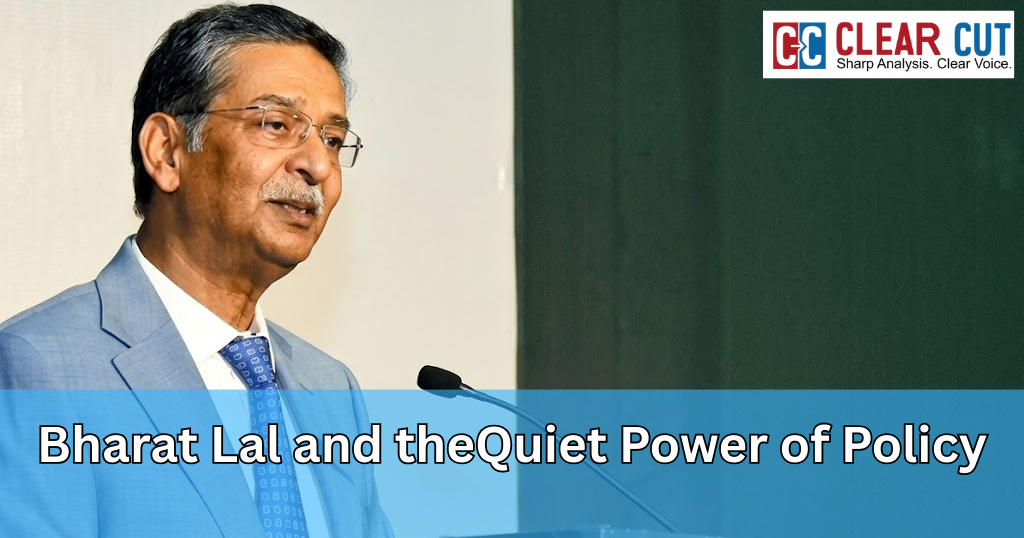
Bharat Lal, as NHRC India Secretary-General, links human rights, governance reform, environmental policy, and institutional learning to shape effective policy leadership in India. He emphasizes youth engagement, gender inclusion, and community-centric programs like Jal Jeevan Mission to ensure rights-based governance.
Influence frequently operates covertly in India’s policy ecosystem. Instead of focusing on headlines, it moves through institutions, frameworks, and administrative decisions. The National Human Rights Commission (NHRC), India’s Secretary-General and Chief Executive Officer, Bharat Lal, is a member
of this tradition of modest but effective leadership. His work demonstrates a persistent attempt to link environmental responsibility, institutional learning, governance reform, and human rights.
Bharat Lal views policy as a living process that must adapt to social change, technological disruption, and environmental stress rather than as a static set of rules. He has continuously maintained throughout
his career that human rights are a measure of the effectiveness of governance rather than something distinct from it.
An Institutional Role with Policy Weight
Bharat Lal is in charge of the NHRC’s institutional direction, policy coordination, and administrative strategy in his capacity as Secretary-General and CEO. The NHRC was founded in accordance
with the Protection of Human Rights Act of 1993 and functions at the nexus of the law, executive
power, and civil society involvement.
In this capacity, Lal has attempted to broaden the Commission’s purview beyond the resolution of complaints. He has increased its emphasis on thematic interventions that address structural
gaps in governance, institutional capacity building, and policy advisories. The NHRC has positioned itself more and more under his direction as an organization that finds trends in human rights abuses and converts them into recommendations for systemic change.
Ground-Level Governance and Early Policy Learning
Bharat Lal’s early career as an officer of the Indian Forest Service (IFoS), Gujarat cadre, 1988 batch, is a major influence on his policy philosophy. He was placed in settings by forest administration where decisions about development had a direct impact on ecological balance and local livelihoods. Long before he joined national institutions, these encounters made him aware of how policy decisions affect people.
He learned from working closely with local governments, forest-dependent communities, and environmental regulations that policies cannot be successful unless they take into consideration the lives that they affect on the ground. His later work consistently incorporates social justice, environmental
sustainability, and governance accountability because of this foundation.
Strengthening Governance Architecture at the National Centre for Good Governance
Bharat Lal was the Director General of the National Centre for Good Governance (NCGG) in New Delhi prior to joining the NHRC. By educating civil servants and recording governance best practices across states and ministries, the organization plays a vital part in enhancing administrative effectiveness.
Lal advanced the Center beyond traditional training models during his time there. He placed a strong emphasis on cross-state learning, outcome evaluation, and evidence-based policymaking. He advocated for governance reform as an ongoing process based on feedback, institutional memory, and policy
experimentation rather than as a onetime endeavor. This stage solidified his position as a policy architect as opposed to a regular administrator.

Engagement with Core Policy Circles
Bharat Lal was approved for a position as Joint Secretary in the Prime Minister’s Office due to his reputation as a policy thinker. This stage signaled his entry into India’s central policy-making ecosystem, even though roles change over time.
Lal consistently showed that he could match institutional mandates with constitutional values throughout these assignments. He emphasized that coordination is just as important to policy effectiveness as authority, focusing on coherence across departments. His reputation as someone who could handle complexity without losing sight of the public good was strengthened by this strategy.
Human Rights as a Governance Instrument
Bharat Lal has continuously presented human rights at the NHRC as a means of enhancing governance structures rather than as discrete legal rights. He has urged the Commission to view human rights abuses as signs of more serious administrative shortcomings.
For instance, he has advocated for analyzing complaint data to find persistent institutional flaws rather than restricting responses to specific cases involving custodial justice, healthcare access, or labor rights. Policy advisories designed to stop infractions before they happen are informed by these insights. Every violation of rights, in his opinion, indicates a policy flaw that needs to be fixed.
Youth Engagement as Long-Term Policy Strategy
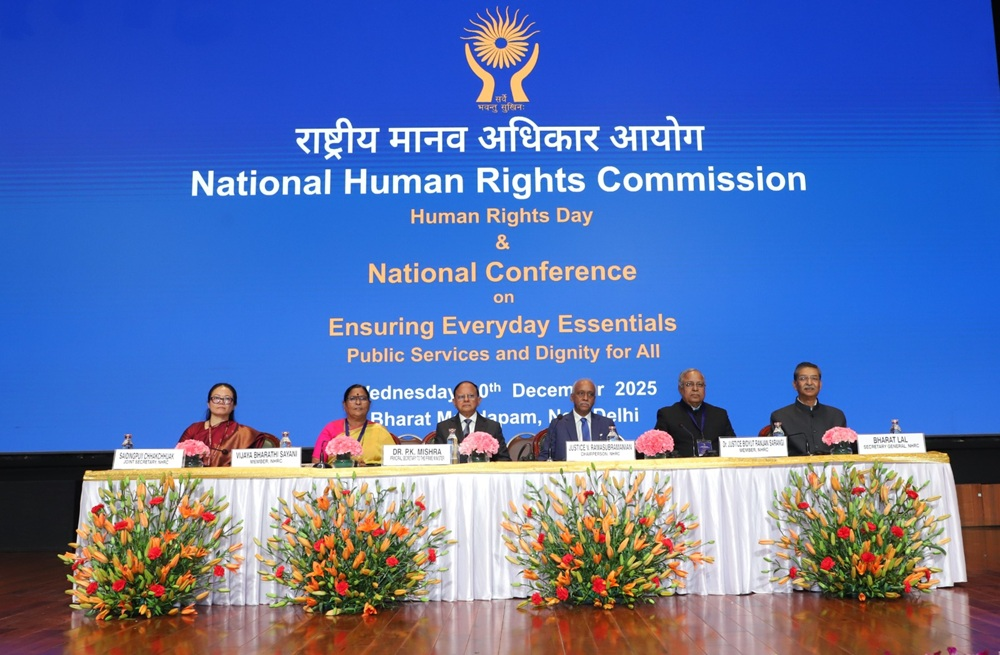
One of the clearest examples of Bharat Lal’s forward-thinking policy approach is the NHRC’s nationwide online internship program, which he launched during an official NHRC session in New Delhi. He framed the initiative as a serious engagement with future policy makers instead of just a symbolic outreach. In his speech to interns from various fields, he urged them to look at human rights in relation to artificial intelligence, climate change, gig-economy labor, cybercrime, and data protection.
This initiative showed the need for proactive governance by preparing institutions and citizens to tackle rights challenges before they become bigger issues.
Linking Environmental Policy with Human Rights
Bharat Lal has also played a significant role in connecting environmental governance with human rights discussions. In keynote speeches at national meetings on environmental law and policy, he has argued that environmental damage directly impacts rights to life, health, livelihood, and dignity.
By presenting environmental harm as a rights issue, he has strengthened the case for holding people accountable for pollution control, land use decisions, and climate adaptation. This perspective moves environmental governance beyond just technical rules and ties it to constitutional responsibility.
Advancing Right to Water through Jal Jeevan Mission
As Additional Secretary and Mission Director of the National Jal Jeevan Mission, Bharat Lal has played a pivotal role in shaping the programme from its very inception, serving as one of its founding members of the mission. His work consistently emphasized meticulous planning, strong institutional frameworks, and community ownership as his position as a policy architect as the foundations of rural water supply.
By championing local participation at every stage—from planning and implementation to operation,
maintenance, and surveillance—he emphasized strengthening grassroots institutions such as Pani Samitis
and communities to take charge of their own water systems. Under his stewardship, the mission evolved not merely as an infrastructure-driven programme but as a people-centric movement, guided by administrative discipline, field-level learning, and long-term resolve, with success measured in the everyday improvement of lives across India’s villages.
Bharat Lal brought Jal Jeevan Mission outcomes into line with his larger policy philosophy by framing
them through a human rights. This means that governance success is measured not only by coverage
statistics but also by lived improvements in people’s daily lives.
Gender Inclusion as Governance Reform
At international forums like the World Woman Davos Agenda, Bharat Lal has emphasized the need to boost women’s participation in the workforce in India. He consistently presents gender equity as a key issue for governance and the economy rather than just a social goal. His comments underline the importance of institutional reform, covering workplace safety, legal access, childcare infrastructure, and digital inclusion.
By shifting the focus to policy design rather than individual adjustments, he promotes a systemic
understanding of inclusion.
Public Communication and Policy Legitimacy
Bharat Lal views public communication as a part of governance. At official NHRC events, public lectures,
and policy discussions, he avoids legal language and concentrates on outcomes that matter to citizens,
such as ease of living, access to justice, and transparency. This strategy builds democratic trust. By making
policy easier to understand, he reinforces the legitimacy of institutions and fosters citizen engagement. His communication style reflects the belief that governance only works when people understand and trust it.
A Consistent Model of Policy Leadership
Throughout his roles and institutions, Bharat Lal’s policy leadership shows remarkable consistency. He
bases policy on real experiences, anticipates future challenges, and connects governance with constitutional values. He uses institutions to promote learning instead of just enforcing rules. This
consistency, more than visibility, defines him as a leader in policy.
Policy Leadership Anchored in Ethics and Institutions
Bharat Lal’s career shows that effective policy leadership comes from ethical clarity and commitment to institutions. By integrating human rights into governance reform, environmental responsibility, youth
engagement, and gender inclusion, he has helped shape discussions that value dignity alongside development. In a time of rapid social and technological change, his work demonstrates that the best policies are those grounded in people’s lives. That is what ultimately characterizes Bharat Lal as a strong policy champion.
Clear Cut Research, Livelihood Desk
New Delhi, UPDATED: March 10, 2026 05:00 IST
Written By: Samiksha Shambharkar