The anti-ESG backlash is weakening accountability systems and cutting funding for gender-focused programmes globally. As ESG rollbacks and aid reductions grow, women are disproportionately bearing the impact, slowing progress on equality.
Trump-era ESG rollbacks and global aid cuts are hitting gender programmes hardest. The UN has the numbers. The corporate sector is looking the other way.
The Rollback and What It Is Rolling Back
In 2025 and into 2026, the ESG landscape in the United States underwent a systematic dismantling. Under Chair Paul Atkins, the Securities and Exchange Commission stopped defending its climate-risk disclosure rule in court, scrapped proposed rules requiring increased ESG fund disclosures, and withdrew from Biden-era rulemaking across multiple sustainability categories. Major banks exited climate alliances. Companies began removing the words “ESG,” “sustainability,” and “climate change” from public communications. ESG Dive documented the atmosphere as one of “fear and uncertainty” that most financial institutions want to avoid.

The dominant framing of this story is financial and regulatory: what happens to disclosure rules, to green investment funds, to corporate climate commitments. What the financial press is covering less systematically is what specifically gets defunded and deprioritised when the ESG infrastructure contracts. The answer, documented in data from the UN, the World Bank, and the Gender Snapshot 2025 report, is disproportionately: women.
The Numbers That Should Be Headlining
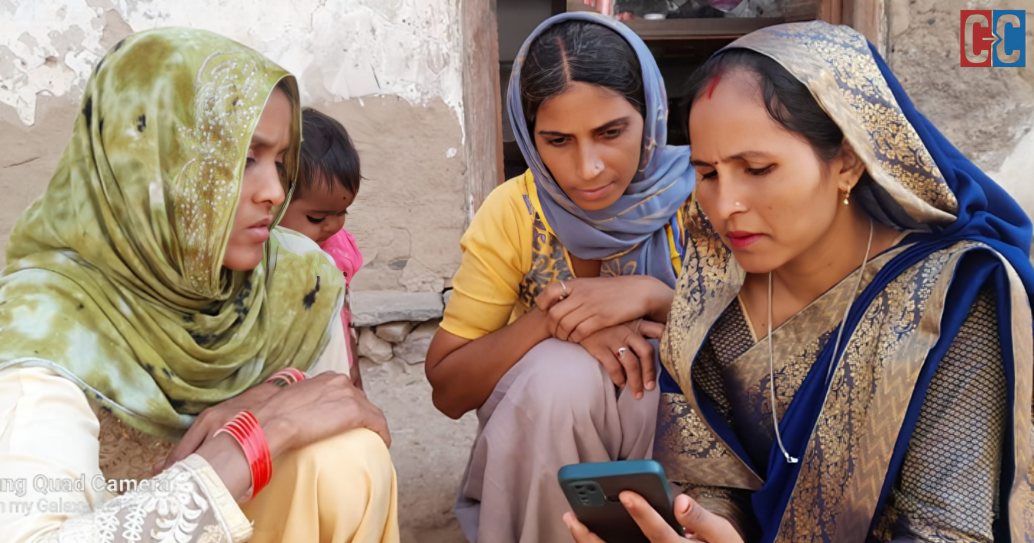
The Gender Snapshot 2025, released by UN Women and the UN Department of Economic and Social Affairs (UN DESA), contains a figure that deserves more attention than it has received. Closing the gender digital divide globally could lift 30 million women out of poverty and add $1.5 trillion to global GDP by 2030, with cumulative economic benefits reaching $100 trillion by 2050 (UN Women & UN DESA, 2025). These are not advocacy estimates but modelled projections based on access, labour force, and productivity data covering 343.5 million women and girls currently excluded from digital access (UN Women & UN DESA, 2025).
The report simultaneously documents that progress on gender equality is slowing. One in eight women aged 15 to 49 experienced physical or sexual violence by an intimate partner in the past year, and nearly one in five young women aged 20 to 24 was married before the age of 18 (UN Women & UN DESA, 2025). Women account for 40 percent of the global labour force but only 29 percent of projected labour force increases between 2024 and 2026 (UN Women & UN DESA, 2025). The report identifies two key drivers of this slowdown: reductions in global aid and growing backlash against gender-focused programmes (UN Women & UN DESA, 2025). Both trends, in the current geopolitical context, are increasingly shaped by the same set of political forces.
What the ESG Contraction Means in Practice
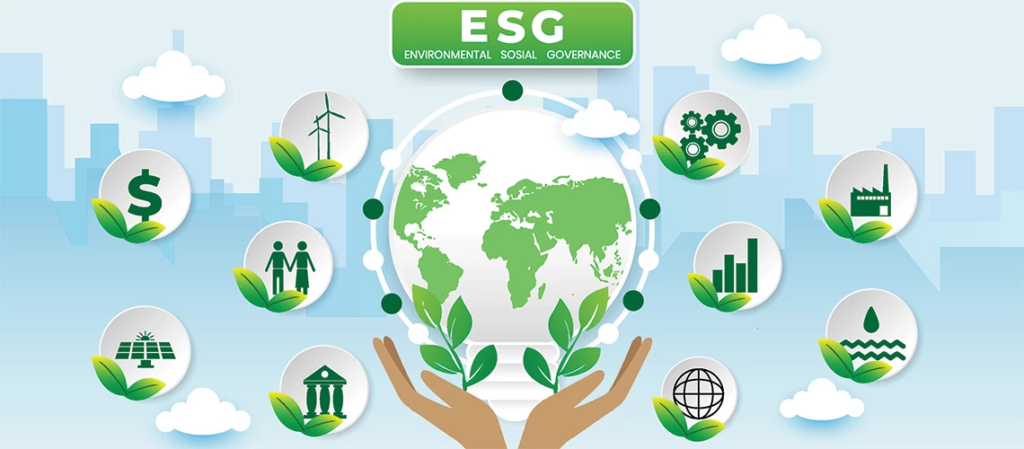
ESG frameworks, at their functional best, are not primarily about disclosure. They are about creating accountability structures that make social outcomes visible and therefore actionable. When the SEC withdraws ESG disclosure requirements, companies lose the regulatory obligation to report on human capital, gender pay gaps, supply chain labour conditions, and community investment outcomes. When anti-ESG pressure causes companies to remove DEI and gender commitments from their annual reports, those commitments do not disappear overnight. But they lose the tracking mechanisms that make them real.
Freshfields, writing in January 2026, noted that the ESG landscape is “dynamic and split across jurisdictions.” In the EU, the Sustainable Finance Disclosure Regulation is being revised, and supply chain due diligence requirements remain. In the UK, gender pay gap reporting is mandatory. In India, SEBI’s BRSR framework requires the top 1,000 listed companies to disclose gender indicators. But in the United States, which remains the world’s largest capital market and whose regulatory posture shapes global corporate norms, the direction is explicitly in reverse.
The specific impact on gender programmes flows through three channels. First, corporate DEI budgets, which fund women’s leadership pipelines, pay equity audits, and mentorship programmes, are being cut under anti-ESG political pressure even where no legal obligation to do so exists. Second, US foreign aid for gender programmes, including USAID funding for reproductive health, women’s economic empowerment, and gender-based violence prevention, has been systematically reduced. Third, US withdrawal from the UN Women’s Executive Board in February 2026 removed both funding and political cover from the international institutional architecture for gender equality, as documented during the CSW70 negotiations.
The Architecture of Retreat
The architecture of the current retreat is worth naming precisely because it is not random. It targets, with some consistency, the infrastructure of accountability: the disclosure requirements that make gender pay gaps visible, the international forums that set norms for women’s rights, the aid programmes that fund survivor support services, and the ESG reporting frameworks that create comparability across corporate gender outcomes. None of these, individually, are the same as gender equality itself. But they are the systems through which gender equality commitments are tracked, funded, and enforced.
Columbia University research on ESG and female leadership notes that despite metrics available to improve gender equality in the workforce, such standards “are not widely deployed” and investors use them only inconsistently. This was the situation before the current rollback. The situation after is materially worse: fewer mandatory disclosures, more voluntary commitments without enforcement, and a political environment in which companies are rewarded for removing gender commitments from public view rather than meeting them.
Conclusion
The anti-ESG wave is often framed as a debate about finance and regulation. In reality, it is a defining question about the kind of future we are choosing to build and who gets left behind when accountability systems weaken. The UN’s own projections make the stakes unmistakably clear: closing the gender digital divide could unlock $1.5 trillion for the global economy by 2030. This is not just an economic opportunity, but a pathway toward more inclusive and resilient growth.
Yet the direction of travel in 2025 and 2026 tells a different story. Aid contractions and ESG rollbacks are not moving us closer to that future; they are actively steering us away from it. The numbers already outline what is possible. The challenge now is whether policy and political will can rise to meet that possibility. The arithmetic is not hidden. It is a roadmap. What remains uncertain is whether we choose to follow it.
References:
- UN Women and UN DESA (2025). Gender Snapshot 2025: Progress on the Sustainable Development Goals. https://www.esgtimes.in/esg/equality-inclusion/closing-gender-digital-divide-could-add-1-5-trillion-to-global-economy-un/
2. ESG Dive (2026, January 8). 4 Trends That Will Shape ESG in 2026. https://www.esgdive.com/news/esg-trends-outlook-2026/809129/
3. Freshfields (2026, January). 7 ESG Trends to Watch in 2026. https://sustainability.freshfields.com/post/102mfa5/7-esg-trends-to-watch-in-2026
4. Columbia Climate School (2024). How Can ESG Support Female Leadership? https://news.climate.columbia.edu/2024/05/08/how-can-esg-support-female-leadership/
Clear Cut Gender Desk
New Delhi, UPDATED: April 06, 2026 01:00 IST
Written By: Jay