The article highlights how older women remain overlooked in gender equality efforts, especially in ESG and CSR frameworks, despite facing compounded lifelong inequalities. It calls for inclusive policies and corporate action to address their economic security, care needs, and social protection.
CSW70’s Ministerial Round Table specifically addressed older women as an emerging focus area. Women make up the majority of those aged 60 and above globally. Neither ESG frameworks nor CSR programmes account for them.
The Group Nobody Counts
At the Ministerial Round Table during the Commission on the Status of Women 70th session held at the United Nations Headquarters on March 11, 2026, ministers and UN leaders convened to focus on “achieving gender equality and the empowerment of all older women” (UN Women, 2026; United Nations Department of Economic and Social Affairs, 2026). The discussion recognised this as an emerging priority area, noting that rapid population ageing, with women forming the majority of those aged 60 and above globally, is reshaping the conditions for gender equality across the life course. Deliberations centred on income security, economic independence, ageism and sexism, and the prevention of elder abuse affecting older women.
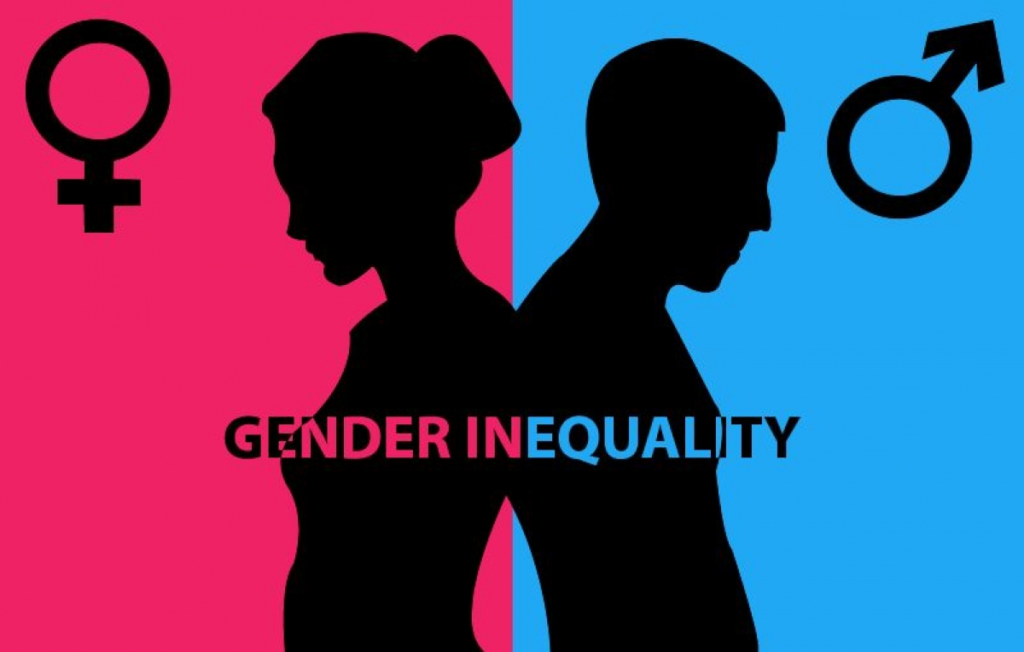
This framing marks a notable shift in international gender discourse, which has traditionally prioritised younger women and girls. Foundational frameworks such as the Beijing Declaration and Platform for Action, Convention on the Elimination of All Forms of Discrimination Against Women, and Sustainable Development Goal 5 largely focus on education, reproductive health, labour force participation, and protection from gender based violence, often centring the experiences of women of working age. Within these frameworks, older women are more commonly positioned as recipients of social protection and healthcare, rather than as agents of economic or political participation. The explicit attention to older women at CSW70 therefore signals an important expansion in how gender equality is being defined and operationalised at the global level (UN Women, 2026).
Why Older Women Are Uniquely Vulnerable
The gender disadvantages that accumulate across a woman’s life do not resolve at age 60. They compound. A woman who spent her prime working years in informal employment, interrupted by caregiving and without pension contributions, reaches old age without retirement income. A woman who did not inherit property because of discriminatory family law owns nothing at the end of her life. A woman who was widowed young and remarried under customary law may have no legal claim to the marital home. A woman who spent decades as an unpaid care worker has nothing to show for that labour in the formal economic record.
The UN’s own data shows that women over 60 experience intersecting vulnerabilities: pension gaps, higher rates of poverty, greater reliance on informal care support, and higher exposure to elder abuse in domestic settings.The Ministerial Round Table specifically addressed how to ensure income security and economic independence for older women, and how to transform social and cultural norms that compound ageism and sexism into combined forms of discrimination. The word “ageism” appearing alongside “sexism” in a ministerial outcome document is a signal that the international community is beginning to take the intersection seriously.
The Corporate Sector’s Blind Spot
Corporate gender equality programmes, CSR women’s empowerment initiatives, and ESG gender metrics are almost entirely oriented toward women aged roughly 18 to 45. This reflects the workforce age distribution and the assumption that gender equality is primarily a workforce participation and leadership problem. Older women appear in CSR programmes primarily as beneficiaries of eldercare services, healthcare camps, and self-help group lending, categories that implicitly treat them as recipients rather than agents.
There is a business case dimension to this that is rarely articulated. Women over 60 comprise a significant and growing consumer market, a caregiving workforce, and an informal economic network that supports younger family members. In India, older women in rural areas are frequently the custodians of agricultural knowledge, community social capital, and water management practice. Their exclusion from formal economic recognition is both a justice failure and an efficiency failure: they hold resources, knowledge, and networks that development programmes do not systematically engage.
The SEBI BRSR framework’s gender indicators capture headcount and pay ratio for the existing workforce. They do not capture retirement income security, pension access, or the gender gap in post-employment economic outcomes for women who have left corporate employment. The result is a corporate gender equality architecture that stops at the point of exit from the formal workforce, precisely when many of the gender disadvantages accumulated across a working life begin to manifest.
The Care Dimension
The ageing population is accelerating the demand for formal care services. In high-income countries, the care sector employs disproportionately large numbers of women, many of them migrant workers, in low-wage, often informal conditions. In low- and middle-income countries, eldercare remains almost entirely the responsibility of female family members, unpaid and unrecognised. The CSW70 Agreed Conclusions’ call for stronger protections for women’s rights at work and for legal recognition of care workers applies across the age spectrum, but its implications for the care of older populations are particularly significant.
Corporate supply chains in the care sector, including pharmaceutical companies, medical device manufacturers, and healthcare service providers, intersect with the gendered labour market of care work in ways that are rarely examined through a gender equity lens. A pharmaceutical company that does not examine whether its marketing practices contribute to over-medicalisation of older women, or a healthcare service provider that does not examine gender pay gaps in its care worker workforce, is making gender equality claims that do not extend to the full scope of its operational impact.
Conclusion
Older women are the fastest growing segment within populations most vulnerable to poverty, abuse, and social exclusion, yet they remain among the least visible in global gender policy and largely absent from corporate gender equality strategies. The ministerial focus at CSW70 signals an important shift, a recognition that gender equality cannot be achieved without addressing disadvantage across the full life course.

This moment offers more than acknowledgement; it offers direction. The corporate sector, deeply embedded in labour markets and the care and health systems that older women rely on, has an opportunity to translate this recognition into meaningful action through investment, transparent reporting, and inclusive programme design.
The projected 123 year path to gender parity reflects not a single gap, but a lifetime of compounded inequalities. Older women represent the point where these gaps converge and become most visible. Bringing them into the centre of policy, investment, and innovation is not only a matter of inclusion, it is essential to building a more equitable and sustainable future.
References:
1. UN Women (2026, February 25 and March 11). International Women’s Day 2026 and CSW70 Ministerial Round Table on Older Women. https://www.unwomen.org/en/news-stories/media-advisory/2026/02/iwd2026-and-csw70
2. UN Women (2026, March 9). CSW70 Agreed Conclusions. https://www.unwomen.org/en/news-stories/press-release/2026/03/csw70-conclusions
3. World Economic Forum (2026, March). Gender Parity Still 123 Years Away. https://www.weforum.org/stories/2026/03/international-women-day-gender-equality/
4. Columbia Climate School (2024). How Can ESG Support Female Leadership? https://news.climate.columbia.edu/2024/05/08/how-can-esg-support-female-leadership/
Clear Cut Gender, CSR Desk
New Delhi, UPDATED: April 07, 2026 09:00 IST
Written By: Jay