Kerala’s 2026 Elderly Budget acknowledges rapid ageing by allocating ₹46,236 crore toward pensions, healthcare, and elder support systems, making ageing a central policy priority. It offers a scalable framework for India, though its success relies on Kerala’s strong social infrastructure and governance model.
India is a country of the young. Or so the story goes, the median age is 28. The recruitment drives for the armed forces overflow. School enrolment numbers tend to swell each passing year. Cut to a corner of the country, there is a remarkably different demographic reality unfolding for decades. Kerala, presently (Keralam), has a median age of around 37. The state is growing old, faster than the rest of India. The state government has finally decided to address this fact on paper, also, in the budget.
In January 2026, the Kerala Finance Minister K N Balagopal, proposed for a dedicated Elderly Budget along with the main state budget. It was not a symbolic gesture. Behind it sat a ₹46,236.52 crore allocation, that was nearly one-fifth of the state’s total budget outlay for FY 2026–27. The message was clear. Ageing is not a footnote. It should be a policy priority.
Why Kerala, Why Now
The numbers make the case plainly. The senior citizens currently make up 18.7% of Kerala’s population. This is projected to reach 22.8% by the year 2036. The state’s elderly population has grown 47% between 2011 and 2026. This is significantly faster than the national average of 36% over the same period. Adding to the crisis, Kerala’s working-age population is expected to decline sharply over the next decade.
The Reserve Bank of India’s report on state finances, has flagged this as a structural concern for Kerala’s fiscal future. A shrinking workforce means a narrower tax base. A growing elderly population means rising welfare demands. The numbers are unforgiving.
Alongside this, a phenomenon the budget describes as the ‘feminisation of ageing‘ is taking hold. Women who outlive men by several years on average, will form most of the elderly population by 2036. Many are widows with limited economic independence. Any serious elder care framework has to say with this reality.
What the Budget Actually Does
The ₹46,236.52 crore figure, while large, needs some unpacking. Around 68% of it covers existing pension commitments. This includes retired government employees, an expenditure the state would incur regardless. What the Elderly Budget does is make all this visible in one place, creating accountability and a baseline for future tracking.
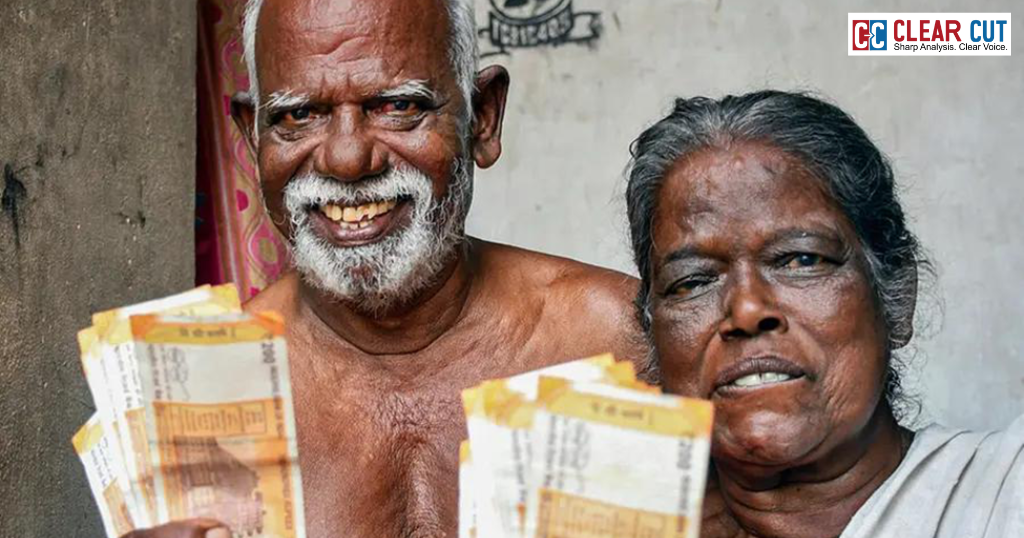
There are meaningful new interventions. Social security and welfare board pensions have been raised to ₹2,000/month. More than three-quarters of Kerala’s elderly population is now covered under at least one pension scheme. The government has given ₹14,500 crore specifically for welfare pensions in FY 2026–27.
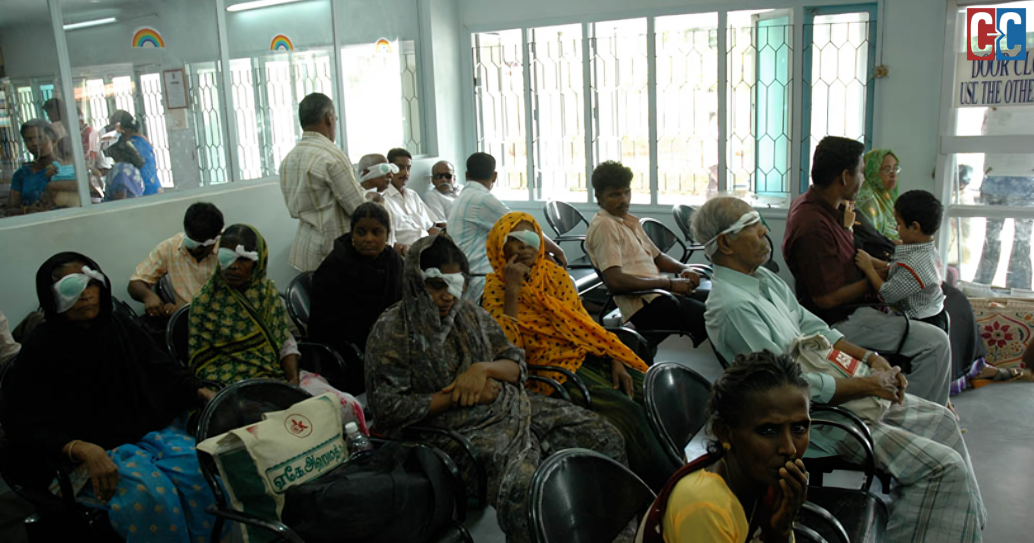
Healthcare is getting attention too. A pneumococcal vaccination programme has been introduced for the elderly people below the poverty line. Government medical colleges now have specialised beds, ramps, and accessible toilets. A new Centre for Geriatric Mental Health and Cognitive Rehabilitation is being set up, at the Institute of Mental Health and Neurosciences (IMHANS). This aims to directly address the growing burden of dementia and age-related cognitive decline.
For the home-bound elderly, the Ashwasakiranam programme has been strengthened. Family caregivers of bedridden senior citizens will now receive ₹1,000/month. The Navajeevan scheme provides subsidised self-employment loans, for people aged 50 to 65 and are still economically active. ₹30 crore for high-tech retirement homes with community kitchens and specialised healthcare facilities.
The Vayojana Commission: Oversight with Teeth
One of the most significant announcements is the Vayojana Commission. Kerala is the first state in India to create such commission. The mandate covers access to healthcare, legal protections, and social welfare. It will function as both a monitoring body and a grievance channel.
The budget has also introduced a new criterion for fund devolution to local government institutions. Local bodies will now receive funds partly based on how many elderly residents they serve. This incentivises localised, context-specific planning, and moves decision-making closer to the communities that need them.
The Kudumbashree Layer
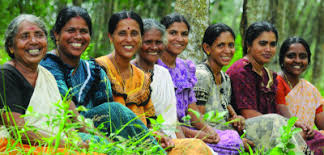
Kerala’s community infrastructure is doing the heavy lifting in this framework. The state’s women-led neighbourhood group network with over 4.5 million members, has long been involved in elderly outreach. Its Harsham Geriatric Care enterprise model allows care providers to help elderly persons with daily tasks and companionship. Its Elderly Inclusion Programme, maps vulnerabilities at the community level. This distinguishes between active, assisted, and destitute elders, and designing interventions accordingly.
The Vathilpadi Sevanam initiative, delivers government services to senior citizens, persons with disabilities, and bedridden patients at their doorstep. It runs through Kudumbashree members and ASHA workers working in coordination. These are not new programmes. But the Elderly Budget formally situates them within a rights-based, life-course framework.
A Blueprint, or Just a Model?
The question the rest of India is now asking is whether Kerala’s approach is transferable. The short answer is, partly. Kerala’s model rests on decades of investment in literacy, healthcare, and community governance, a foundation most other states are still building. The state spends more per capita on social services than almost any other. That fiscal culture cannot be replicated overnight.
But the architecture can be. The idea of dedicated elderly budget document to track all age-related spending across departments in one place, can be adopted by any state legislature. The Vayojana Commission model is equally portable.
HelpAge India has called for a national smallest old-age pension of ₹3,000 per month, indexed to inflation, to bring uniformity across states. The Union Budget is yet to move in that direction. Kerala’s ₹2,000 floor is not enough on its own, but it is higher than what most states offer.
India will have 300 million people above the age of 60 by 2050. The country has 24 years to build systems that can hold their weight. Kerala is showing one version of what that could look like. Whether other states and the Union government would choose to learn from it, is a political question as much as a policy one.
References
1. Onmanorama. (2026, January 29). Kerala presents India’s first elderly budget, to link local body fund devolution to senior citizen population. https://www.onmanorama.com/news/kerala/2026/01/29/kerala-elderly-budget-local-body-fund-devolution-commission.html
2. The South First. (2026, January 30). Kerala’s ‘Elderly Budget’: An ‘ageing’ state braces to support its seniors. https://thesouthfirst.com/kerala/keralas-elderly-budget-an-aging-state-braces-to-support-its-seniors/
3. Business Standard. (2026, February 5). Datanomics: Kerala becomes first state to unveil ‘Elderly Budget’. https://www.business-standard.com/budget/news/datanomics-kerala-becomes-first-state-to-unveil-elderly-budget-126020501062_1.html
4. ETV Bharat. (2026, January 29). Kerala Budget 2026-27 Pushes Welfare Expansion, Free Education And Healthcare. https://www.etvbharat.com/en/state/kerala-budget-2026-27-focuses-on-welfare-expansion-free-education-and-healthcare-push-enn26012902339
5. BusinessToday. (2026, January 31). Budget 2026 expectations: Senior citizens look for tax relief, care policies, concessions. https://www.businesstoday.in/union-budget/expectations/story/budget-2026-expectations-senior-citizens-look-for-tax-relief-care-policies-concessions-513804-2026-01-31
6. Kudumbashree. (n.d.). Elderly Inclusion Programme. https://kudumbashree.org/pages/38
7. NewsClick. (2021). Ageing Kerala Moves to Prioritise Care for Older Population. https://www.newsclick.in/Ageing-Kerala-Moves-Prioritise-Care-Older-Population
8. The Print. (2025, February 3). Learn elderly care system from Kerala. Their population will double by 2050. https://theprint.in/opinion/learn-elderly-care-system-from-kerala-their-population-will-double-by-2050/2477484/
9. Journal of Indian Academy of Geriatrics. (2023). Resource Utilization for Healthy Aging in Kerala. https://journals.lww.com/jiag/fulltext/2023/19040/resource_utilization_for_healthy_aging_in_kerala_.10.aspx
Clear Cut Health Desk
New Delhi, UPDATED: April 10, 2026 09:00 IST
Written By: Tanmay J Urs