

India’s CSR spending still prioritizes post-disaster relief over pre-disaster resilience, even though proactive investments save more lives and livelihoods. To address rising climate risks, corporate strategy must shift toward long-term, risk-based resilience planning rather than reactive aid.
Introduction
Geeta Devi lives in Darbhanga, Bihar. In the monsoon of 2025, the Baghmati river rose for the 3rd consecutive year. It took away her family’s stored grain, the one-room addition they had built 2 years ago, and the goats they raised for daughter’s school fees. Within days, relief trucks arrived. Some were government vehicles. One carried the logo of a large consumer goods company. It carried biscuits and rice. Geeta accepted them gratefully. She also said, quietly, that what she needed was not biscuits. She needed an embankment. She needed an early-warning siren. She needed a government or a company, that came before the flood.
India experienced extreme weather events on 255 of 274 days surveyed in 2024, according to the Centre for Science and Environment (Pandey & Centre for Science and Environment, 2024). In 2025, a ₹5,000 crore reconstruction package was announced for Uttarakhand, Himachal Pradesh, Assam, Sikkim, and Kerala. The NDMA recorded 469 natural disasters between 2000 and 2019 alone. Climate change is not a future risk in India (Charak, 2024). It is a present condition.
Relief vs. Resilience
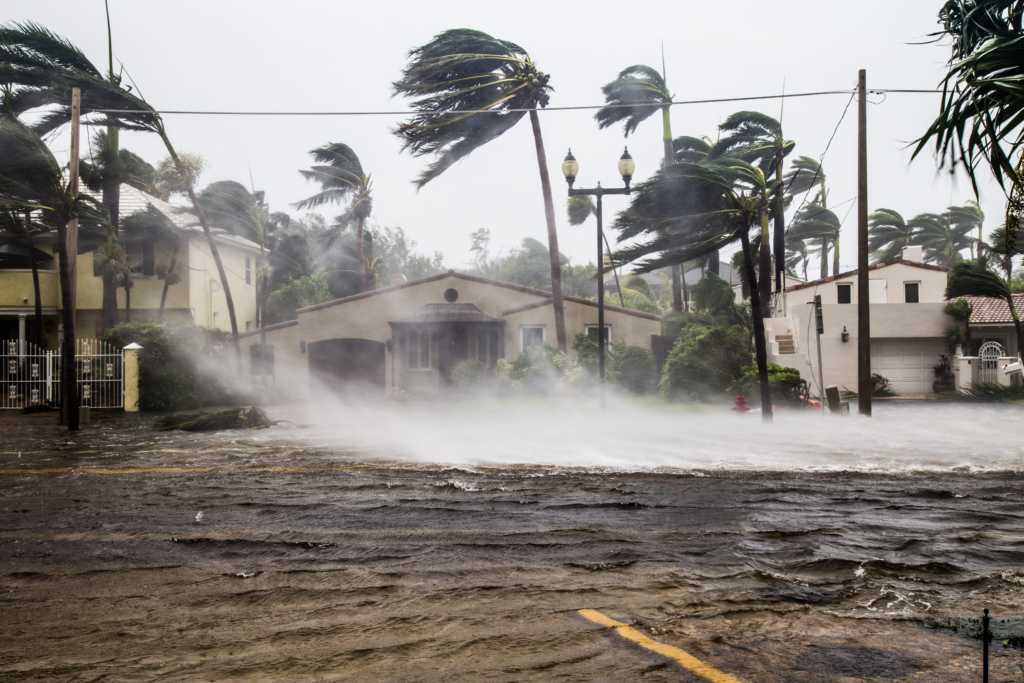
There is an important distinction that rarely makes it into CSR annual reports: the difference between disaster relief and disaster resilience. Relief is what arrives when the flood is already in the living room. Resilience is what ensures the flood does not enter the living room in the first place.
An October 2025 study by the International Institute for Environment and Development (IIED), covered by Mongabay India, quantified this gap. Post-disaster aid can reduce losses by 59%. But early resilience investments employment schemes, community capacity-building, direct benefit transfers can bring losses down below 50%. The implication is direct: proactive investment saves more lives and more livelihoods than reactive charity.
Yet Schedule VII of the Companies Act, 2013, which governs what counts as eligible CSR activity, lists “prime minister’s relief fund contributions” as a permitted activity. It does not distinguish between companies that write a cheque after a cyclone and companies that build early-warning infrastructure in cyclone-prone districts before the season begins. Both are counted. Only one actually changes outcomes.
What The Data Shows
India’s CSR expenditure on environmental sustainability the category most directly relevant to climate resilience stood at approximately 10% of total spend in FY 2023-24, even as education absorbed 35% and healthcare 20%. This is not because the environmental problem is smaller. It is because environmental outcomes take longer, are harder to photograph, and resist the annual project cycle that most CSR planning follows.
Meanwhile, the physical evidence is accumulating. In 2024, severe floods hit Himachal Pradesh, Uttarakhand, and Manipur. The Punjab floods of 2025 displaced thousands and triggered a wave of corporate relief operations such as biscuits, tarpaulins, mobile camps. Valuable in the moment. Insufficient as a response to a systemic, recurring, intensifying crisis.
A 2024 research article published in Frontiers in Health Informatics documented how companies like ITC, Tata Chemicals, and Mahindra & Mahindra have used CSR to support water conservation and climate-smart agriculture, initiatives that genuinely strengthen community resilience. ITC’s watershed programmes have produced water-positive outcomes in drought-prone regions. Reliance and L&T have invested in disaster preparedness systems. These examples exist. They are not yet the norm.
The Structural Failures
Three structural failures keep corporate CSR from becoming a meaningful force in climate resilience.
The first is the annual project cycle. Most CSR plans are designed, approved, implemented, and reported within a single financial year. Climate resilience infrastructure like embankments, mangrove restoration, early warning systems, flood-resistant housing require multi-year commitments. The 2025 MCA amendments allow for ongoing CSR projects with extended timelines. Very few companies are using this provision for climate work.

The second is geography. As noted in Mission Sustainability’s February 2026 analysis, CSR spending is concentrated in Maharashtra, Gujarat, Delhi, and Tamil Nadu states with heavy corporate presence. The districts most exposed to climate risk in Assam, Bihar, Odisha, Manipur receive minimal CSR investment. The mismatch between risk geography and investment geography is not accidental. It is a consequence of a system that ties CSR to where companies operate, not where need exists.
The third failure is measurement. A company can record that it contributed to a state flood relief fund and file it as CSR without any obligation to report whether that contribution led to rebuilt homes, restored livelihoods, or improved drainage. Outcome metrics for climate resilience CSR are effectively non-existent in India’s current reporting framework.
What Needs To Change
The path is clear, even if the will to walk it has been absent. NDMA’s national guidelines must be integrated into the CSR reporting framework. Companies in climate-exposed sectors such as mining, construction, agriculture, manufacturing are required to allocate a defined proportion of their CSR spend to pre-disaster resilience activities, not post-disaster PR.
The government’s call for a national risk-mapping platform linking NDMA, IMD, and ISRO data should be extended to the private sector. CSR implementing agencies working in climate-vulnerable districts should be required to use this data in project planning. Investment should follow risk, not convenience.
Multi-year CSR commitments for climate infrastructure should be incentivised through the tax treatment of unspent CSR funds. Currently, unspent funds must be transferred to government funds or a designated account within 30 days. A provision allowing ringfenced multi-year climate resilience funds would enable the kind of sustained investment that actually builds community capacity.
Conclusion
Geeta Devi’s goats are gone. Her grain is gone. The one-room addition her family spent two years building is a memory. A corporate relief camp came and went in three days, its banner photographed and filed in a CSR annual report somewhere.
This is not a story about bad intentions. The companies that sent trucks to Bihar sent them in good faith. The problem is that good faith, deployed after the disaster, is worth a fraction of what good strategy, deployed before it, would have been worth. Early resilience investment, the IIED study found, saves more than reactive aid. India’s corporate sector has the resources to fund the embankments, the early-warning systems, the flood-resistant homes. It has a legal mandate to spend on social good. It has not yet connected those two facts to the geography of climate risk.
The floods will come again next monsoon. And the monsoon after that. The question is not whether Indian companies will respond. They will. The question is whether they will choose to act as genuine partners in India’s climate future — or continue to arrive, banner in hand, after the water has already risen.
A nation that faces extreme weather 255 days a year cannot afford a CSR culture built for the other 19. The mandate exists. The money exists. The science of what works exists. What remains is the decision to use all three, before the next flood, not because of it.
References
- Pandey, K. & Centre for Science and Environment. (2024). Extreme weather events in India. https://cdn.cseindia.org/attachments/0.91675000_1731049848_extreme-weather-events-in-india.pdf
- Mongabay India. (2025, October 16). Early investments in climate resilience could save India billions in disaster management. Citing: IIED Study on Climate Resilience Investments. india.mongabay.com
- Mission Sustainability. (2026, February). CSR in India: Eligibility, Laws, and Trends. missionsustainability.org/blog/csr-in-india
- Frontiers in Health Informatics / International Journal of Medical Informatics. (2024, December 26). Exploring the Role of Indian Corporations in Community Adaptation and Mitigation Strategies Through CSR and Climate Resilience. doi: IJMI/article/view/1604
- Insights on India. (2025, October 6). India’s Direction for Disaster Resilience. Citing NDMA, 15th Finance Commission (2021–26). insightsonindia.com
- NuSocia. (2025, May 29). CSR’s Role in India’s Climate Future: A Focus on Adaptation. nusocia.com
- Drishti IAS. (2025, December). Reimagining Corporate Social Responsibility in India. Based on: The Hindu, 23 December 2025. drishtiias.com
- National Disaster Management Authority (NDMA). (2020). India’s disaster risk profile: 469 natural disasters, 2000–2019. Government of India.
- Government of India. (2025). Union Budget 2025–26 announcements on climate reconstruction. ₹5,000 crore for five states: Uttarakhand, Himachal Pradesh, Assam, Sikkim, Kerala.
Clear Cut Climate, CSR Desk
New Delhi, UPDATED: April 24, 2026 09:00 IST
Written By: Tanmay J Urs