India’s gig economy is expanding rapidly, but millions of gig workers remain excluded from basic labour rights and social protections. The article argues that corporate CSR and policy frameworks must urgently evolve to ensure dignity, security, and accountability for this workforce.
Introduction
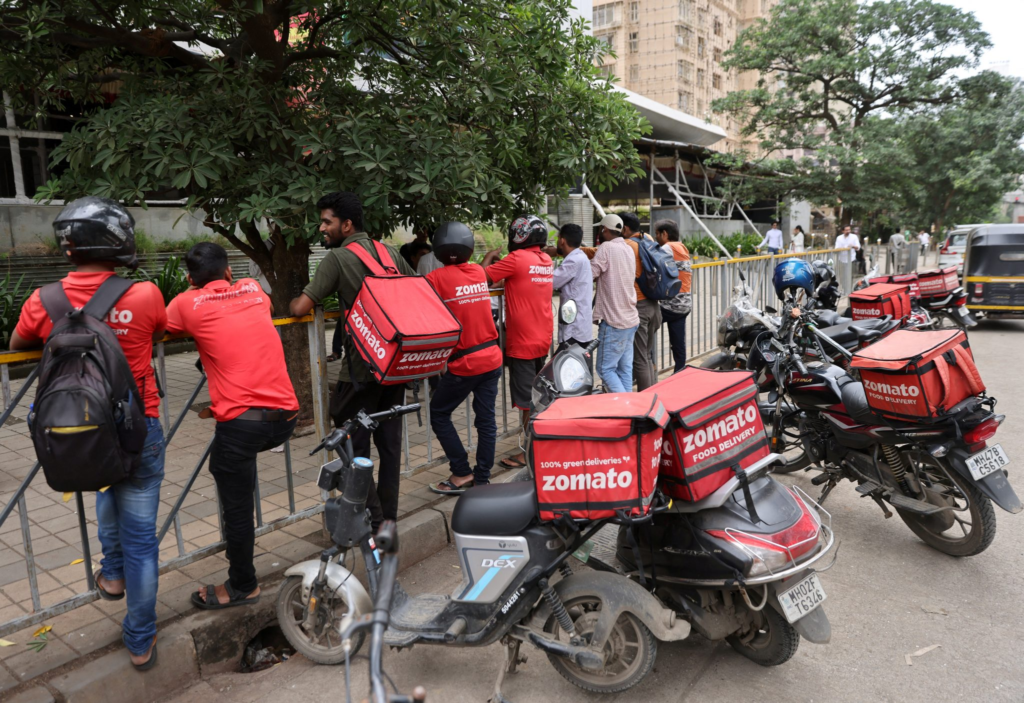
Ramesh Kumar wakes up at 5 AM every day. He has no office, no manager, and no payslip. All he has is a mobile phone, a bicycle, and a delivery bag branded with the logo of one of India’s most prestigious consumer electronics brands. By 7 PM, Ramesh has done 22 deliveries and has received INR 580. He hasn’t had any food since midday. According to his employers, Ramesh Kumar doesn’t even exist as an employee.
As per FY 2025, there were approximately 12 million gig workers in India, an increase of 55% from the number which was only 7.7 million back in FY 2021. The rise in the number of gig workers in India can be attributed to the increasing smartphone user base which has risen to 800 million users. The Quick Commerce (Q-Commerce) sector in India alone accounted for ₹64,000 crores in FY 2025-26. The economy where your groceries arrive within 10 minutes thrives on individuals who don’t even come under minimum wage and employer-provided healthcare and benefits.
The Scale of The Problem
India’s Economic Survey 2025-26, tabled in Parliament on January 29, 2026, put the numbers plainly: approximately 40% of gig workers earn below ₹15,000 per month (Nitanaware, 2026) . Platform algorithms control work allocation, performance monitoring, wages, and supply-demand matching. The Survey flagged concerns about algorithmic bias and burnout. It noted that gig workers are classified as “freelancers” or “independent contractors,” a legal fiction that denies them access to minimum wage guarantees, regulated hours, and dispute resolution (Nitanaware, 2026).
The government projects that non-agricultural gig work will reach 6.7% of India’s total workforce by 2029-30. The gig workforce could expand to 23.5 million by the same year. An estimated 20 lakh new gig jobs are expected in 2026 alone.
The report “Prisoners on Wheels”, cited across multiple policy analyses in 2025, found that over 80% of gig workers work more than 10 hours daily. Nearly half receive no weekly day off. Over 99% report physical or mental health issues, often linked to long hours, income insecurity, and the constant threat of arbitrary account deactivation.
A 2025 study published in the Indian Journal of Occupational and Environmental Medicine, authored from St. John’s Medical College, Bengaluru, documented symptoms of loneliness, depression, anxiety, sleep disorders, and chronic back pain among platform workers. The performance-based pay model, the study noted, places workers under constant psychological stress (Joseph & Joseph, 2025).
Where Does Corporate Responsibility Fit?
This is, first and foremost, a labour rights crisis. But it is also a CSR crisis, and the distinction matters. India’s largest consumer technology platforms are not small companies without means. Swiggy, Zomato, Blinkit, Zepto, and Ola collectively serve hundreds of millions of users. Several are publicly listed. Several meet the thresholds under Section 135 of the Companies Act, 2013 that mandate CSR spending.
Yet the workforce that makes their business model possible. The delivery partner, the driver, the last-mile connector is structurally excluded from the benefits that CSR is supposed to address. These workers often live in the same communities as the beneficiaries of corporate-funded health camps, skill development workshops, and sanitation programmes. They are simply not counted as stakeholders.
Workplace wellness initiatives, according to ILO data cited in a September 2025 analysis in The Public Podium, reduce absenteeism by 20-25% and yield returns of four to nine times the cost in productivity gains. The business case for investing in gig worker mental health is unambiguous. The practice remains rare (“9th Regulating for Decent Work Conference,” 2025).
The Regulatory Patchwork
In November 2025, four labour codes came into force. Only the Code on Social Security recognized gig and platform workers at all. The remaining three, covering wages, occupational safety, and industrial relations, excluded them entirely.
The Code on Social Security requires platforms to contribute 1-2% of their annual turnover to a Social Security Fund covering life and disability insurance, accident insurance, and health and maternity benefits. A significant step on paper. But draft central rules released in January 2026 condition access on workers completing at least 90 days of engagement with a single aggregator annually, or 120 days across multiple platforms (Code on Social Security, 2020: Towards Universal and Inclusive Social Protection, n.d.). For workers who switch platforms seasonally or work across apps simultaneously, this threshold can be structurally impossible to meet.

Rajasthan, Karnataka, Bihar, and Jharkhand have enacted independent gig worker welfare legislation. But for a workforce where roughly half of all delivery workers are migrants, entitlements that reset at state borders offer thin protection. The central e-Shram portal, intended to register these workers, had enrolled fewer than 340,000 of the country’s 12 million gig workers as of mid-2025.
Accountability Points
Platform companies must stop sheltering behind the “aggregator” label. If a company sets prices, manages performance metrics, and can deactivate a worker’s account without appeal, it exercises employer-level control. The legal classification should follow the economic reality.
CSR committees at listed platform companies should explicitly include gig worker welfare in their mandated activities access to mental health services, insurance portability, financial literacy programmes, and emergency savings schemes. The Budget 2025 extended social security measures for gig workers; the corporate sector should build on that floor, not ignore it.
The 90-day threshold in the draft rules must be revised. Proportional, portable benefits accruing per task or per day, travelling with the worker across platforms and state lines are the only design that reflects how gig work actually functions.
Conclusion
In 2026, India’s platforms are racing to expand. Zomato and Blinkit are entering Tier-3 cities. New categories of gig work are being created every quarter. The workforce is growing faster than the protections around it.
Ramesh Kumar delivers your dinner in the rain. He builds the valuation of companies whose annual reports celebrate innovation, digital inclusion, and social impact. He does not appear in those reports.
A truly responsible corporate sector must answer one question without ambiguity: if the platform you built could not function without a person, how is that person not your responsibility? The answer will define whether India’s gig economy becomes a model for inclusive growth or a monument to profitable extraction. The workforce cannot wait for the next budget, the next amendment, or the next CSR report cycle. The time for minimum commitments is over. What is needed now is a minimum standard of dignity.
Clear Cut Livelihood, CSR Desk
New Delhi, UPDATED: April 24, 2026 05:00 IST
Written By: Tanmay J Urs