India’s water crisis is no longer about access but accountability. Despite massive CSR and government investments, unsafe water and weak governance continue to threaten public health.
Introduction
In October 2025, Sunita Verma’s 9-year-old son was admitted to a government hospital in Indore, Madhya Pradesh, with acute diarrhoea and vomiting. Within two days, she knew of three neighbours whose children were hospitalised with the same symptoms. Within a week, the district health administration confirmed that sewage had entered the municipal water supply in the Bhagirathpura area. At least seven people died. Residents and opposition representatives claimed the toll was higher. More than 1,400 residents fell ill, hundreds requiring hospitalisation.
The city of Indore. India’s cleanest city. Winner of the Swachh Survekshan award for seven consecutive years. A city that has become a national symbol of urban sanitation excellence. Seven people dead from contaminated drinking water.
The Indore crisis of 2025 is not an aberration. It is a revelation. It reveals what national sanitation rankings do not measure, what corporate CSR water programmes do not fix, and what 600 million Indians living under high-to-extreme water stress already know in their bodies: the problem is not access to water. The problem is quality, safety, and the long-term integrity of the systems we have built and then stopped watching.
The Headline vs. The Reality
India’s Jal Jeevan Mission, launched in 2019 with an approved outlay of Rs. 3.6 lakh crore, set an ambitious target: functional household tap water connections to every rural home. Official dashboards show rural tap water coverage rising from around 17% in 2019 to over 75% by 2025, reaching more than 145 million households. The central government’s allocation for drinking water and sanitation rose from around Rs. 20,000 crores in FY 2020 to over Rs. 70,000 crores by FY 2025-26.
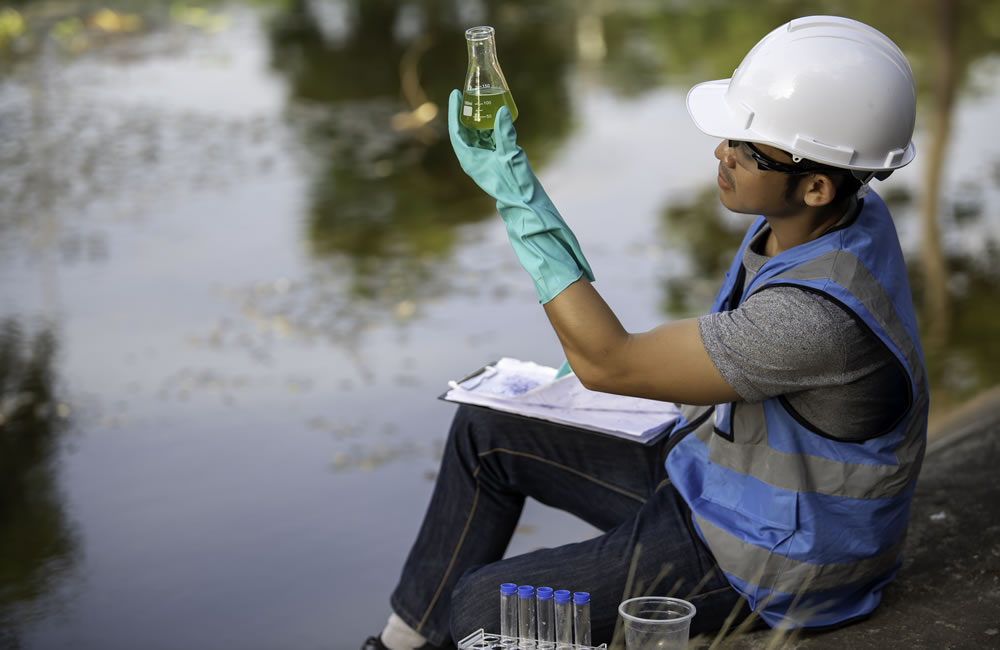
These are genuine achievements. A connection at the tap is better than a walk to the river. But audit findings and parliamentary disclosures indicate that water testing frequency, data transparency, and corrective follow-up remain uneven. Particularly in smaller towns and aspirational districts. The JJM has supported over 2,000 water quality testing laboratories. It has not ensured that all of them function, that results are publicly disclosed, or that contamination events trigger accountability rather than denial.
Reuters, in a July 2024 investigation, reported that India faces a water crisis threatening its fast-growing economy, with shrinking rivers, drying lakes, and falling groundwater levels. Approximately 200,000 people die each year due to contaminated water. The government’s own targets acknowledge the scale of the gap: recycling 70% of wastewater by 2030 (up from 20% currently) and reducing dependence on rivers and groundwater to below 50% from roughly 66% today.
Where CSR Fits in and Where it Falls Short
Corporate India is not absent from the water space. Ministry of Corporate Affairs data shows that Indian companies collectively spend between Rs. 7,000 and Rs. 10,000 crores annually on water, sanitation, and environmental sustainability, which accounts to 10-12% of total CSR expenditure. Programmes include community water purification systems, rainwater harvesting, watershed development, lake rejuvenation, and school-level WASH initiatives.
Some of this work is genuinely impactful. Mphasis, through its One Billion Drops initiative in partnership with United Way Bengaluru, is implementing decentralised rainwater harvesting and percolation well projects addressing Bengaluru’s groundwater crisis. ITC and Tata Chemicals have documented water-positive outcomes in drought-prone agricultural communities. Hindustan Unilever’s Project Prabhat has deployed watershed and wastewater management across multiple states.
But a 2026 analysis by The CSR Universe, drawing on MCA disclosure data, found that a large share of CSR water interventions remains site-specific and output focused. Disclosures prioritise infrastructure built and beneficiaries reached rather than water quality outcomes, disease reduction, or long-term system resilience. A company can build a community water purification unit, photograph the inauguration, and file it as a completed CSR project with no obligation to test water quality in that community twelve months later.

This is a reporting gap and a reflection of a deeper systemic misalignment. CSR operates within a framework that incentivises visibility over viability, short-term outputs over long-term public health outcomes, and geographic concentration over basin-level planning. Water crises, however, are not localised problems; they are hydrological, ecological, and governance failures that transcend administrative and corporate boundaries.
As a result, CSR interventions often function as isolated patches on a structurally fractured system. A village may receive a water purification unit while its upstream watershed continues to degrade. A lake may be rejuvenated even as untreated sewage flows into connected water bodies. Corporates may report being “water positive” within their operational boundaries while externalising water stress into surrounding communities through supply chains.
In effect, CSR risks becoming a parallel, project-based micro-solution layer that coexists with systemic failure. Without integration into public water governance frameworks, regulatory accountability, and basin-wide planning, these interventions, however well-intentioned, cannot alter the trajectory of India’s water crisis. Instead, they may inadvertently normalise a cycle where corporations repeatedly fund the symptoms of water distress without addressing the structural drivers that reproduce it.
The 600 Million Question
Nearly 600 million Indians face high-to-extreme water stress. Climate change is deepening droughts, depleting aquifers, and making monsoon rainfall increasingly unpredictable. The National Institute of Disaster Management has emphasised that water mismanagement is a primary driver of both urban water crises and rural water insecurity.
The August 2025 Punjab floods illustrated the other edge of this crisis. The Ravi River saw a record flow of 14.11 lakh cusecs, exceeding safe capacity by 4.41 lakh cusecs, the worst flood in the river’s documented history. Of that flow, 85% came from unregulated tributaries and nullahs. This is not a climate story alone. It is a water governance story. And it has corporate dimensions: the industries whose operations affect drainage, whose effluents enter groundwater, whose packaging clogs urban waterways, are part of the system that is failing.
Accountability Points
The accountability case has three clear dimensions.
- First, CSR water programmes must measure outcomes, not outputs. Building a water purification unit is an output. Testing the water quarterly, disclosing the results publicly, and maintaining the unit over three years is an outcome. MCA should require CSR disclosures to include at least one health or quality indicator for every water-related project, not merely the number of beneficiaries reached.
- Second, corporate water users must be accountable for what they extract, not only what they restore. India’s large manufacturers — textiles, beverages, pharmaceuticals, steel — are among the country’s largest groundwater users. Their CSR programmes fund conservation projects in communities. Their operations deplete the same aquifers. The BRSR framework requires water footprint disclosure for listed companies; it does not yet require extraction to be weighed against community water availability in the same watershed.
- Third, place-based coordination is essential. A single drought-stressed district may receive three competing watershed projects from three different companies, while an adjacent district with equal need receives none. A government-facilitated corporate water investment platform would replace duplication with coverage.
Conclusion
Sunita Verma’s son recovered. Many of his neighbours did. Seven people in Bhagirathpura did not. Their deaths were recorded in a district health report. They will not appear in any corporate CSR annual report, because no company has accepted responsibility for the water quality of the cities they work in, the watersheds their factories draw from, or the pipe networks their effluents eventually reach.
India is at a genuinely critical juncture on water. The infrastructure investment of the past five years has been large and real. The quality, governance, and long-term resilience investment has lagged badly. Corporate CSR has funded taps and purifiers. It has not yet funded accountability.
The vision India needs is not a country where every village has a water connection. It is a country where every connection delivers water that will not kill you. That is not a technical aspiration. It is a moral minimum. And achieving it will require every actor in the system to stop counting the infrastructure they built and start measuring the health of the people who depend on it.
Water is not a CSR category. It is a right. India’s corporate sector must begin to treat it as one, not by doing more projects, but by demanding that every project it funds works, staying long enough to know whether it did, and accepting, publicly, the consequences when it does not. That is what accountability means. That is what the seven people of Bhagirathpura deserved.
Clear Cut Wash Desk
New Delhi, UPDATED: April 26, 2026 05:00 IST
Written By: Tanmay J Urs