


- India’s AI boom is driving massive investment and innovation, but it is also increasing electricity and water consumption through the rapid expansion of data centres, raising environmental concerns.
- While AI can improve renewable energy integration, grid efficiency, and industrial decarbonisation, India’s regulatory framework still lacks mandatory environmental standards for AI infrastructure.
- The future impact of AI on climate will depend on policy decisions around renewable power, resource efficiency, transparency, and sustainable data centre development.
When the India AI Impact Summit wrapped up in New Delhi this February, the headline numbers were about investment: over $200 billion in commitments, a $15 billion data centre hub from Google in Visakhapatnam, and a national AI market expected to grow from roughly $9.5 billion in 2024 to $130 billion by 2032. Less discussed, but arguably just as important, was a smaller line in the summit’s closing declaration, a commitment to “People, Planet, and Progress.” That word, Planet, is where the more complicated part of India’s AI story sits.
AI is often framed in Indian policy circles as a climate solution: a tool for forecasting renewable output, cutting grid losses, and optimising industrial energy use. That framing is not wrong. But it is only half the picture, and a growing number of researchers, environmental groups and even government-linked committees are starting to say so publicly.
The resource question
Data centres are essential for running AI models at scale. However, large amounts of electricity and water are required for data centres. According to projections shared at the AI Impact Summit, data centre electricity demand in India could rise nearly fivefold by 2030, with AI facilities alone accounting for close to 5% of the country’s total power consumption by that year. Water use is projected to more than double over the same period, from about 150 billion litres in 2025 to roughly 358 billion litres in 2030.
It is worth noting these are projections, not certainties, and they depend heavily on how fast AI adoption actually grows and how efficiently new facilities are built. Still, the scale is significant enough that observers have pointed out that roughly a third of India’s 213 data centres already sit in high-temperature zones, where cooling demands are naturally higher. India holds about 18% of the world’s population but only around 4% of its freshwater resources, so even a modest increase in water-intensive infrastructure lands in an already tight system.
Industry representatives generally push back on the framing that this is a crisis in the making. Several data centre operators have pointed to ongoing investment in renewable-powered facilities and more efficient cooling technology, arguing that newer builds are far less resource-intensive than the older facilities driving current estimates. Whether that improvement in efficiency keeps pace with the sheer growth in AI usage is, at this point, an open question rather than a settled one.
Where AI helps the climate case
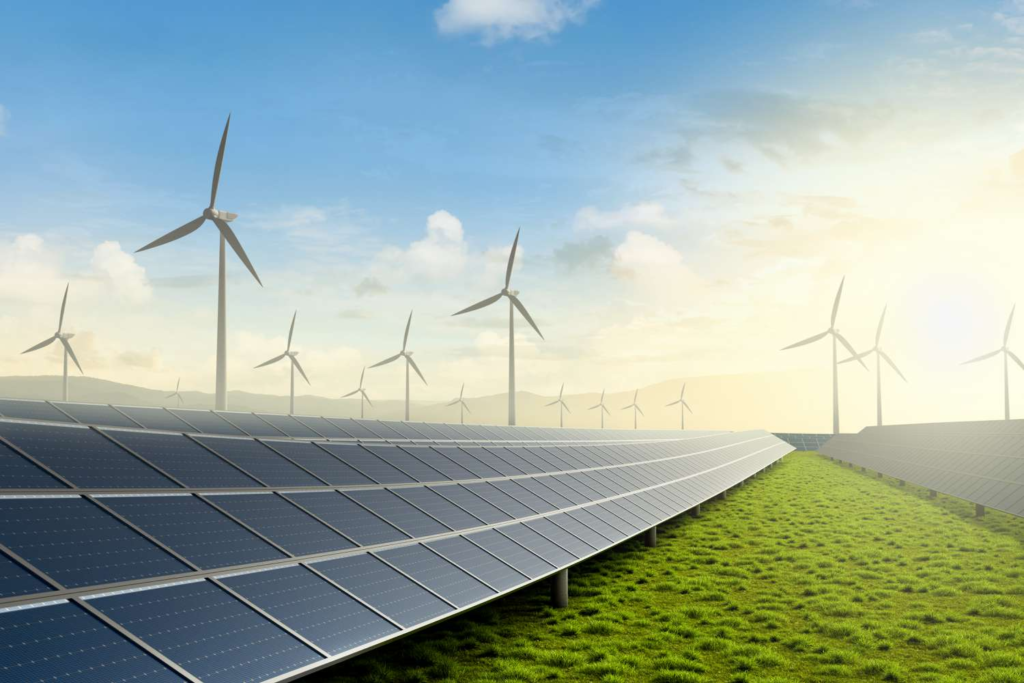
The case for AI as a climate tool is not just rhetorical. A joint casebook on energy from IndiaAI and the International Energy Agency documents 15 real-world deployments across smart grid optimisation, renewable integration, demand forecasting and efficiency. For example, Google DeepMind’s wind-forecasting models can forecast farm production up to 36 hours in advance, allowing grid operators to plan for renewable supplies instead of resorting to fossil-fuel backup when production is low. It has been attributed to machine-learning-aided grid management, which has increased the value of wind energy by approximately 20% in certain markets.
In India specifically, AI-based load forecasting and predictive maintenance are being explored as ways to reduce transmission and distribution losses, which currently run as high as 20% in parts of the grid.[5] In heavy industry – steel, cement and chemicals, sectors that are both carbon-intensive and difficult to decarbonise. AI-driven digital twins are being used to model efficiency gains before committing capital to physical upgrades.
Taken together, this is a genuine trade-off rather than a simple story of harm. AI’s resource footprint is real and growing. Its potential contribution to grid efficiency, renewable integration and industrial decarbonisation is also real. Neither side of that equation cancels out the other.
The regulatory gap
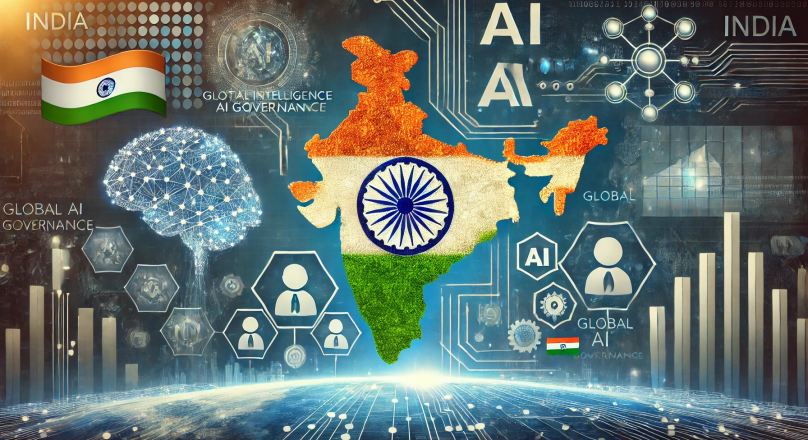
What most observers agree on is that the policy framework has not caught up with either side of this trade-off. India’s AI Governance Guidelines, which draw on the Reserve Bank of India’s FREE-AI Committee report, reference energy efficiency and “frugality” as a principle but do not lay out specific, enforceable environmental requirements. There is currently no mandate for data centres to go through formal Environmental Impact Assessments, and no standard requirement to publicly disclose Power Usage Effectiveness or Water Usage Effectiveness figures. Even the FREE-AI report’s lead author has acknowledged this as a gap that future guidelines need to address.
Some steps are underway. Extended Producer Responsibility rules will require importers of AI hardware to recycle 70–80% of specialised chips by 2026. Policy analysts have called for data centres to be brought under environmental clearance processes and for operational transparency to become a baseline requirement, not a voluntary disclosure.
What to watch
India’s AI ambitions and its climate commitments are not inherently at odds, but they are not automatically aligned either. The outcome will likely depend less on the technology itself and more on the choices made around it in the next few years: where new data centres are sited, whether they run on renewable power, whether efficiency standards are mandatory or aspirational, and whether communities near water-stressed facilities have any say in the process. Those are policy questions, not technical ones, and they remain largely unanswered.
Clear Cut Research Desk
New Delhi, UPDATED: July 04, 2026 09:00 IST
Written By: Asmita Yadav