
- Climate change and extreme weather events are making Indian agriculture increasingly vulnerable, causing crop losses, threatening farmer livelihoods, and putting food security at greater risk.
- Experts stress that shifting from disaster relief to climate-resilient farming through better forecasting, sustainable practices, crop insurance, and stronger rural policies is essential for the future of Indian agriculture.
Agriculture Under Growing Climate and Disaster Risks
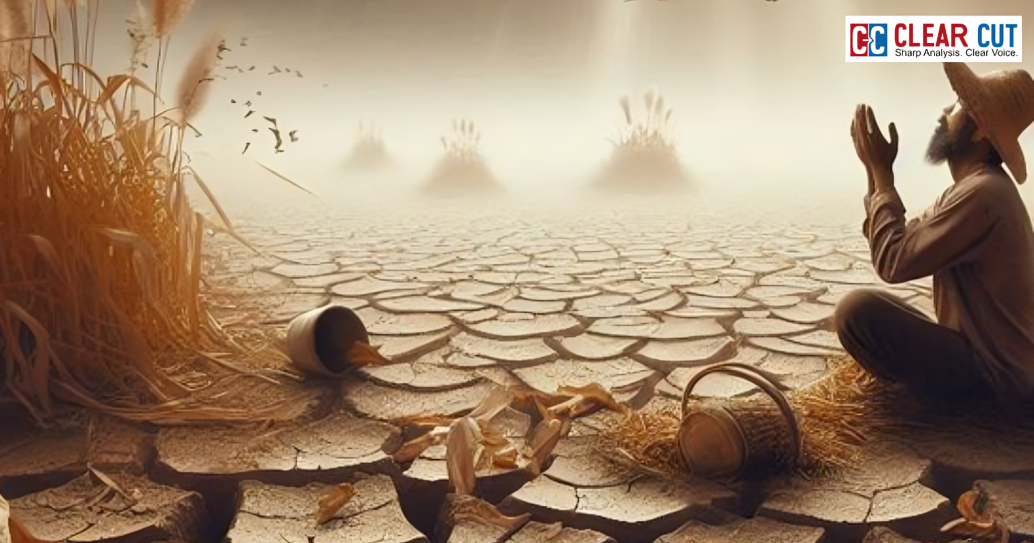
India’s agricultural sector is becoming more prone to the dual effects of natural calamities and climate change. In recent years, farmers in various regions of the country have suffered from an increasing frequency of extreme weather events such as unseasonal rain, hailstorms, droughts, floods, cyclones, heat waves, cold waves, and high winds. Such phenomena often cause destruction of crops, loss of agricultural production, deterioration of the quality of soil, disruption of the harvesting process, and increased economic risks for farming communities. It is especially unfortunate when crops get ruined just before harvest after spending months on hard work and financial investments.
Apart from the initial damage and losses associated with specific disasters, there is a new emerging threat in the long run. The unpredictable and erratic nature of climatic conditions are making traditional agricultural practices and seasonal activities difficult for the farmers. It is becoming difficult to predict when rains will fall, when temperatures will rise, how long the dry spell will last, and how frequently the extreme climatic conditions will occur. The old traditional wisdom associated with farming decisions such as planting and harvesting periods is being made unreliable due to climate change. Events which used to be occasional occurrences have been observed regularly, reflecting the impact of climate change in agriculture. This evolving relationship between climatic changes and disasters is rendering agriculture fragile and calls for an urgent need for climate adaptation practices, disaster management plans, effective early warning systems, and crop insurance, among others.
Expanding Crisis from Food Grains to Horticulture
In addition to the growing crisis experienced by food grains due to climate change, the impact of disaster and climate change is becoming more evident in the horticultural sector, which too faces severe threats from the adverse effects of climate change and environmental degradation. Fruit, vegetable, and plantation crops are facing difficulties due to changing weather conditions including heat waves, unseasonal rains, hailstorms, droughts, pest outbreaks, etc. Compared to field crops, horticultural crops are more vulnerable to slight fluctuations in climatic factors like temperature, rainfall, and humidity.
This is very evident in the case of apple production in the Himalayan states of India like Himachal Pradesh and Jammu & Kashmir. In the production of apples, adequate winter chilling through cold temperature and snowfall is critical. However, in recent years, there has been a reduction in snowfall and warming trend resulting in decreased chill hours in several places, thereby causing problems like flower development, poor productivity, quality of apples, and forcing apple orchards to move to higher altitude zones. Likewise, climatic stresses are also affecting other fruits like mangoes, citrus fruits, grapes, bananas, and vegetables in India. Late rains when the plants are in the flowering and fruiting phase, temperature fluctuations, strong wind, and pests/diseases are leading to heavy economic losses for farmers.
This increased exposure of the horticultural sector to climate impacts has broader consequences than just reducing farm incomes. Given the role played by fruits and vegetables in providing nutrition, vitamins, and a variety of foods in our diets, any disturbances to horticulture can have direct impact on nutritional security and food prices.
Disaster and Agricultural Losses around the World
The problems facing agriculture are only a reflection of an extensive global problem that involves disasters. All across the globe, extreme events and disasters are becoming increasingly prevalent in affecting food production and rural livelihoods. According to Food and Agriculture Organisation the United States (FAO-UN), natural disasters and extreme events caused USD 3.8 trillion worth of crop and livestock production loss globally between 1991 and 2021, averaging USD 123 billion per year. These losses represent a significant share of global agricultural production and highlight the enormous economic burden disasters impose on the agriculture sector.
The occurrence of disasters is increasing by each passing year due to a combination of factors. Natural phenomena such as floods, drought, cyclone, heat waves, fires, and storms are becoming more frequent in their occurrence and affecting wider areas and populations. This, coupled with climate change, environmental damage, urbanization, and socio-economic risks, have led to an increase in disasters, especially affecting agriculture, which depends on weather conditions immensely.
The impact of this loss is more severe on developing countries, especially poor and poorer nations where agriculture provides the main source of livelihood and rural economy. Small farmers, who are generally not financially insured and protected, as well as those who don’t have access to proper water infrastructure, insurance and climate-proof agricultural technology, are at maximum risk. The loss experienced is not confined to food grains alone but also includes fruits and vegetables, livestock, fishery, etc.
These facts are clear evidence of how disaster risk has shifted from being an occasional phenomenon to a regular one which impacts agricultural sustainability, food security, nutrition, employment, and development in general across the globe. This new reality requires an increased emphasis on climate-proof agriculture, disaster risk reduction, forecasting, and sustainable natural resource management strategies.
Agricultural Vulnerability in India
India’s agricultural sector is extremely vulnerable to disasters and variations in the climate owing to the high dependence of the sector on the natural resource endowment and monsoon rainfall patterns. It has been estimated that a majority of India’s agricultural lands remain rain-fed; hence, the agricultural output from such areas becomes susceptible to changes in climatic parameters. In addition to irregular monsoon and lack of timely rains, long periods of dry spell, floods, tropical storms, hailstorms, and heat waves have become increasingly common in the agricultural zones of India. On the other hand, several river basins and farming zones have simultaneously been experiencing droughts as well as floods.
Furthermore, the vulnerability of Indian agriculture can be accentuated due to the presence of small and marginal farmers who lack adequate financial capabilities, own small pieces of land, lack irrigation facilities, and do not have much access to insurance policies as well as modern technologies. The current literature and evidence from scientific experiments are indicating that the impact of changing climatic factors on Indian agricultural yields, cropping patterns, irrigation patterns, soil quality, and pest population dynamics has become increasingly common.
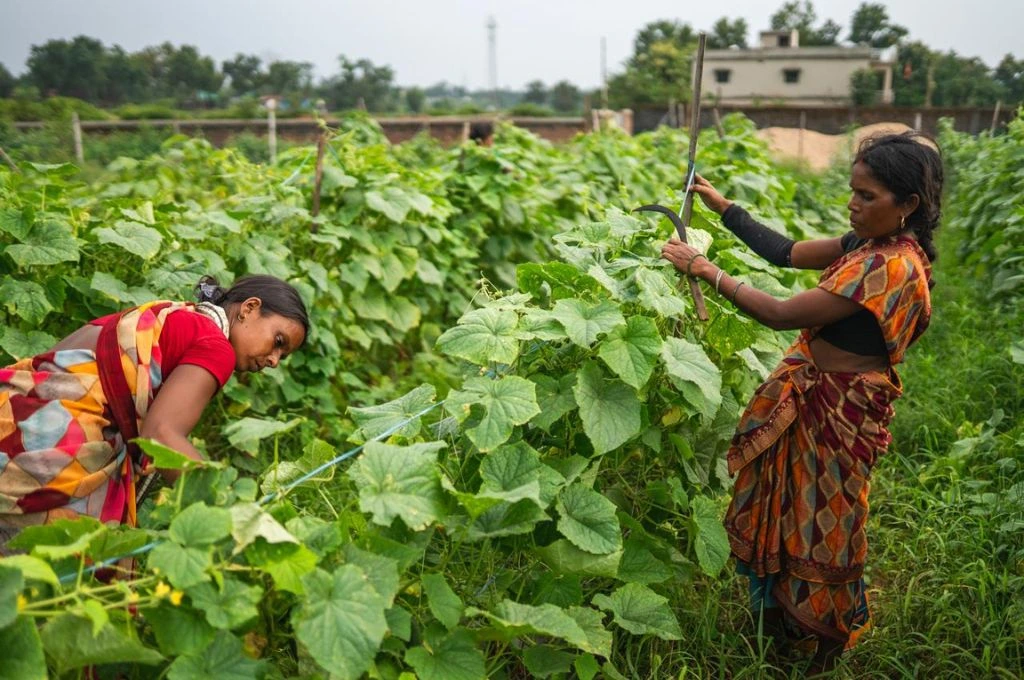
Disaster consequences go well beyond mere crop failure. Severe weather events affect livestock, fisheries, irrigation systems, warehouses, transport systems, rural markets, and supply chains as well. Disasters affect employment and lead to debt and financial insecurity, making rural areas economically vulnerable. Due to increase in frequency and severity of disasters, the period during which people recover from disasters and prepare for the next one is getting shorter. As a result, farming households keep experiencing recurrent vulnerability.
In recent times, agriculture in India has been witnessing increased input costs, volatile market prices, water table depletion, and climate variability at the same time. This has made farming in India a difficult task, and a number of issues can be anticipated.
What Does the Future Hold Regarding Climate Change?
The future outlook on climate change is not favourable for the agriculture industry of India, and it may get worse in the coming years. According to scientific analysis conducted by both national and international bodies, South Asia, including India, is likely to face a rise in temperatures and an increase in the frequency and intensity of heatwaves, climate variabilities, and unpredictability in monsoons. These changes are likely to pose great threats to agricultural production, water availability, and rural livelihoods.
The agriculture sector is very sensitive to climate factors, and even minor changes in temperature or rainfalls have a huge effect on farming processes. Increase in temperature affects a number of different crops, especially wheat that suffers immensely from high temperatures at some important stages of its growth process. Similarly, climate variability causes problems for different food crops, including rice, pulses, and oilseeds due to late monsoons, long droughts, sudden rainfalls, and water scarcity.
The horticultural crops would be subject to greater climatic challenges due to their sensitivity towards changes in temperature and humidity. The alterations in the climate pattern due to variations in winter temperatures, less snowfall, rainfall patterns, and the zones of the climatic belt have influenced the growth of fruits and altered fruit growing pattern in several regions of India. Likewise, other types of crops like vegetable crops, plantation crops, and floriculture would be subjected to climatic changes which affect flower growth and bearing, quality, and marketing.
In addition to this, climate change is also expected to bring about frequent weather disturbances like flood, drought, cyclone, hailstorm, cloudburst, and heat waves. Such climate challenges not only pose threats to the production of crops but also to the infrastructure in rural India and to its water resources and overall food security system. As can be seen from the above, climate change is no more a future problem; it has already impacted agricultural systems and disaster management practices in India.
Threats to Food Security and Nutrition
Climate change and disaster effects on agriculture go beyond the reduction in crop yields; they pose serious threats to food security, nutrition, and the health of the populace. Agriculture continues to be the major provider of food and sources of livelihood in most developing countries including India. Any disruption in agricultural production is bound to affect the supply chain of food.
Severe weather conditions like droughts, floods, heatwaves, cyclones, and unusual rains can result in reduced crop yield, damage in the storage facilities, disruption in transportation systems, and the unavailability of basic food commodities. The above problems will have a direct impact on the cost of food thereby increasing its expense. This will affect most small and marginal households that use a substantial amount of their budget in purchasing food.
The threat is much greater in horticultural produce because they are sources of vitamins and micronutrients required for proper nutrition.
The reduction in agricultural yields resulting from climate change could lead to low dietary diversity and hence malnutrition problems, especially for children, women, and vulnerable socio-economic groups. The reduction in livestock, fishery, and dairy production due to climatic pressures could exacerbate food insecurity, thereby undermining livelihoods in rural areas.
At the global scale, various organizations have sounded the alarm bells over climate change, indicating that there might be an undoing of the many years’ effort towards minimizing world hunger levels and achieving food security. The combination of climatic change, increasing populations, and environmental degradation is putting more strain on our already stretched food system.
Human Side of Climate Distress
In addition to economic costs linked to disasters and climate change, there is another significant human aspect that deserves consideration. Increasingly, farmers from different areas are facing situations where they experience uncertainty, fear, and financial strain due to the changing climate conditions that make forecasts difficult. Farmers’ calendars, along with their traditional weather prediction mechanisms, are becoming less reliable than before, making crop management much harder and more challenging.
Farmers usually spend a lot of money, effort, and time planting their fields, using either their savings or borrowing funds. Damage caused to their crops due to unseasonable rain, drought, flooding, hailstones, or heat damage affects not only their ability to make profits but also influences their capacity to repay debts and earn enough for a decent living.
Apart from the initial financial burden, climate-based natural disasters have other far-reaching consequences, such as their effects on social well-being, jobs, migrations, and the general standard of living in rural regions. The delay in assessment and compensation may further complicate the situation for the affected farmers. Although the process of disaster management and compensation is essential in handling the situation, it is not sufficient for addressing climate-related losses.
Another equally important problem faced by the farming community is the sustainability of agriculture practices. With increasing uncertainties in weather patterns, many farmers doubt whether traditional agricultural activities are sustainable. Such concerns highlight the importance of adopting adaptive practices that will enable farmers to cope with future changes.
Pathway Ahead: From Relief to Resilience
In light of the growing frequency and intensity of disasters and climate risks, there is a dire need to move away from the present approach of relief and compensation, which is largely reactionary in nature, to one that is proactive and focuses on building resilience and reducing risks. Building the resilience of agriculture requires a multi-dimensional approach that involves efforts across policy, institution, technology, and community levels.
Building climate-resilient agriculture has now become imperative in order to reduce vulnerability and promote sustainable agriculture. This would involve crop and livelihood diversification, efficient use of water resources, conservation agriculture, agroforestry, improved soil health, and the use of drought-tolerant and flood-resistant crops as well as salt-tolerant crops. In addition, in the case of horticulture, orchards, scientific crop planning, and proper agro-climatic zoning will assume greater importance.

Improving weather forecasting and early warning mechanisms is also one area that requires attention. There is a need to convert advances in the field of meteorology and climate science into practical weather and climate forecast advisories that would facilitate sowing, irrigation, pest management, and harvesting decisions by farmers.
In terms of policies, the process of reducing disaster risks and adaptation to climate changes needs to be fully incorporated into agricultural and rural development plans. This can be achieved through alignment with international frameworks like the United Nations Office for Disaster Risk Reduction Sendai Framework for Disaster Risk Reduction, which would make the approach more systematic and cohesive in terms of agricultural risk management. Crop insurance and risk financing mechanisms, as well as agricultural research and infrastructure that is adapted to climatic conditions, must also be considered crucial.
It is also necessary to focus on capacity building and institution building. In order to adapt to new conditions, farmers need to have access to scientific information and educational and financial systems. Strengthening of community-level institutions, farmer producer organizations, cooperatives, and other forms of local governance would greatly contribute to this process.
Transformation through Crisis: Moving Forward
It is evident that the impact of climate change and disasters on agriculture signals the start of an era when agricultural systems will undergo significant transformation. Losses incurred due to the destruction of crops, reduced productivity, scarcity of water resources, altered agro-climatic zones, and uncertainties about the future are all indicative of a transformation in agriculture that the current state of affairs necessitates. This proves that climate change is not just an environmental issue anymore; it is an issue that has developmental and socio-economic implications.
However, in light of the crisis, there are opportunities to re-engineer agricultural systems in a more sustainable manner. It is clear from the increasing voice emanating from the farmers’ communities that apart from the need for relief and compensation, there is an urgent requirement for a paradigm shift that addresses the need for sustainable development of agriculture and makes it more adaptable and resistant to future uncertainties.
The task of ensuring protection of agriculture against the ever-growing effects of climate change and disasters goes beyond agriculture to become an absolute national imperative tied to development, poverty alleviation, environmental protection, and social stability. How resilient the country will make its agriculture today will define how well it can provide for itself in terms of food and nutrition security in the future and also promote sustainable development. It is clear that delays in acting on this agenda will simply create more vulnerabilities and cost us dearly socially and economically in the future.
Clear Cut Climate Desk
New Delhi, UPDATED: July 06, 2026 03:45 IST
Written By: Dr Satendra Singh