
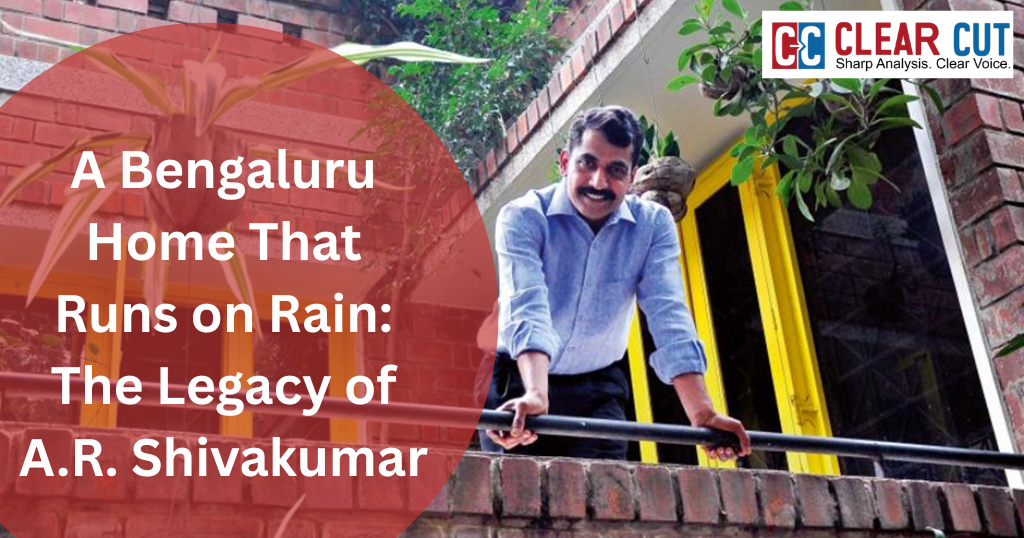
A Bengaluru home meets all its water needs through rainwater harvesting and greywater recycling, following innovations by Dr. A.R. Shivakumar. This model offers a sustainable, decentralised, and low-cost solution for urban water security.
A house in Bengaluru has shown that it is possible to live comfortably using only rainwater. The home meets its entire domestic water demand through harvested rainwater for drinking, cooking, bathing, and cleaning. It also recycles greywater for secondary use. This sustainable model connects directly to the work of water conservation expert Dr. A.R. Shivakumar, whose innovations in rooftop rainwater harvesting have influenced urban water practices across Karnataka.
At a time when Bengaluru struggles with falling groundwater levels and rising dependence on private water tankers, this example offers a practical solution. It shows that water security does not always require massive infrastructure. It can begin at home.
A House That Runs on Rain
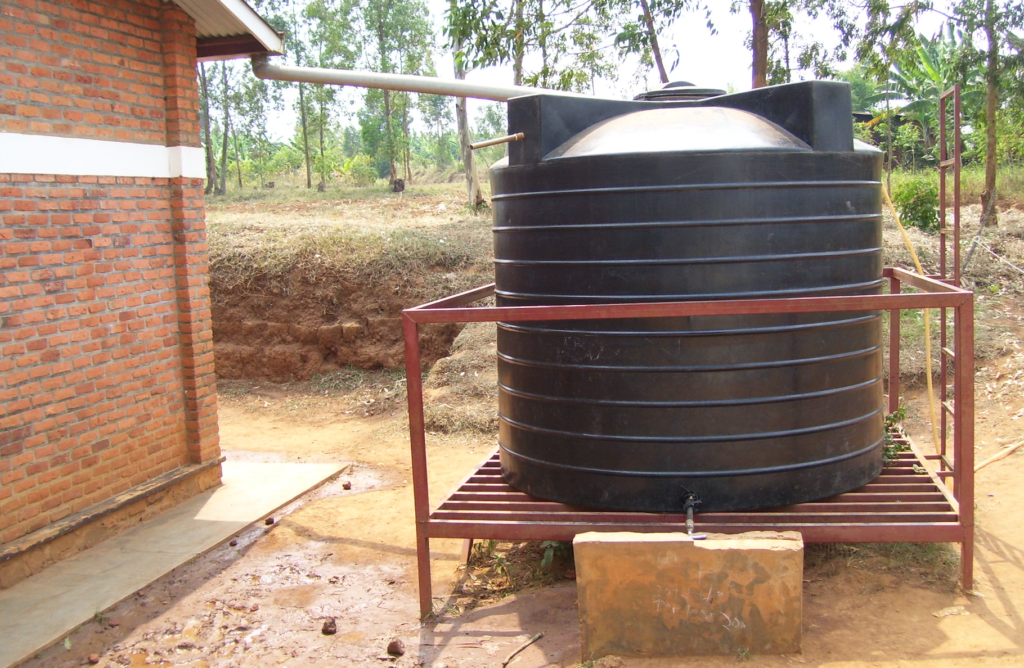
The Bengaluru house captures rainwater from its rooftop during the monsoon season. The collected water passes through a simple but effective filtration system designed on the principles promoted by Dr. A.R. Shivakumar, former Principal Research Scientist at the Centre for Sustainable Technologies, Indian Institute of Science (IISc), Bengaluru.
The filtered water enters underground storage tanks. From there, it supplies the household throughout the year. The system does not rely on complicated machinery. It uses gravity-based filtration and careful storage planning.
According to water management studies cited by sustainability experts, Bengaluru receives sufficient annual rainfall to meet a large part of its domestic water demand if harvested efficiently. This home proves that claim in practice.
The Man Behind the Movement
Dr. A.R. Shivakumar has spent decades advocating for rainwater harvesting as a practical urban solution. He has installed and demonstrated working rainwater systems in his own residence since the 1990s. His work has been recognised by global intellectual property forums, including the World Intellectual Property Organization (WIPO), which featured his rainwater filter innovation as a case study in low-cost environmental technology.
His filtration design removes debris and impurities before water enters storage tanks. It works without high energy consumption. It adapts easily to Indian housing structures. Urban local bodies and technical institutions have frequently cited his research while framing rooftop harvesting guidelines.
Shivakumar consistently argues that water should not be treated as a scarce commodity in a rainfall-rich region. Instead, cities must learn to capture and manage what nature already provides.
Greywater Recycling for Complete Efficiency
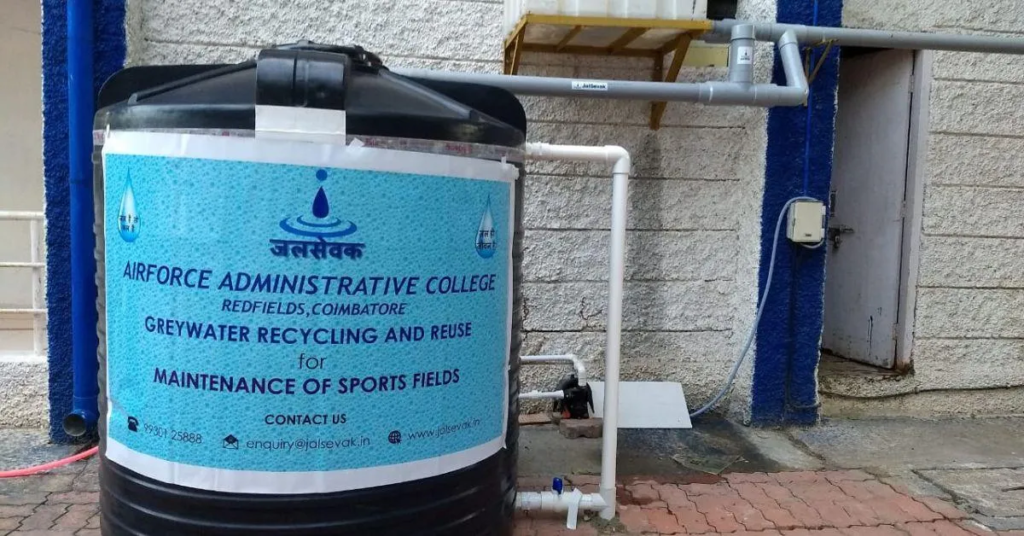
The Bengaluru house does not stop at rainwater harvesting. It also recycles greywater from bathrooms and sinks. The treated water is reused for gardening and flushing. This reduces freshwater demand and minimises wastewater discharge.
Urban water planners have repeatedly recommended greywater reuse in policy consultations related to Bengaluru’s water crisis. Experts from the Karnataka State Pollution Control Board and municipal engineering departments have emphasised that decentralised reuse systems can reduce pressure on sewage networks.
This integrated approach ensures that every drop serves multiple purposes before returning to the soil.
Bengaluru’s Growing Water Crisis
Bengaluru faces recurring summer shortages. Reports from the Central Ground Water Board have documented declining groundwater levels in several parts of the city. Rapid urbanisation has reduced open spaces that once allowed natural recharge.
Many neighbourhoods rely on tanker water during peak summer months. Residents pay high prices for transported water, which often comes from over-extracted rural borewells.
Urban hydrologists have warned that dependence on external water sources creates long-term vulnerability. Rainwater harvesting and decentralised recycling offer a way to reduce this dependence.
The example of this rain-powered house directly responds to that concern.
Nature as Teacher
Environmental advocate AR Shivakumar often frames water conservation as a learning process from nature. In sustainability forums and public lectures, he has described nature as the ultimate teacher. His philosophy connects science with ecological respect.
Sustainability storytellers have highlighted how his personal lifestyle reflects this belief. He uses minimal processed water. He demonstrates rainwater filtration publicly. He encourages citizens to observe rainfall patterns instead of ignoring them.
This mindset transforms water harvesting from a technical solution into a cultural shift.
Policy Relevance and Public Action
Rainwater harvesting is already mandatory in many parts of Bengaluru under municipal building regulations. However, enforcement remains uneven. Water policy analysts have noted that while rules exist, implementation depends heavily on citizen initiative.
The work of Dr. Shivakumar provides a model that policymakers can replicate. Technical feasibility has already been demonstrated. Cost barriers remain low compared to tanker expenses over time.
Experts associated with sustainable urban planning argue that governments should incentivise rooftop harvesting systems, provide training modules, and integrate water literacy into school curricula.
Social Impact Beyond One Home
The story of this house carries a larger message. It challenges the idea that solutions must always come from large institutions. It shows that individuals can influence public policy debates through demonstration and advocacy.
For middle-class families struggling with water bills, such systems offer financial relief. For low-income communities, decentralised harvesting can reduce dependence on uncertain supply chains.
For the city as a whole, widespread adoption can restore groundwater balance and improve long-term resilience.
Highlights
- A Bengaluru home meets its full water demand through rooftop rainwater harvesting.
- The system follows principles developed by Dr. A.R. Shivakumar of IISc.
- Greywater recycling further reduces freshwater consumption.
- Global intellectual property bodies have recognised Shivakumar’s filtration innovation.
- The model addresses Bengaluru’s groundwater depletion and tanker dependency.
A Blueprint for Urban India
This Bengaluru house represents more than architectural innovation. It stands as a working example of sustainable urban living. It reflects decades of advocacy by Dr. A.R. Shivakumar and demonstrates that rainwater harvesting is not theoretical.
As Indian cities confront climate change, erratic monsoons, and rapid population growth, decentralised water solutions will become essential. This model offers a blueprint grounded in science, simplicity, and respect for natural cycles.
Water security does not begin with mega projects. It begins with rooftops, filters, and informed citizens willing to act.
Clear Cut WASH, Climate Desk
New Delhi, UPDATED: Feb 16, 2026 05:00 IST
Written By: Samiksha Shambharkar