

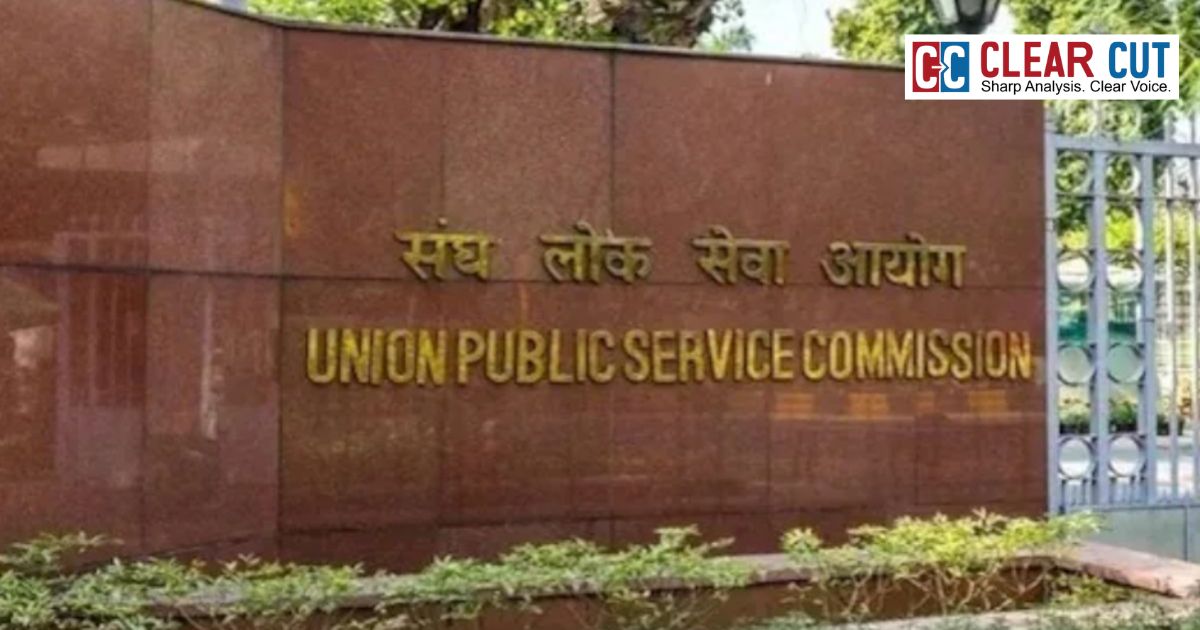
A recent decision by the Union government has changed how officers of the All India Services are allocated to state cadres. The revised policy affects officers selected through the Union Public Service Commission (UPSC) for the Indian Administrative Service (IAS), Indian Police Service (IPS), and Indian Forest Service (IFoS). The changes aim to bring greater balance, transparency, and administrative efficiency to cadre allocation, a process that directly shapes the careers of civil servants and the governance capacity of states.
What the Cadre Allocation Change Is About
Cadre allocation decides which state or group of states a newly recruited officer will serve in for most of their career. Earlier, this process relied heavily on officers’ preferences, along with reservation rules and vacancies. Over time, the system drew criticism for uneven distribution, with some states repeatedly receiving fewer officers while others attracted most preferences.
The Department of Personnel and Training (DoPT), under the Ministry of Personnel, Public Grievances and Pensions, has now revised the policy to correct these imbalances. The new framework changes how preferences, vacancies, and regional requirements interact during allocation.
Key Change in Preference Structure
One of the most significant changes lies in how candidates indicate their preferences. Earlier, candidates could choose individual states or limited options. Under the revised system, candidates must rank entire zones and then rank states within each zone.
India is divided into five zones, each grouping multiple state cadres. Officers must now provide a full preference list across all zones and cadres. This ensures that no cadre remains consistently under-preferred.
Officials from the DoPT have stated that this approach promotes “national integration of services” and reduces the concentration of officers in a few popular states.
Balancing Officer Choice and State Needs
The revised policy seeks to balance two competing objectives: the personal preferences of officers and the administrative needs of states. Several states, particularly in the Northeast, central India, and smaller hill states, have long faced staff shortages.
By restructuring preferences through zones, the government ensures a more equitable distribution of officers. This also aligns with the constitutional idea of All India Services, where officers serve beyond their home states to maintain neutrality and administrative cohesion.
Senior officials involved in policy drafting have noted that cadre imbalance affects service delivery, law enforcement capacity, and forest governance at the state level.
Impact on IAS, IPS, and IFoS Officers
The changes apply uniformly across all three All India Services. For IAS officers, cadre allocation influences postings in district administration, state secretariats, and central deputation. For IPS officers, it affects policing exposure, law and order responsibilities, and counter-insurgency experience. For IFoS officers, it determines the ecological regions they will manage, from forests and wildlife reserves to climate-sensitive zones.
Service associations have acknowledged that while the policy may reduce predictability for candidates, it strengthens the institutional character of the services.
Role of Reservation and Merit
The revised system continues to follow constitutional reservation norms for Scheduled Castes, Scheduled Tribes, Other Backward Classes, and Economically Weaker Sections. Merit ranking in the UPSC examination remains central to allocation, but it now operates within the zonal framework.
DoPT officials clarified that the algorithm still prioritises higher-ranked candidates, but within a structure that ensures all cadres receive officers over time.
Administrative Rationale Behind the Change
The Union government has defended the revision as an administrative necessity rather than a political decision. According to internal assessments shared with senior bureaucrats, several cadres reported vacancy levels that affected governance outcomes.
The revised policy also reflects recommendations made in earlier internal reviews of cadre management and observations raised during interactions between the Centre and state governments at conferences of Chief Secretaries and Directors General of Police.
Concerns Raised by Aspirants and Officers
Despite its objectives, the policy has raised concerns among civil service aspirants. Many worry about reduced certainty, especially those with family obligations or regional ties. Officers’ associations have asked the government to ensure transparent implementation and regular review.
However, former civil servants and administrative reform experts argue that the All India Services were never meant to function like local services. They stress that exposure to diverse regions strengthens professional capacity and national outlook.
Social and Governance Implications
Beyond individual careers, cadre allocation shapes governance quality. States with chronic officer shortages often struggle with the implementation of welfare schemes, policing, and environmental management. A more even distribution can improve administrative reach in underserved regions.
From a social perspective, officers serving outside their home states may bring new perspectives, reduce local elite capture, and strengthen institutional accountability. The revised policy reinforces this broader public interest dimension of civil services.
Highlights of the Revised Cadre Policy
- The Centre has revised cadre allocation for IAS, IPS, and IFoS officers.
- Candidates must now rank zones first, then states within zones.
- The policy aims to correct long-standing cadre imbalances.
- Merit and reservation rules continue within the new framework.
- The Department of Personnel and Training oversees implementation.
- States with staff shortages are expected to benefit.
Looking Ahead
The revised cadre allocation policy marks a structural shift in how India manages its elite civil services. Its success will depend on transparent implementation, periodic review, and responsiveness to genuine concerns raised by officers.
While the policy may challenge individual preferences, it reinforces the foundational idea of the All-India Services: serving the nation across regions, cultures, and administrative contexts. In the long run, a more balanced cadre system could strengthen governance where it is needed most.
Clear Cut Education Desk
New Delhi, UPDATED: Jan 29, 2026 09:00 IST
Written By: Samiksha Shambharkar