
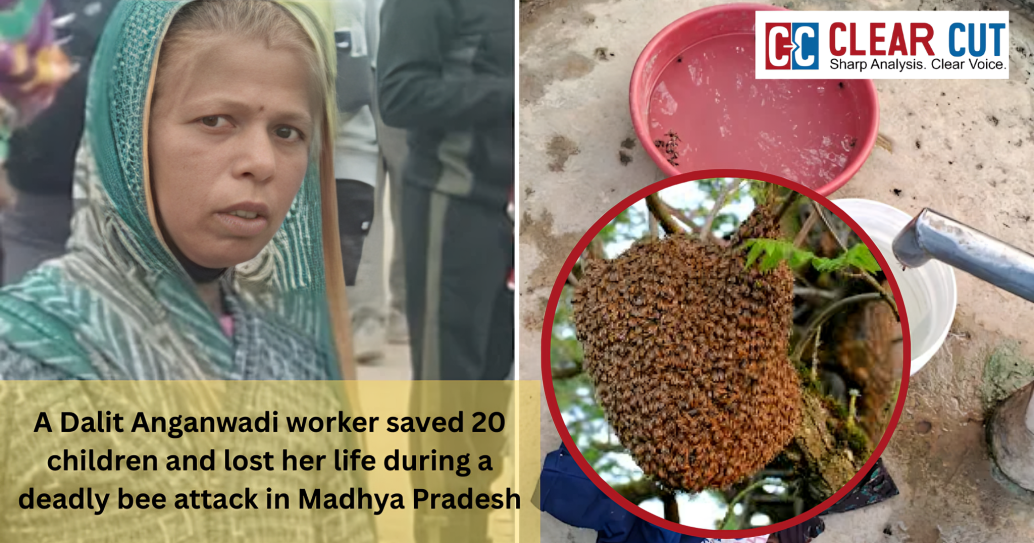
A Dalit Anganwadi worker, Kanchan Bai Meghwal, died after saving nearly 20 children during a deadly bee attack at a government school in Madhya Pradesh, highlighting courage, caste, and invisible frontline labour.
A quiet government school day in Madhya Pradesh turned into a moment of extraordinary sacrifice when a sudden bee attack created chaos among young children. In the middle of panic and pain, an Anganwadi and mid-day meal worker, Kanchan Bai Meghwal, stood between danger and life. She saved nearly 20 children. She did not survive.
This incident is not just about a tragic death. It is about invisible frontline workers, caste and gendered labour, and how everyday courage often goes unnoticed until it demands the highest price?
What Happened Inside the School Premises?
The incident occurred at a government school in Madhya Pradesh when a swarm of bees suddenly attacked the premises during school hours. Children, many of them very young, panicked and began running in different directions. Teachers and staff tried to shield them, but the attack escalated quickly.
Kanchan Bai Meghwal, who worked as a mid-day meal and Anganwadi helper, immediately stepped in. Witnesses later told district officials that she physically shielded children, pushed them into safer spaces, and absorbed the brunt of the attack herself. By the time help arrived, nearly 20 children were safe. Kanchan Bai had suffered multiple stings and collapsed soon after.
Doctors later declared her dead.
Immediate Government Response and Official Statements
Following the incident, the Madhya Pradesh government announced ex-gratia compensation for Kanchan Bai Meghwal’s family. Chief Minister Mohan Yadav publicly acknowledged her sacrifice and directed district authorities to ensure financial assistance to her next of kin.
According to state officials from the Women and Child Development Department, the compensation was granted under disaster and duty-related death provisions. The district collector also confirmed that the administration would explore additional support measures for the family, including education assistance for her children, if applicable.
These announcements brought brief attention to the tragedy. But they also raised deeper questions about safety, recognition, and the working conditions of grassroots workers.
The Role of Anganwadi and Mid-Day Meal Workers
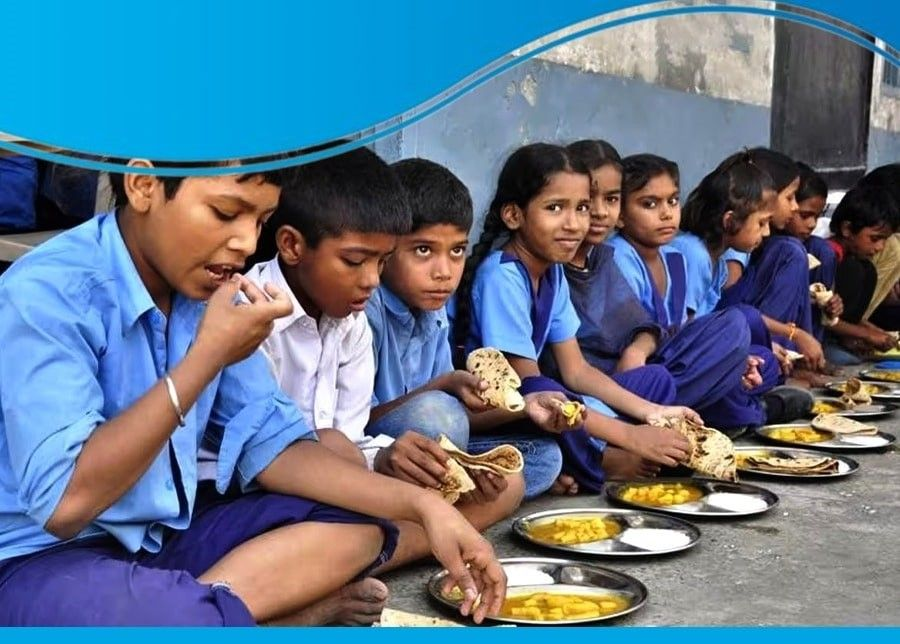
Anganwadi and mid-day meal workers form the backbone of India’s child nutrition and early education system. They ensure food, basic health monitoring, and care for millions of children every day. Yet, they are not classified as formal government employees. Most receive honorariums rather than salaries, limited social security, and minimal insurance coverage.
Kanchan Bai Meghwal belonged to this category of workers. Her job description did not include disaster response. Yet, when danger arrived, she acted instinctively to protect children.
Officials from the Integrated Child Development Services (ICDS) network have repeatedly highlighted that Anganwadi workers face occupational risks without adequate safety protocols. Incidents involving animal attacks, fire accidents, and structural hazards in schools are not rare, especially in rural areas.
Caste, Gender, and Invisible Labour
Kanchan Bai Meghwal was a Dalit woman. Her story resonated widely because it reflects how caste and gender intersect in frontline public service. Dalit women disproportionately occupy the lowest-paid, most precarious roles in welfare delivery systems.
Social activists and rights groups pointed out that her sacrifice gained attention only after her death. During her life, her labour remained largely invisible. This pattern is not unique. Across India, Anganwadi and mid-day meal workers, most of whom are women from marginalised communities, carry enormous responsibility without institutional power or protection.
By risking her life for children who were not her own, Kanchan Bai forced the country to confront uncomfortable truths about whose lives are valued and whose sacrifices are taken for granted.
Safety Gaps in Government Schools
The bee attack also exposed serious safety gaps in school infrastructure and disaster preparedness. According to local forest and education department officials, unmanaged beehives near school buildings are common in semi-rural areas.
Schools rarely conduct risk assessments for environmental hazards. There are no standard operating procedures for sudden natural threats such as animal attacks, heat waves, or structural collapse. Teachers receive limited training, and support staff receive none.
Experts in school safety governance argue that this incident should trigger mandatory audits of school surroundings, coordination with forest departments, and basic emergency response training for all staff.

Public Reaction and National Attention
After details of the incident emerged, civil society groups, women’s collectives, and Dalit rights organisations amplified Kanchan Bai Meghwal’s story. They described her as a symbol of “everyday heroism” rooted in care work.
Some activists demanded that she be recognised with a state or national civilian honour. Others called for Anganwadi and mid-day meal workers to be granted employee status, life insurance, and occupational hazard compensation.
Education experts also stressed that children survived because of human courage, not system preparedness. That distinction matters.
Beyond Compensation: What Justice Should Look Like
While ex-gratia compensation offers temporary relief, it does not address systemic neglect. Kanchan Bai Meghwal’s death raises urgent policy questions.
Should frontline care workers continue without insurance?
Why are school safety audits not mandatory?
Why do women who protect public welfare lack public protection?
Officials from the state education and women’s welfare departments have indicated that internal reviews are underway. However, no formal policy changes have been announced yet.
A Legacy Written in Action
Kanchan Bai Meghwal did not plan to become a symbol. She responded to danger because children needed protection. Her final act saved lives and exposed truths that often remain hidden behind welfare statistics.
Her story reminds us that public systems do not run on policies alone. They run on people who show up every day, often unseen, and sometimes at great personal cost.
If her sacrifice leads to safer schools, stronger protections for frontline workers, and recognition of invisible labour, then her legacy will extend far beyond that schoolyard.
Clear Cut Health Desk
New Delhi, UPDATED: Feb 07, 2026 09:00 IST
Written By: Samiksha Shambharkar