

- India’s gig workers are demanding fair wages, social security, and legal recognition as app-based companies continue to grow rapidly.
- Delivery riders and drivers face intense pressure from algorithms, ratings, and unrealistic delivery timelines, often without job security or worker protections.
- Recent nationwide strikes have highlighted the hidden human cost behind the convenience of India’s fast-growing digital economy.
As India’s app economy races ahead, millions of delivery workers, drivers, and service providers are asking a basic question: if the digital economy runs on their labour, why are they denied the rights of workers?
“Convenience for the customer is built on insecurity for the worker.”
At 10:45 on a winter night in Chennai, Aravind’s phone buzzes again. A grocery order. Three kilometres away. Delivery promised in ten minutes.
He glances at the red traffic light ahead and then at the timer flashing on his phone screen. Eight minutes remain. If he is late, his customer rating may fall. If the rating drops below a certain threshold, fewer orders may be assigned the next day. Too many missed deliveries, and his ID could be blocked by the app without explanation.
That means no work tomorrow. No money for fuel. No cash to pay the EMI on the second-hand motorbike that is both his livelihood and his burden. So when the light turns amber, he accelerates. For urban India, the app economy has transformed everyday life. Groceries arrive in minutes, meals appear at the doorstep, taxis can be summoned with a tap, and even household repairs can be booked online.
The price of your 10-minute delivery? Invisible workers risking everything no rights, no security, just algorithms deciding their fate. This story reveals the truth.
But behind this architecture of speed and convenience stands an invisible workforce of riders, drivers, and service workers whose lives are governed not by human supervisors, but by algorithms. Their struggle has now begun to spill into the public sphere.

The nationwide strikes by gig workers in December 2025 and January 2026 involving delivery personnel, app-based drivers, and platform service workers have forced the country to confront an uncomfortable truth: the digital economy may be modern, but its labour relations remain deeply unequal.
The workers’ demands were straightforward: fair wages, social security, protection from arbitrary ID blocking, transparent grievance systems, and legal recognition as workers. At the heart of these protests lies a question far bigger than one sector. What does the future of work in India look like?
The tyranny of the timer
The most visible symbol of this new economy is speed. “10-minute delivery” has become the slogan of India’s quick-commerce boom. But what the customer experiences as convenience, the worker experiences as pressure. Workers across cities have repeatedly spoken about the stress of impossible delivery timelines. The timer on the app is not merely a countdown; it is a disciplinary tool. Every second becomes measurable, punishable, and monetisable. Riders often navigate traffic congestion, bad weather, and unsafe roads in an attempt to avoid penalties and protect their ratings.
The recent strikes specifically targeted this model, demanding the withdrawal of the 10-minute delivery promise that companies aggressively use in advertising. The issue is not merely one of stress. It is one of physical risk. Several mainstream media reports have highlighted the link between extreme delivery pressures and road accidents.
The Hindu, in its coverage of the nationwide strike, noted that the speed-first model had made working conditions increasingly intolerable for delivery personnel. In effect, the cost of instant gratification is being borne by the bodies of workers.
“The timer on the app is not just a countdown — it is a disciplinary tool.”
Neither employee nor entrepreneur
Platform companies prefer terms such as “partner”, “delivery executive”, or “independent contractor”. The language is deliberate. It allows companies to deny an employer-employee relationship and thereby avoid legal obligations relating to minimum wages, overtime, provident fund, health insurance, paid leave, and accident compensation. Yet in practice, these workers are far from independent. The company decides the payout structure. The app assigns work. The routes are tracked. Ratings determine future work allocation. Policies change without consultation. Accounts can be suspended with little or no explanation.
This contradiction lies at the centre of the current debate. If a platform decides how work is assigned, how performance is measured, and whether a person can continue to access work, can it still claim there is no employment relationship? This question is not unique to India. In the UK, courts have ruled that Uber drivers must be treated as workers entitled to minimum wage and holiday pay. Similar legal developments in California and parts of Europe have increasingly challenged the “independent contractor” model.
India, however, continues to operate in a legal grey zone. Gig workers find mention in the Code on Social Security, but meaningful implementation remains limited. This leaves millions of workers outside the core architecture of labour rights.
The myth of flexibility
The gig economy is often sold as a model of freedom and flexibility. But flexibility for whom? For the consumer, it means convenience. For the platform, it means a workforce that can be expanded or reduced without long-term obligations. For the worker, it often means irregular hours, unstable earnings, and the constant need to remain available.
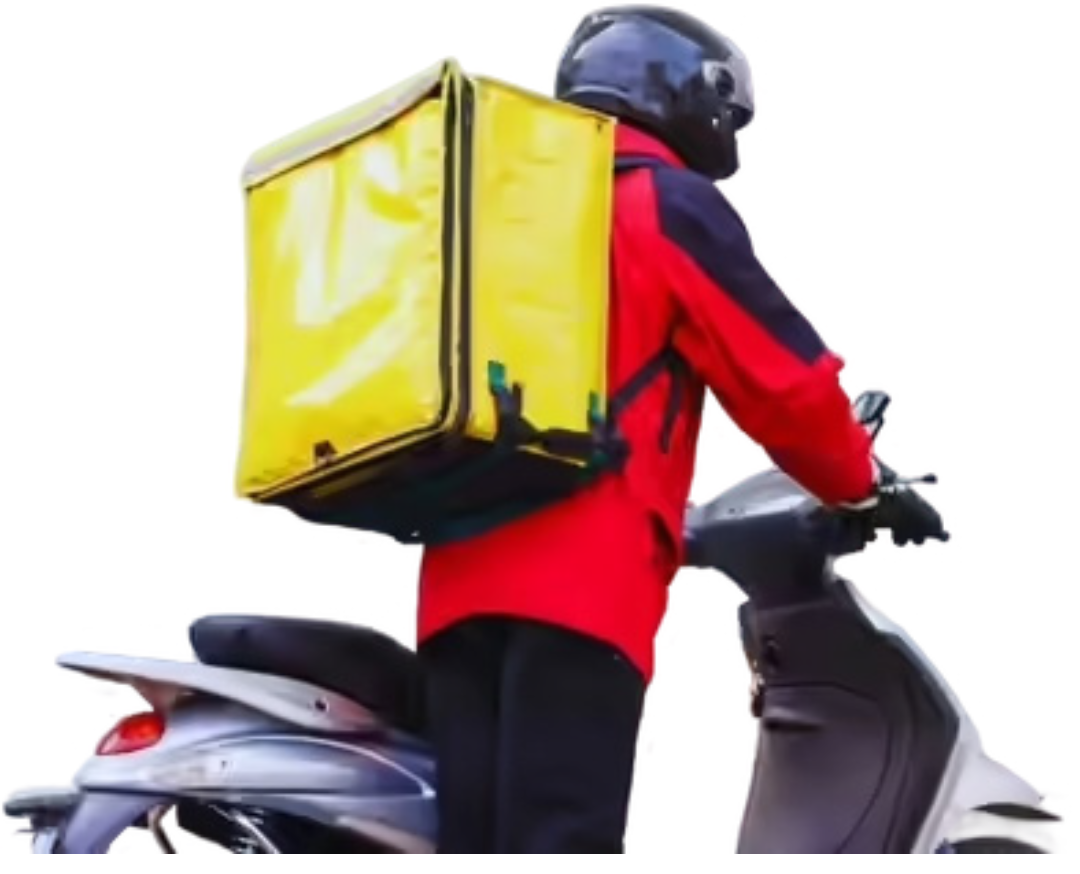
Many workers report working 12 to 15 hours a day while earning less than ₹500 after accounting for fuel and maintenance costs. The freedom is largely illusory. A missed order can reduce future assignments. A poor rating can affect incentives. A technical glitch can lead to a temporary suspension. The burden of risk has been almost entirely shifted onto the worker. This is what distinguishes platform labour from conventional employment. The company enjoys control without responsibility. The worker bears responsibility without protection.
For women gig workers, the situation is often even more precarious. Reports from the worker organisations have highlighted concerns relating to harassment, safety, payment disputes, and abrupt ID blocking. When grievances are raised, automated support systems frequently delay resolution. In many cases, the worker simply loses access to the platform. And with that, the day’s income disappears.
Law lagging behind reality
The legal system has been slow to respond to the rise of platform work. The Rajasthan Platform Based Gig Workers Act, 2023 was widely seen as a pioneering intervention. It introduced registration, a welfare board, and a welfare fund for platform workers. This was undeniably a step forward. But it stopped short of the central issue. It did not recognise gig workers as employees entitled to enforceable labour rights. As a result, core concerns such as minimum wages, limits on working hours, union rights, and protection against arbitrary termination remain unresolved.
The distinction is crucial. Welfare measures can provide relief. Recognition as workers can provide rights. One is discretionary. The other is enforceable. That is why worker unions continue to insist that the central demand is not charity or welfare, but legal recognition. Recent coverage in The Indian Express and Reuters suggests that this issue is beginning to enter mainstream policy discourse, with parliamentary committees and labour groups pushing for stronger regulation of platform companies. But the pace of legal reform remains far slower than the pace of platform expansion.
The politics of logging off
Perhaps the most significant development in recent months is the emergence of collective worker action. Traditional labour movements were organised around factories, offices, and common workplaces. Gig workers have no common shop floor. Their workplace is the street. Their supervisor is an app. Their colleagues are dispersed across cities and sectors.
And yet they are organising. WhatsApp groups, Telegram channels, digital unions, and app-based worker federations are increasingly becoming the new spaces of labour politics. The act of collectively switching off the app is itself a powerful political statement. It disrupts the illusion that digital platforms operate autonomously. It reminds the public that behind every delivery notification is a worker. The December and January strikes did precisely that. They made visible what the platform economy tries to hide.
Labour
“The workplace is the street. The manager is an algorithm.”
The struggle of gig workers is not just about one sector. It is about the future of labour in India. As more industries move toward platformisation, algorithmic management, and flexible contracting, the issues currently faced by delivery riders and drivers may soon define work across many sectors. The question is no longer whether platform work will grow. It already has. The question is whether India’s labour laws, public institutions, and political imagination can catch up. Can technology coexist with dignity? Can convenience be decoupled from exploitation? Can innovation be built without eroding rights? For Aravind, these are not abstract questions. They determine whether he returns home safely after a late-night shift. Whether his app remains active tomorrow. Whether he can continue to earn. The app may call him a “partner”. But his life tells another story. One of labour without recognition. Work without security. Speed without protection. The recent strikes suggest that workers are no longer willing to bear this burden silently. And that may well be the beginning of a new labour movement for the digital age.
About the Author
Raghavan Srinivasan is a social development professional, writer and author, based in New Delhi. He writes on labour, social justice, history and democratic rights, with a particular interest on how the present economic system affects the lives of ordinary people.
Clear Cut Livelihood Desk
New Delhi, UPDATED: May 20, 2026 09:00 IST
Written By: Raghavan Srinivasa