
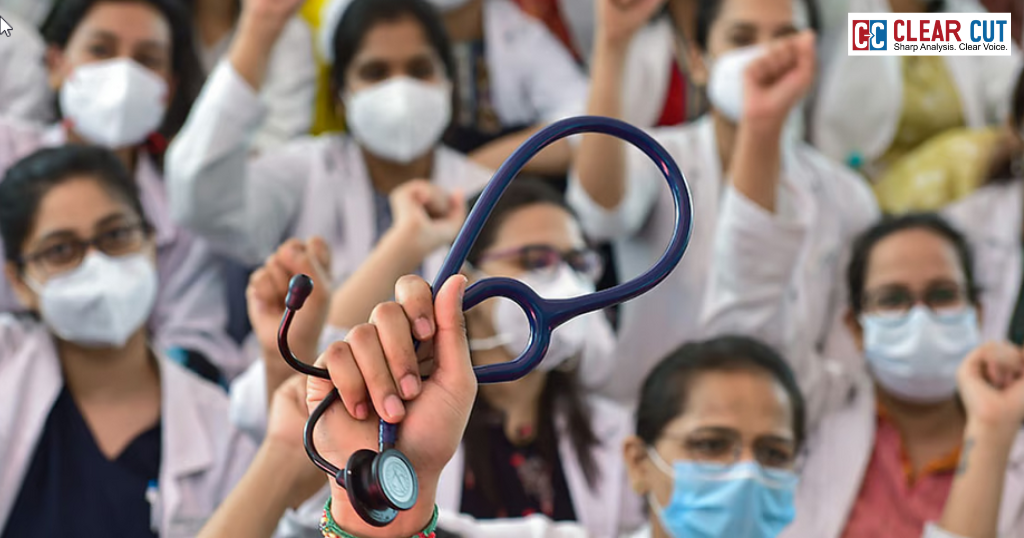
India is addressing its doctor shortage through new medical colleges, financial incentives, and curriculum reforms, but rural healthcare gaps remain a major challenge. The success of these efforts will depend on whether doctors can be effectively deployed to underserved areas.
India is taking a hard look at one of its most persistent public health challenges. The country has over 13.88 lakh registered allopathic doctors and 7.51 lakh AYUSH practitioners. Yet the doctor-population ratio sits at just 1:811, far from the globally benchmarked standard. Union Minister of State for Health and Family Welfare, Prataprao Jadhav, shared these figures in a written reply in the Lok Sabha on March 27, 2026. The data, sourced from the National Medical Commission (NMC), paints a complex picture. There are doctors in the system. But getting them where they are needed most remains the real challenge.
The Rural Gap Remains Wide
India’s cities have hospitals, specialists, and medical infrastructure. Its villages often have none of these. The Indian Medical Association (IMA) Telangana chapter warned in October 2025 that the state’s rural healthcare system is on the brink of collapse, with only 600 primary health centres serving more than 12,000 gram panchayats. This is not a Telangana-only crisis. It reflects a national pattern. According to a study published in the Journal of Family Medicine and Primary Care, India faces a shortfall of over 83% of surgeons, 74% of obstetricians and gynecologists, 79% of physicians, and nearly 82% of pediatricians at the community health centre level, as per Rural Health Statistics 2021-22. The government, however, is not sitting still.
Financial Incentives to Draw Doctors to Rural Areas
Under the National Health Mission (NHM), the Centre has rolled out several financial levers. Specialist doctors posted in hard and remote areas receive a dedicated hard area allowance along with residential support. Gynecologists, pediatricians, and anesthetists trained in emergency obstetric and life-saving procedures earn additional honorariums for conducting cesarean sections in underserved regions. The NHM also allows states to offer negotiable salaries to attract specialists. One such model goes by the name “You Quote We Pay,” giving states flexibility to compete with private sector pay scales. ANMs and doctors are also given performance-based incentives tied to antenatal checkups and adolescent health activities. Non-monetary perks have been added too. Staff who serve in difficult areas get preference in postgraduate admissions. Accommodation improvements in rural postings are also being undertaken.
Medical Education Expansion at a Record Pace
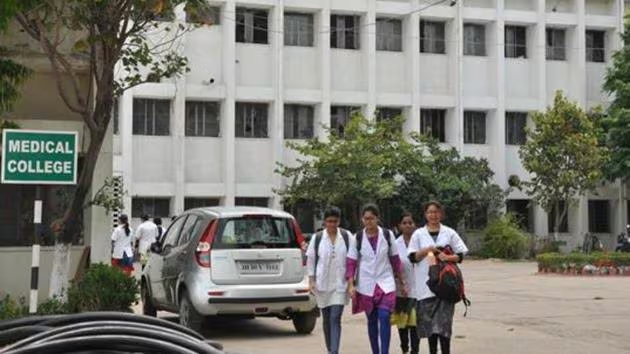
The supply-side reform has been equally aggressive. Minister Prataprao Jadhav informed the Lok Sabha that India now has 818 NMC-recognized medical colleges, a steep jump from 596 colleges in 2021-22. MBBS seats have reached 1,28,976, while postgraduate seats have grown to 85,020. Under the Centrally Sponsored Scheme for establishing new medical colleges by upgrading district and referral hospitals, 157 new colleges have been approved. Existing state and central government medical colleges are also being strengthened to increase MBBS and PG capacity. Two additional changes have been made to tackle faculty shortages. The Diplomate of National Board (DNB) qualification is now accepted for appointment as medical college faculty. And the age limit for teachers, deans, principals, and directors in medical colleges has been raised to 70 years.
Faculty Quality Under the Spotlight
Expanding seats alone cannot solve the problem. Dr. Sabine Kapasi, UN advisor and global health strategist, cautioned ahead of the Union Budget 2026 that adding seats without investing in faculty and training quality risks producing inadequately prepared doctors. She said India must invest in teachers, mentorship, and training systems with the same urgency as seat expansion.  Dr. Kapasi also noted that shortages of medical faculty directly lead to reduced bedside teaching, overburdened supervisors, and inadequate clinical exposure for interns and residents, saying that competent doctors simply cannot be produced without adequate teachers.  India’s public health expenditure has also come under scrutiny. It rose from 1.28% of GDP in 2018-19 to 1.9% in 2023-24. But this still falls short of the 2.5% target set by the National Health Policy 2017.
New Curriculum Programmes Targeting Rural Exposure
Two curriculum-level programmes now directly address the rural gap. The Family Adoption Programme (FAP) has been woven into the MBBS curriculum. Medical colleges adopt nearby villages. Students then adopt specific families within those villages. They follow up regularly on vaccination, nutrition, antenatal care, menstrual hygiene, and medication adherence. It builds sensitivity to rural health needs from year one of training. The District Residency Programme (DRP), notified by the NMC, makes it mandatory for postgraduate students to undergo a three-month posting at a district hospital as part of their course. This directly trains specialists in under-resourced settings.
Shared Responsibility Between Centre and States
Health is a state subject under the Indian Constitution. The Ministry of Health and Family Welfare provides technical and financial support through Programme Implementation Plans submitted by states under the NHM. The Centre then approves funding through Record of Proceedings. States are responsible for creating regular posts in line with Indian Public Health Standards (IPHS) in the long run, while NHM posts fill the gaps in the short to medium term. Minister Jadhav, while addressing the Rajya Sabha in March 2026, confirmed that assuming 80% availability of registered practitioners from both allopathic and AYUSH systems, the doctor-population ratio in the country stands at 1:811.The government has also supported multi-skilling of existing doctors to compensate for the shortage of specialists in remote postings. Skill upgradation remains a key strategy under NHM to improve health outcomes without waiting for the pipeline of new graduates to catch up.
The Road Ahead
India is moving. New colleges are opening. Curricula are evolving. Incentives are increasing. But bridging an infrastructure gap that goes back decades takes more than policy announcements. The real test will be whether trained doctors actually reach the primary health centres and community hospitals that need them most. Speaking at the National Arogya Fair 2026 in Maharashtra, Minister Prataprao Jadhav called Ayush not just a system of medicine but a movement for rural empowerment and social transformation, underlining the government’s intent to approach healthcare holistically.For now, India has the data, the policy framework, and the political intent. Execution at the state level will determine whether the gap between the doctor and the patient finally begins to close.
Clear Cut Health Desk
New Delhi, UPDATED: March 30, 2026 01:00 IST
Written By: Ayushman Meena