
Viksit Bharat 2047 is India’s long-term national vision to become a developed nation by 2047, focusing on inclusive growth, digital infrastructure, social justice, and sustainable development. The initiative aims to empower youth, women, farmers, and the poor while strengthening innovation, governance, and economic progress.
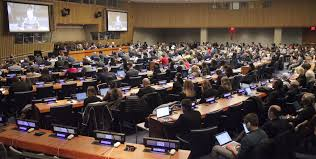
India stepped into the global spotlight in early February 2026. At the 64th Session of the United Nations Commission for Social Development (CSocD64) in New York, the Indian delegation made a strong case for its home-grown development model. The session, running from February 2 to 10 at UN Headquarters, brought together representatives from over 100 member states. This year’s theme was “Advancing Social Development and Social Justice through Coordinated, Equitable, and Inclusive Policies.”
India’s message was clear: its approach to fighting poverty and inequality is not just a domestic story. It is a global blueprint worth sharing.
Thakur Anchors India’s Case in the Constitution
Minister of State for Women and Child Development Savitri Thakur led the Indian delegation, reaffirming India’s commitment to inclusive and rights-based social development at the session. Delivering India’s national statement, she said that social justice and social protection in the country are rooted in constitutional guarantees and aligned with the long-term vision of Viksit Bharat 2047.
Thakur did not present the vision as a political promise. She grounded it in law, governance structure, and citizen rights.
She highlighted the guiding principle of “Sabka Saath, Sabka Vikas,” reflecting a whole-of-government and whole-of-society approach to ensure that no one is left behind.
The emphasis on leaving no one behind resonated directly with the UN’s Sustainable Development Goals framework. The session was presided over by Ambassador Khrystyna Hayovyshyn, Permanent Representative of Ukraine to the UN. The session also featured speeches by top UN officials, including General Assembly President Annalena Baerbock and Deputy Secretary-General Amina J. Mohammed.
What Viksit Bharat 2047 Actually Means
The vision stretches to India’s centenary of independence. The Viksit Bharat initiative represents the Government of India’s ambitious vision to transform the nation into a developed country by 2047, seeking to mobilize efforts across economic, social, environmental, and governance domains to achieve comprehensive and sustainable development.
The initiative focuses on inclusive growth, economic expansion, sustainability, innovation, and citizen participation, with four core pillars: Youth, Poor, Women, and Farmers.
Finance Minister Nirmala Sitharaman has been vocal about what this vision demands. Speaking at Stanford University’s Hoover Institution in April 2025, she said: “The global order is evolving. That brings both challenges and opportunities. We must be ready to tackle the former and seize the latter.” She added that India’s journey to become a Viksit Bharat by 2047 is not merely an aspiration, but a shared national mission powered by a vision for inclusive, sustainable, and innovation-led growth.
Digital Infrastructure as the Engine of Delivery
One of the most praised elements of India’s presentation was its digital delivery infrastructure. Thakur highlighted the role of digital public infrastructure and Direct Benefit Transfers (DBT) in enhancing transparency, efficiency, and accountability in public service delivery.
The numbers behind this claim are substantial. India’s Direct Benefit Transfer system has helped achieve cumulative savings of Rs 3.48 lakh crore by plugging leakages in welfare delivery, with subsidy allocations halved from 16 percent to 9 percent of total government expenditure since implementation. Beneficiary coverage expanded 16-fold, from 11 crore to 176 crore people.
Sitharaman described this shift as a “population-scale success story.” In her Hoover Institution address, she stated: “Over a billion digital identities have been created. These identities enabled the government to open bank accounts for the unbanked, and during the COVID-19 pandemic, we were able to transfer relief funds directly with a click of a button.”
Broad-Based Social Inclusion on Display
India did not limit its presentation to digital efficiency. The delegation laid out a wide range of social programmes.
Thakur shared that over 800 million people are covered under food security programmes, more than 550 million citizens access free healthcare through an extensive network of health and wellness centres, and over 1.45 million elected women representatives serve in local governance.
Comprehensive maternal, child health, and nutrition programmes are reaching over 100 million beneficiaries. Expanded social security and targeted schemes cover the elderly, persons with disabilities, unorganised workers, and transgender persons.
These figures reflect years of policy continuity and programme scaling. UN Deputy Secretary-General Amina J. Mohammed, who addressed the session, has consistently urged member states to act collectively. She stated at the UN Sustainable Development Group: “To keep the promise of the SDGs, we need everyone on board. Let us commit to invest in hope, invest in sustainable development, and invest in a better future for all people on a healthy planet.”
India Calls for Global Cooperation, Not Just Applause
India did not just present its achievements. It made an active call for collective action.
Emphasizing that global challenges require collective responses, India expressed support for strengthened multilateral cooperation, capacity building, and South-South collaboration to accelerate progress on social development models.
This framing is deliberate. India positions itself not as a finished model, but as a partner. Thakur reaffirmed India’s civilizational ethos of “Vasudhaiva Kutumbakam” meaning the world is one family,and expressed India’s readiness to strengthen global partnerships and share its development experience to advance social justice worldwide.
India’s digital public infrastructure has already drawn global interest as a potential model for other developing nations. The IMF noted in a March 2023 assessment that India’s foundational Digital Public Infrastructure, called India Stack, has been harnessed to foster innovation and competition, expand markets, close gaps in financial inclusion, and boost government revenue.
The Road to 2047 Is Long, But the Direction Is Set
India’s presence at CSocD64 sent a clear signal. The country is no longer only a recipient of development advice. It is now an active shaper of global social development conversations.
India’s HDI rank improved from 133 in 2022 to 130 in 2025, and life expectancy increased from 58.6 years in 1990 to 72 years in 2023, while expected years of schooling rose from 8.2 to 13 years. Gaps remain, but the trajectory is upward.
For a country of 1.4 billion people, the scale of what India is attempting is unprecedented. The Viksit Bharat 2047 vision ties together constitutional rights, digital governance, financial inclusion, and social protection into one unified national mission. On the floor of the United Nations, India made a credible case that these tools, taken together, can work and that the world should pay attention.
Clear Cut Research, Livelihood Desk
New Delhi, UPDATED: March 05, 2026 05:05 IST
Written By: Ayushman Meena