
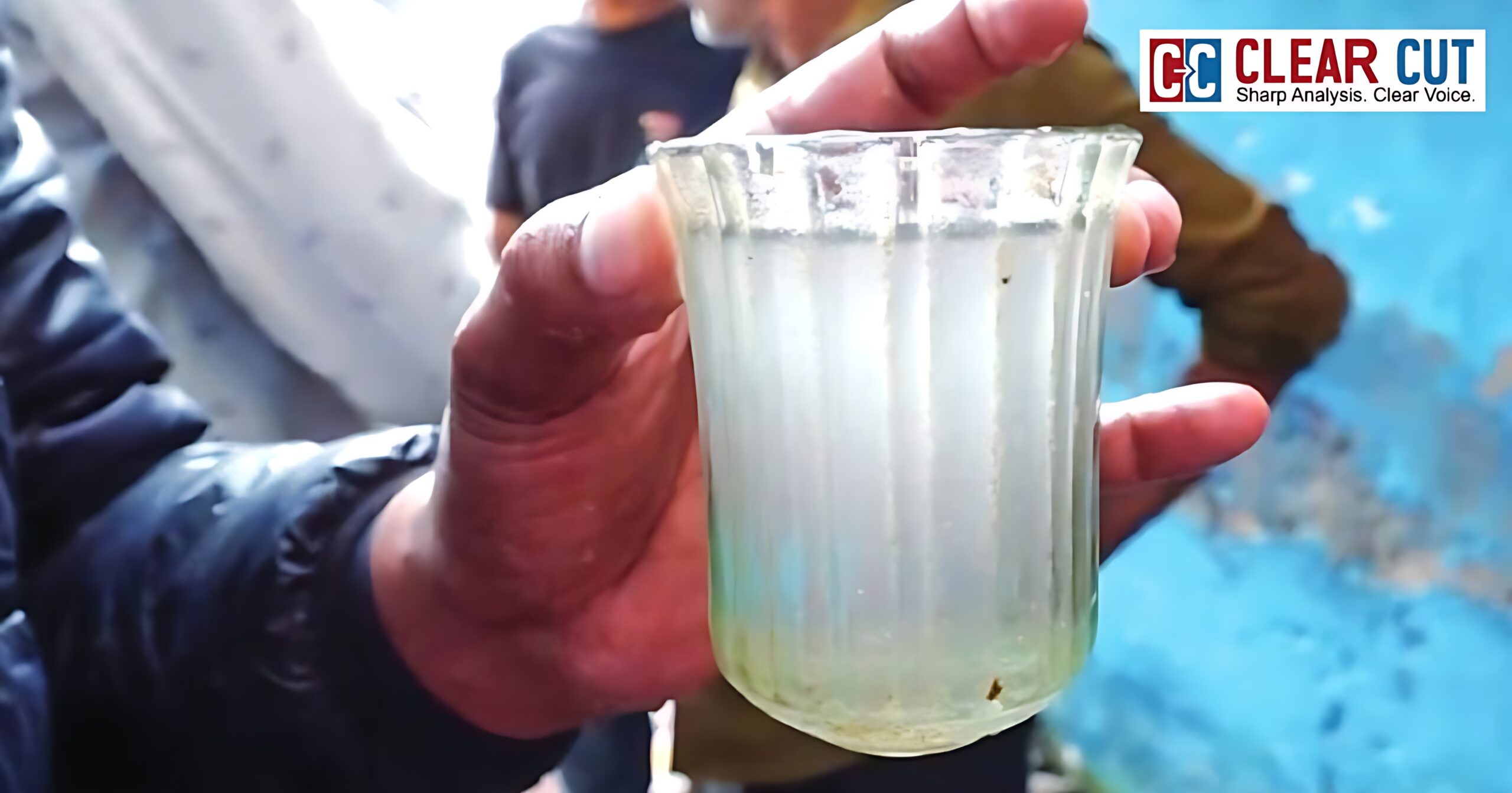
The Madhya Pradesh government has constituted a high-level inquiry committee to investigate a serious drinking water contamination incident in Indore, following reports of widespread illness and multiple deaths. The decision was taken after health authorities confirmed a spike in water-borne infections in several localities, triggering public concern over the safety of the municipal water supply.
Senior officials in the state administration have described the incident as a public health emergency and a potential failure of urban governance. The probe aims to identify the source of contamination, assess administrative lapses, and fix accountability across departments responsible for water supply and monitoring.
Sequence of Events Leading to the Crisis
In the days preceding the government’s intervention, hospitals in Indore reported an unusual rise in patients suffering from acute diarrhoea, vomiting, and dehydration. Medical officers at government hospitals flagged the pattern to the District Health Administration, suspecting contamination in drinking water.
Preliminary field inspections by engineers from the Public Health Engineering Department (PHED) suggested that polluted water may have entered the supply due to pipeline leakages or cross-contamination with sewage lines. Following confirmation of deaths linked to severe water-borne illness, the matter was escalated to the state government.
Composition of the Inquiry Committee
The Madhya Pradesh government constituted a multi-departmental probe panel led by a senior Additional Chief Secretary-level officer, with members drawn from the Urban Administration and Development Department, Public Health Engineering Department, and Health and Family Welfare Department.
Officials associated with the committee’s formation stated that the panel has been granted powers to summon records, inspect infrastructure, and seek explanations from responsible officials. The inquiry operates under the supervision of the Chief Secretary’s office, underscoring the seriousness attached to the investigation.
Mandate and Scope of the Investigation
According to the official terms of reference, the committee will examine:
- Water treatment plant operations and chlorination protocols
- Pipeline integrity and maintenance records
- Sewage and water line proximity and leakage history
- Water quality testing frequency and reporting mechanisms
- Emergency response timelines after illness reports emerged
Health department officials are supporting the probe by providing laboratory test results and epidemiological data to establish a clear causal link between contaminated water and reported deaths.
The committee has also been directed to recommend corrective and preventive measures, including infrastructural upgrades and monitoring reforms.
Fixing Administrative Responsibility
A central focus of the inquiry is accountability. Urban water supply in Indore involves coordination between the Indore Municipal Corporation, the PHED, and contracted service agencies. Senior bureaucrats have acknowledged that overlapping responsibilities often dilute accountability.
The state government has clarified that if negligence, delay, or violation of standard operating procedures is established, disciplinary action will be initiated under service rules. Legal experts advising the administration have noted that criminal liability may also be examined if gross negligence is proven.
Impact on Public Health and Communities
The contamination incident has disproportionately affected low-income neighbourhoods that depend entirely on municipal water. District-level health officers reported that children, elderly residents, and people with existing health conditions faced the most severe consequences.
Public health specialists associated with the state health services have emphasised that water contamination crises extend beyond immediate illness. They disrupt livelihoods, increase healthcare expenses, and erode public trust in essential services.
Women, who largely manage household water use and caregiving, carry a disproportionate burden during such emergencies. The incident has renewed calls from civil society groups for stronger urban water safeguards.
Urban Infrastructure and Systemic Weaknesses
Officials from the Urban Administration Department have acknowledged that Indore’s rapid expansion has placed stress on aging water infrastructure. Old pipelines, unplanned settlements, and insufficient real-time monitoring increase the risk of contamination.
The inquiry committee is expected to evaluate whether routine audits were conducted and whether warning signs were overlooked. Urban planning experts consulted by the administration have stressed the need for sensor-based water quality monitoring and clearer command structures.
Immediate Measures Ordered by the Government
Alongside the probe, the state government instructed the district collector and municipal commissioner to ensure an uninterrupted supply of safe drinking water. Emergency water tankers were deployed in affected areas, and intensive chlorination of pipelines was carried out.
The District Health Officer issued advisories urging residents to boil water before consumption until test reports confirmed safety. Surveillance teams were also deployed to monitor fresh cases and prevent further fatalities.
Key Developments at a Glance
- Madhya Pradesh government formed a high-level inquiry committee under senior administrative leadership
- Probe involves PHED, Urban Administration, and Health departments
- Investigation covers technical failures and administrative accountability
- Emergency water supply and health advisories issued
- Findings expected to shape future urban water safety reforms
A Turning Point for Urban Water Accountability
The Indore water contamination tragedy has exposed the fragile link between infrastructure, governance, and public health. While the formation of a high-level probe reflects administrative intent, its impact will depend on whether recommendations translate into enforceable reforms.
For affected families, accountability is as important as prevention. For policymakers, the crisis serves as a reminder that safe drinking water is not merely an infrastructure issue but a governance obligation. The inquiry’s conclusions may well influence how urban water systems are managed across Madhya Pradesh and beyond.
Clear Cut Health Desk
New Delhi, UPDATED: Jan 22, 2026 05:28 IST
Written By: Samiksha Shambharkar