
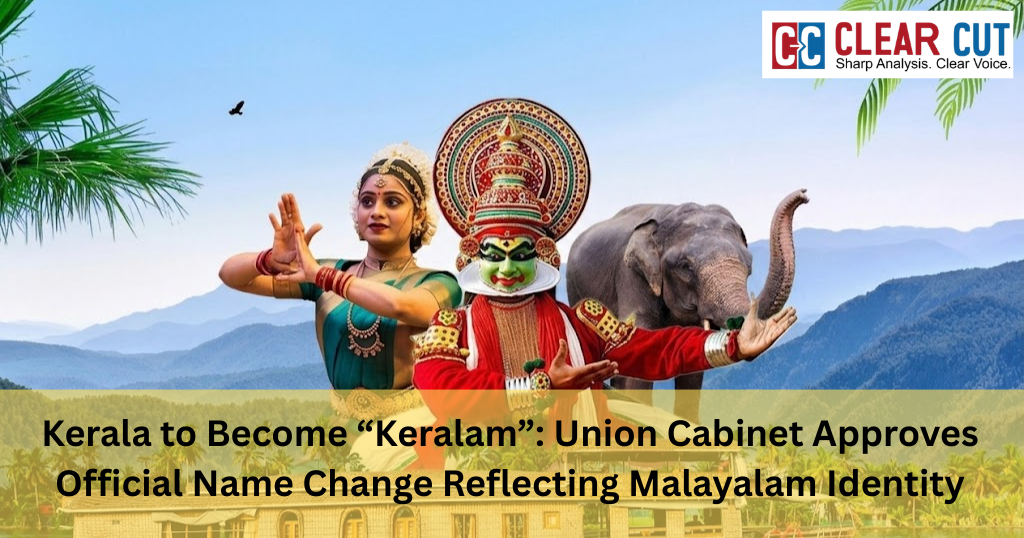
The Union Cabinet has approved renaming Kerala as Keralam to reflect its Malayalam linguistic identity, with Parliament required to amend the Constitution for official implementation.
Highlights of the Decision
• Union Cabinet approved proposal to rename Kerala as Keralam.
• Kerala Legislative Assembly passed the resolution unanimously.
• Parliament must amend the Constitution for final approval.
• The change reflects Malayalam linguistic identity.
• Public response largely supports cultural authenticity.
The Union Cabinet of India has approved a proposal to officially change the name of the state of Kerala to “Keralam.” The decision follows a resolution passed by the Kerala Legislative Assembly, which requested that the state’s name reflect its pronunciation in the Malayalam language. The proposal will now move forward for constitutional amendment procedures.
What Exactly Has Been Approved?
The Union Cabinet approved the proposal to rename the state from Kerala to Keralam. The state government had earlier passed a unanimous resolution in the Kerala Legislative Assembly requesting this change.
The proposal now requires an amendment to the Constitution of India, specifically in the First Schedule, which lists the names of states and union territories. Once Parliament approves the amendment and the President gives assent, the name change will become official.
According to statements from the Kerala Chief Minister, the name “Keralam” better represents the state’s cultural and linguistic identity.
Why Change the Name?
The word “Kerala” is the anglicised version of the Malayalam word “Keralam.” In Malayalam, the language spoken by over 38 million people in the state, residents refer to their homeland as “Keralam.”
The name “Keralam” has deep historical roots. Historical records and ancient inscriptions mention variations of the term dating back centuries.
The state government argued that the English version does not fully capture the linguistic authenticity of the original Malayalam name. Therefore, the proposed change seeks to align official nomenclature with cultural and linguistic reality.
Linguistic and Cultural Significance
Language forms a core part of identity. Malayalam holds official status in the state and plays a central role in education, administration, and cultural life.
The renaming move aligns with similar changes across India where cities restored indigenous names. Examples include:
• Mumbai (formerly Bombay)
• Chennai (formerly Madras)
• Kolkata (formerly Calcutta)
These changes reflected post-colonial efforts to reclaim linguistic and cultural heritage.
The Kerala government emphasized that “Keralam” represents the correct phonetic pronunciation in Malayalam and strengthens cultural authenticity.
Political and Constitutional Process
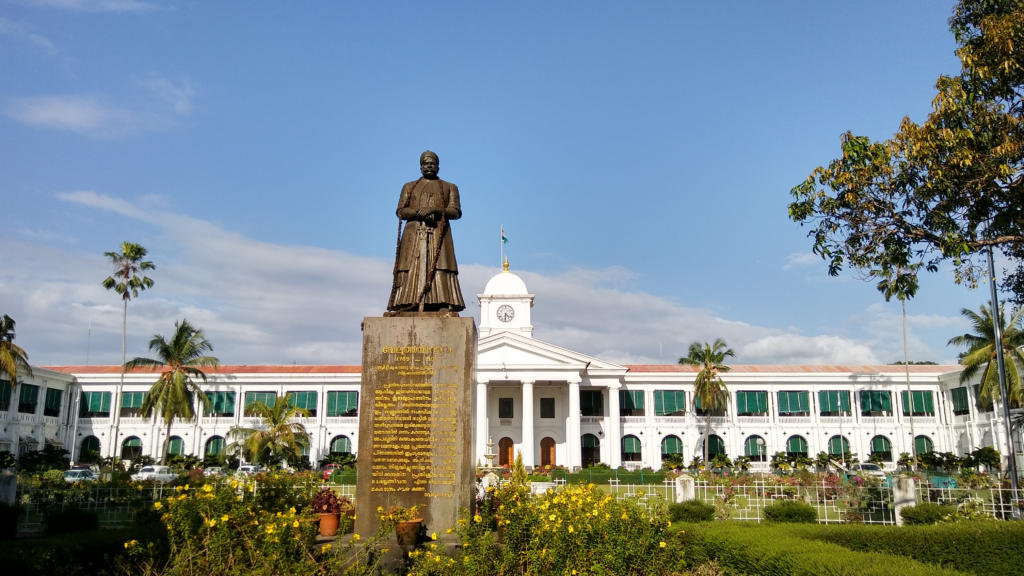
Changing a state’s name requires a constitutional amendment under Article 3 of the Indian Constitution.
Parliament must pass the amendment bill, and the President of India must grant assent.
The Kerala Legislative Assembly passed the resolution unanimously. Political parties across ideological lines supported the proposal, indicating broad consensus within the state.
Once approved, all official documents, government records, and national listings will reflect the new name.
Social Dimension: Identity, Pride and Public Opinion
For many residents, the change symbolizes respect for local culture. It reinforces the importance of linguistic identity in governance.
However, some critics question whether symbolic measures should take priority over pressing issues such as unemployment, climate vulnerability, and infrastructure development.
Kerala faces several socio-economic challenges, including:
• High unemployment rates among youth
• Climate risks such as floods and coastal erosion
• Public health expenditure pressures
While the name change strengthens cultural pride, citizens expect parallel focus on development and economic growth.
Public reaction appears largely positive, especially among cultural groups and Malayalam language advocates.
Economic and Administrative Implications
Renaming a state involves administrative costs, including:
• Updating official documents
• Changing signage and government stationery
• Modifying digital platforms and legal records
Experts suggest that these costs remain manageable within the broader state budget.
Kerala’s economy plays a significant role in India’s service sector, remittance flows, tourism, and education. The name change does not alter fiscal policies or economic strategies.
Tourism branding may benefit from stronger linguistic alignment. Kerala markets itself globally as “God’s Own Country,” and the authentic name “Keralam” may reinforce its cultural identity.
Historical Context of “Keralam”
Historians trace the origin of “Keralam” to ancient Tamil and Sanskrit references. Some interpretations link the word to “Kera,” meaning coconut, reflecting the state’s abundant coconut trees.
The region became a separate state in 1956 under the States Reorganisation Act based on linguistic boundaries. Malayalam-speaking regions merged to form Kerala.
The proposed change continues this linguistic alignment.
Broader Implications for Indian Federalism
India’s federal system allows states to express regional identity within a national framework. Renaming initiatives often symbolize cultural assertion and democratic expression.
The decision reflects India’s evolving post-colonial identity. It demonstrates how regional aspirations coexist with national constitutional processes.
At the same time, policymakers must ensure that symbolic decisions complement substantive development policies.

Conclusion
The proposal to rename Kerala as Keralam marks an important cultural moment. It aligns official nomenclature with linguistic authenticity and reflects regional pride.
The Union Cabinet’s approval moves the process forward, but Parliament must complete the constitutional amendment for final implementation.
The change highlights the intersection of language, history, and governance in modern India. For many residents, “Keralam” feels more authentic. For policymakers, the responsibility remains to balance identity recognition with sustained economic and social progress.
Clear Cut Research Desk
New Delhi, UPDATED: Feb 28, 2026 05:00 IST
Written By: Samiksha Shambharkar