
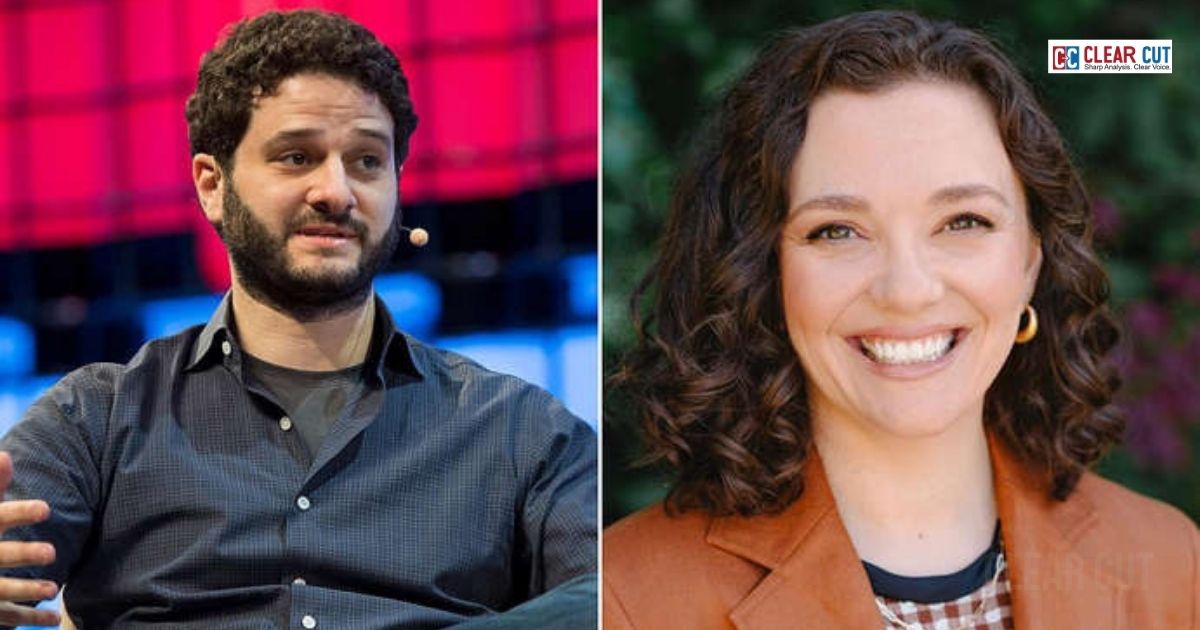
In the early 2000s, Dustin Moskovitz co-founded Facebook with Mark Zuckerberg, Eduardo Saverin and others. In his mid-20s, he was a billionaire, one of the youngest in the world. But unlike most Silicon Valley founders who turned their fortunes into new companies or lavish lifestyles, Moskovitz and his wife, Cari Tuna, a former Wall Street Journal journalist, have spent the past decade trying to give away nearly all of it.
Today, the couple run one of the most data-driven and ambitious giving operations in the world through their organisation, Open Philanthropy. The aim is simple but radical: to use their wealth to do the most good possible, with the same precision and intensity that once built a tech empire.
From Facebook to Philanthropy
Moskovitz’s wealth originates primarily from his early Facebook shares. After leaving the company in 2008, he co-founded Asana, another successful tech firm. He began focusing on what he and Tuna called “the moral challenge of our age” – figuring out how to use extreme wealth for maximum social benefit.
They jointly founded Good Ventures in 2011 and later merged much of their work into Open Philanthropy, a nonprofit that works closely with the Effective Altruism movement. Unlike classical philanthropy, which has historically spread funding across many obvious but small causes, Open Philanthropy invests in evidence-based interventions where impact per dollar can be maximized.
As of 2025, the couple have given away more than $4.5 billion, with an estimated lifetime giving potential exceeding $15 billion. Yet what makes their philanthropy distinct is not just the amount — it’s the method.
“Drones are noisy, have limited flight times, and face privacy concerns.”
How Their Money Moves
At Moskovitz-Tuna, philanthropy is a scientific process. Each funding area is chosen after deep research in which analysts compare the cost-effectiveness of related approaches, the measurability of their outcomes, and their long-term global impact.
Their most significant funding areas include:
• Global Health and Development: Large-scale donations to the GiveWell charity evaluator, malaria prevention campaigns, and vitamin supplementation programmes. Open Philanthropy gave $650 million in 2024 alone toward reducing poverty and disease in Sub-Saharan Africa and South Asia.
• Biosecurity and Pandemic Preparedness: More than $400 million has been directed toward research on vaccines, lab safety, and pandemic prevention since 2020 — an area they consider underfunded despite COVID-19’s lessons.
• Criminal Justice Reform: They have invested in the reduction of mass incarceration in the United States by focusing on bail reform, along with evidence-based policing strategies.
• Animal Welfare: Over $250 million in grants have gone into projects developing alternatives to factory-farmed meat and promoting animal welfare laws around the world.
Open Philanthropy’s approach often defies convention. It underwrites unpopular or long-term projects, like AI safety research or future global-risk mitigation, on the logic that preventing catastrophe later is worth more than alleviating smaller pain now.
Who will help him look for ways to ensure a place in heaven?
Why They Give This Way
Moskovitz and Tuna are deeply influenced by the philosophy of effective altruism, the belief that charitable giving should be directed to those areas where it saves or improves the greatest number of lives per dollar spent. Rather than emotional giving, they seek rational giving, rooted in data and expected outcomes.
Cari Tuna has said in interviews that their mission is not to “feel good about giving” but rather to “give well.” The two often challenge the tendency of traditional philanthropy to focus on prestige projects, such as buildings at universities or art museums. In their view, money needs to go where it will do the most good-even if the work is less glamorous, whether deworming children in Kenya or funding vaccine storage infrastructure in Bangladesh.
Their financial transparency is unusual. All the grants, with reasoning and expected impact, are listed publicly by Open Philanthropy. With its open-data approach, it has already inspired younger philanthropists for whom accountability is central to ethical wealth distribution.
The Global Ripple Effect
Their giving has quietly influenced other billionaires, too. In 2023, a slew of new tech donors signed the Giving Pledge, citing Moskovitz and Tuna’s evidence-based model. They’ve funded academic work at Oxford, Stanford, and MIT to strengthen research in philanthropy effectiveness and long-term global risks.
The couple’s focus on prevention, rather than publicity, runs counter to the PR-heavy strategies of traditional philanthropy; they rarely appear at galas or public ceremonies. As Moskovitz once said, “The best measure of our success is how much suffering we prevent, not how much attention we attract.”
Economists and policy analysts say their approach could reshape how billionaires engage with inequality. If scaled across other fortunes, data-driven giving could redirect billions toward areas like health, education, and climate resilience that often go underfunded.
The Bigger Question
Their work also raises one uncomfortable question: why does so much moral responsibility rest on private wealth? Critics say that philanthropic decisions by billionaires, no matter how well-intentioned, reflect unjust systems in which power replaces policy. Moskovitz and Tuna acknowledge this paradox but respond by focusing on measurable good rather than ideology.
Whether one agrees with their methods or not, their model represents one of the most serious attempts yet to align money with morality. In a world in which fortunes grow much faster than fairness, Dustin Moskovitz and Cari Tuna are trying something quietly revolutionary: giving until it truly makes a difference.
Clear Cut Education Desk
New Delhi, UPDATED: Nov 12, 2025 05:02 IST
Written By: Janmojaya Barik