

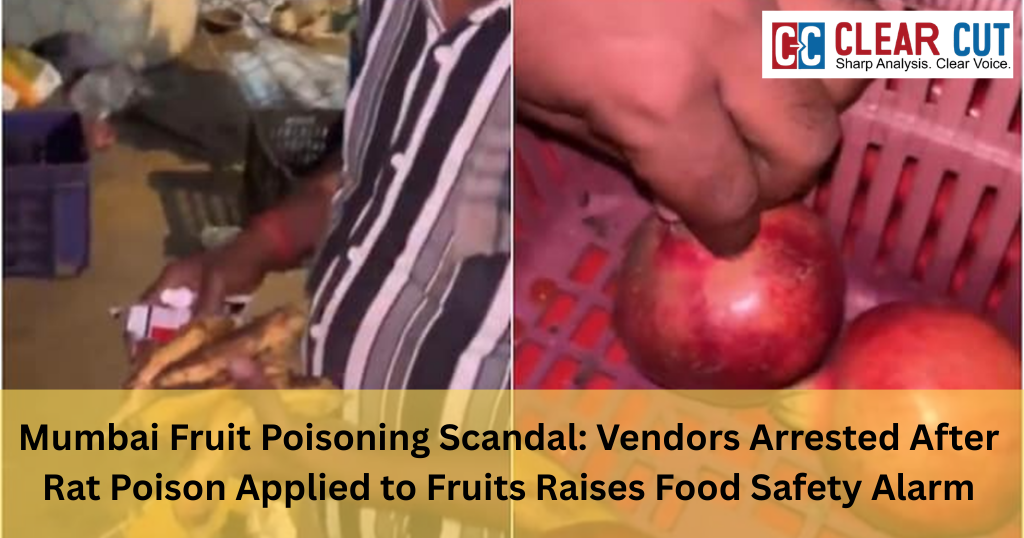
Two fruit vendors in Mumbai were arrested after a viral video showed rat poison applied to fruits, triggering serious food safety and public health concerns. Authorities booked the accused under IPC Sections 272 and 273 and the Food Safety and Standards Act, 2006.
Key Highlights of the Incident
• Viral video showed vendors applying rat poison to fruits in Mumbai.
• Police arrested two accused vendors after investigation.
• The act posed serious health risks to consumers.
• Charges invoked include IPC Sections 272, 273, and relevant provisions under the Food Safety and Standards Act, 2006.
• The case raises concerns about food safety enforcement in informal markets.
Mumbai witnessed a shocking food safety incident after a video surfaced showing fruit vendors allegedly applying rat poison to fruits before selling them. Authorities arrested two vendors after the footage went viral. The incident triggered public outrage and raised serious concerns about food safety, consumer protection, and regulatory enforcement in urban markets.
What Exactly Happened?
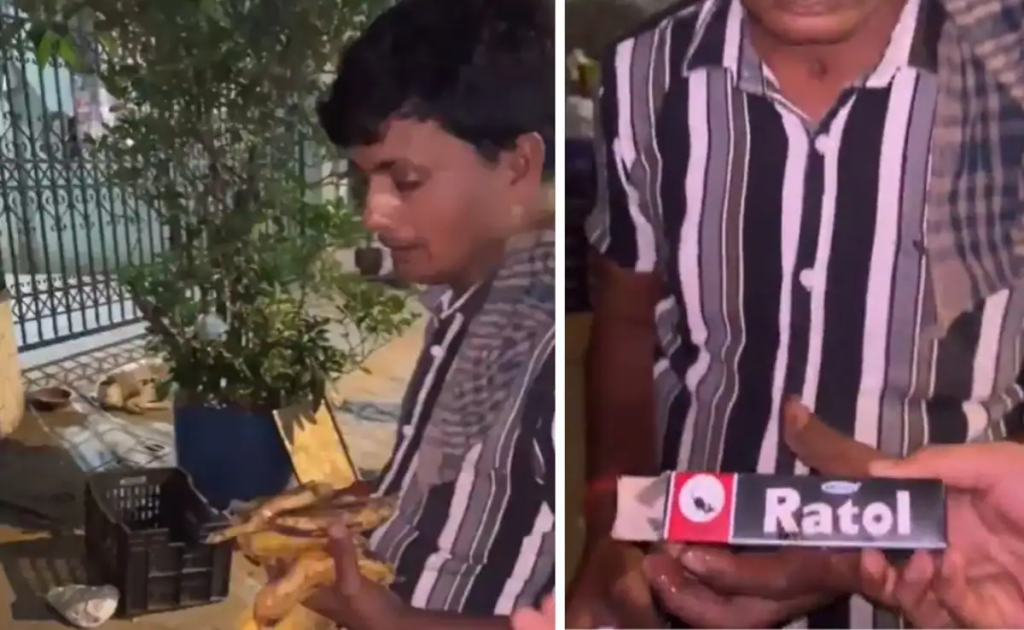
The viral footage reportedly captured vendors at a fruit stall applying rat poison to fruits kept for sale. Authorities later confirmed that the substance used was toxic and unsafe for human consumption.
Following the circulation of the video, the Mumbai Police intervened quickly. Officials from the local police station detained two vendors. They registered a case under relevant sections of the Indian Penal Code for endangering public health.
According to police briefings, the accused were caught on camera deliberately applying the poisonous substance. The act posed a direct threat to unsuspecting consumers who could have purchased and consumed the contaminated fruits.
Why This Incident Is Extremely Dangerous
Rat poison contains chemicals designed to kill rodents. These substances can cause severe internal bleeding, organ failure, and even death in humans if ingested.
Even small quantities of such poison can lead to:
• Nausea and vomiting
• Severe abdominal pain
• Internal bleeding
• Neurological complications
• Life-threatening medical emergencies
Children and elderly individuals are especially vulnerable to food contamination. Since fruits are usually consumed raw, without cooking, the risk becomes even higher.
Public health experts warn that deliberate contamination can lead to mass poisoning if such products enter the supply chain.
Legal Action Taken Against the Accused
Police arrested two vendors soon after identifying them through the viral footage. Authorities invoked specific penal provisions for precision.
The case includes charges under:
• Section 272 of the Indian Penal Code (IPC) – Adulteration of food or drink intended for sale.
• Section 273 of the IPC – Sale of noxious food or drink.
• Relevant provisions under the Food Safety and Standards Act, 2006, particularly Section 59, which deals with punishment for unsafe food causing injury or death.
The Food Safety and Standards Authority of India (FSSAI) regulates food safety standards nationwide. Under Indian law, deliberate mixing of harmful substances in food can lead to imprisonment and heavy fines.
Officials stated that investigations are ongoing to determine whether the act involved wider intent or coordination.
Food Safety in India: A Larger Concern
This incident highlights broader concerns about food safety enforcement in crowded urban markets.
Street vendors and informal food sellers operate across Indian cities. Many lack proper licensing or routine inspections. Municipal bodies conduct periodic checks, but enforcement remains uneven.
According to data published by the Food Safety and Standards Authority of India (FSSAI), over 2.5 lakh food samples are tested annually, and roughly 12–15% of samples fail quality or safety standards due to adulteration or contamination.
In some inspection cycles, more than 25,000 samples annually have been found sub-standard or unsafe, indicating persistent gaps in compliance and monitoring.
Urban consumers often trust vendors without questioning food quality. However, such incidents reduce public trust and create fear around everyday purchases.
The Social Dimension: Trust, Livelihoods and Public Fear
The incident does not concern only two vendors. It affects the entire informal vendor community.
Mumbai has thousands of small fruit sellers who depend on daily sales for survival. When such shocking footage goes viral, public suspicion spreads across the sector.
This situation creates two major consequences:
- Consumers become fearful of buying fruits from roadside stalls.
- Honest vendors suffer economic losses due to declining trust.
Authorities must balance strict punishment with broader regulatory reform. The focus should remain on improving inspection systems rather than stigmatizing informal workers.
Why Rapid Police Action Matters
In this case, quick police intervention prevented potential health disasters. If consumers had unknowingly purchased and eaten contaminated fruits, hospitals could have seen serious poisoning cases.

The rapid arrest sent a clear message that food contamination will not be tolerated.
Law enforcement agencies must continue:
• Regular surveillance of markets
• Random food sample testing
• Awareness drives for vendors
• Strict penalties for violations
These measures protect public health and safeguard the reputation of legitimate vendors.
The Role of Technology and Public Vigilance
The video that exposed the act was recorded by a citizen. This demonstrates how digital technology strengthens accountability.
Smartphones and social media platforms allow people to document unsafe practices instantly. Public vigilance can complement official inspections.
However, authorities must verify such content carefully before initiating legal action. Responsible investigation remains essential.
What Needs to Happen Next?
Authorities should strengthen food inspection mechanisms in high-density urban markets. Municipal bodies must conduct more frequent inspections and ensure proper vendor registration.
Public awareness campaigns can educate consumers about identifying unsafe practices. Vendors should receive training under food safety regulations.
The Food Safety and Standards Authority of India must intensify coordination with local civic bodies to prevent similar incidents.
Urban governance must treat food safety as a public health priority. Clean and safe food is not a luxury. It is a basic right.
Conclusion
The Mumbai fruit poisoning incident serves as a serious warning about food contamination risks. While the swift arrest of the accused vendors prevented potential tragedy, the case exposes monitoring and enforcement gaps.
With thousands of food samples failing safety tests annually across India, strengthening inspection systems is essential.
Food safety requires constant vigilance from authorities, responsible behaviour from vendors, and awareness among consumers.
Public health depends not only on hospitals and medicines but also on safe food practices. When trust in everyday food breaks down, society must respond firmly and responsibly.
Clear Cut Health, Research Desk
New Delhi, UPDATED: March 01, 2026 09:00 IST
Written By: Samiksha Shambharkar