
The National SARAS Mela in Vijayawada generated significant sales, bringing together around 1,500 women entrepreneurs from self-help groups across India. However, questions remain about whether these sales translate into sustainable personal incomes and profits. The article examines the Lakhpati Didi initiative, access to financial support, business opportunities and the need for better income measurement and long-term market access.
By 20 October, the National SARAS Mela in Vijayawada had recorded about ₹3.7 crore in sales, according to a UNI report filed at midday. The Hans India, reporting the same date, put the total at ₹5 crore and two lakh products. The gap probably reflects different reporting times, but it illustrates a wider point: the Mela produces large numbers, and each one needs careful reading.
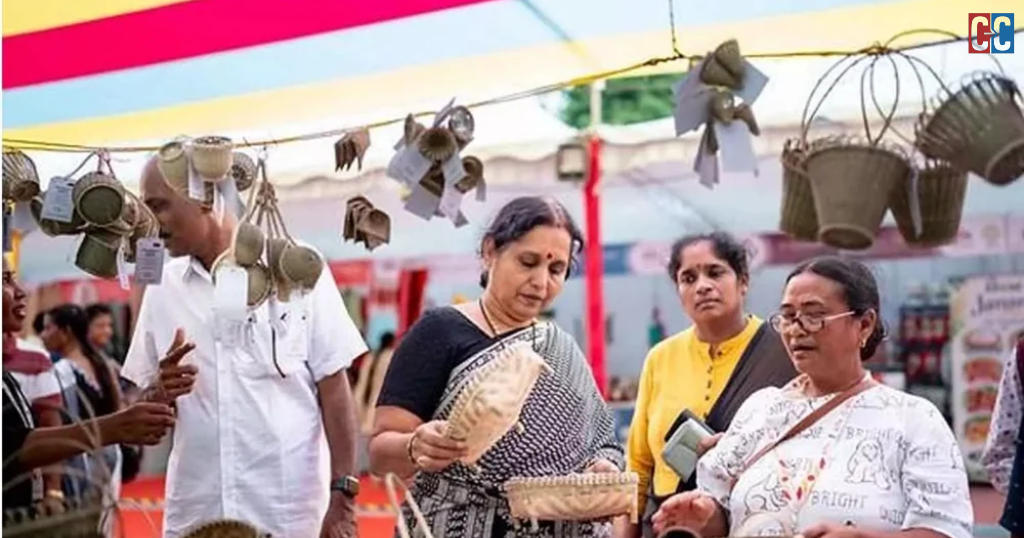
The Mela runs from 13 to 31 October at Punnami Ghat. It is organised by the Ministry of Rural Development with the Andhra Pradesh Society for Elimination of Rural Poverty, and it is the first national SARAS Mela held outside Delhi-NCR. About 1,500 women entrepreneurs from self-help groups (SHGs) in more than 30 states and union territories are taking part, across 600 to 650 stalls, according to official and press accounts. Spread over the stalls, ₹5 crore works out to roughly ₹77,000 to ₹83,000 in gross sales per stall in about a week. That is revenue. It says nothing about costs, travel or what a woman takes home.
What the Mela is designed to do
SARAS Melas fall under the Deendayal Antyodaya Yojana-National Rural Livelihoods Mission (DAY-NRLM). Daily sessions at the venue cover branding, packaging and export marketing, and the eSARAS platform extends sales online. A summary of Press Information Bureau material states that 117 national melas have recorded sales above ₹200 crore, and that the Vijayawada event showcases women earning more than ₹10 lakh a year, some above ₹1 crore. The summary calls these earnings. It does not say whether they refer to turnover or profit.
The target behind the fair
The Mela also showcases the Lakhpati Didi initiative, which measures success at the household level. A Lakhpati Didi is an SHG member whose household earns at least ₹1 lakh a year, with average monthly income above ₹10,000, sustained across four agricultural seasons or business cycles. The Government says it reached three crore Lakhpati Didis by December 2025, a year ahead of its March 2027 target, and in February 2026 it raised the goal to six crore by March 2029.
Because the measure is household income, it cannot show what a woman earns herself. A 2024 BehanBox investigation, reported from Madhya Pradesh, Chhattisgarh and Andhra Pradesh, described an SHG member who was counted as a Lakhpati Didi mainly because of her husband’s shop income. It found that many women interviewed had received little training or business support. The same report cited the government’s monitoring data of the time: of 91 million women surveyed, 14 million (17 per cent) were above the threshold, and more than half had household incomes below ₹60,000. Those findings predate the three-crore milestone and rest on interviews in a limited number of districts. A published independent evaluation of the initiative since 2023 was not identified in the sources examined.
The support package behind the label is specific. Each SHG can receive a revolving fund of ₹20,000 to ₹30,000 and collateral-free bank loans of up to ₹20 lakh. A Women Enterprise Acceleration Fund offers individual entrepreneurs up to ₹5 lakh, with a 2 per cent interest subvention on loans up to ₹1.5 lakh, according to Outlook’s summary of the scheme. BehanBox found groups that struggled to obtain loans even when eligible: one group in Khandwa district had its application rejected four times. Whether credit reaches women at scale is therefore a separate question from whether fairs help them sell.
Turnover, income and profit
The distinction matters for the entrepreneurs showcased at the Mela. Turnover is what a business sells. Profit is what remains after materials, labour, transport and stall costs. Household income adds whatever else a family earns. A craft business with ₹1 crore in turnover may employ many people and still leave modest personal earnings, depending on its margins. The summaries reviewed do not give margins, and they do not describe how the featured entrepreneurs’ income was measured.
What the Mela plainly offers is market access. Women sell directly to visitors, meet buyers and attend training sessions, and a dedicated pavilion highlights Lakhpati Didi business skills. Festival timing helps: more than 70,000 visitors attended on Vijayadashami alone, according to The Hans India. That also means the sales figures reflect a seasonal peak, not a typical week of trading.
Repeat orders matter more than one fair. The sources do not report whether an exhibitor’s October sales turn into customers who reorder through eSARAS or other channels, or how many stallholders cover their travel and stall costs.
Three disclosures would show whether the Mela and the Lakhpati Didi count are raising incomes: the share of Lakhpati Didis whose income comes from an SHG-linked enterprise, the number of exhibitors with documented repeat buyers six months after the fair, and income figures for individual women rather than households. Without them, ₹5 crore in sales and three crore Lakhpati Didis remain measures of activity.
Clear Cut Livelihood Desk
New Delhi, UPDATED: November 16, 2026 23:00 IST
Written By: Tanmay J. Urs