

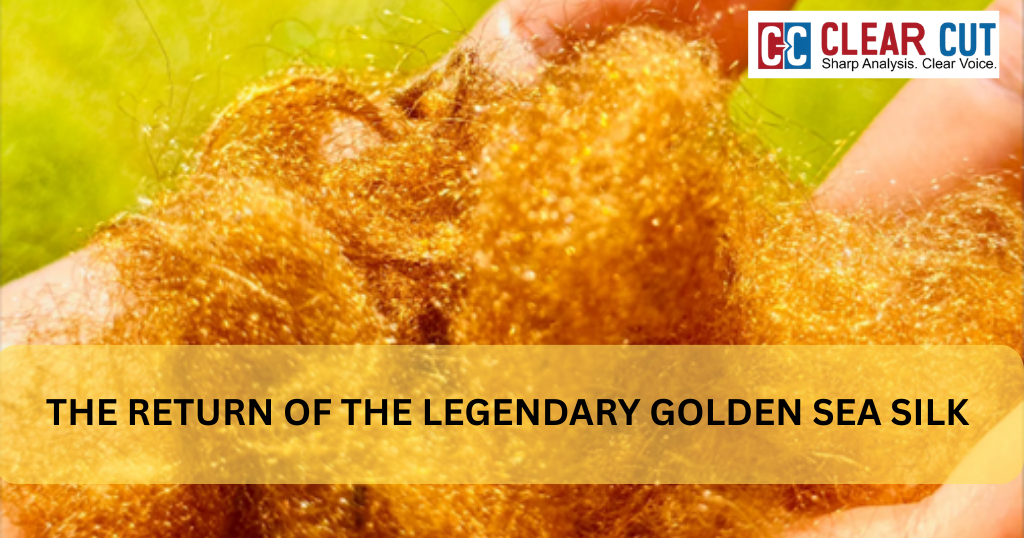
Researchers in South Korea have successfully revived sea silk, a rare golden fibre prized in ancient times, using sustainable methods that avoid harming endangered species. The fibre’s natural golden shimmer comes from structural coloration, offering a durable, dye-free, and eco-friendly alternative for modern textiles and fashion.
Introduction
A remarkable scientific development has revived a textile that once symbolised wealth, power, and craftsmanship in the ancient world. Researchers in South Korea have successfully recreated sea silk, a rare golden fibre that dates back more than 2,000 years. This achievement represents a powerful combination of history, science, and sustainability, demonstrating how modern research can revive lost traditions while offering innovative solutions for the future of materials and textiles.
A Rare Fibre with Ancient Roots
Sea silk, sometimes referred to as the “gold of the sea,” was one of the most prized textiles of ancient Rome. It was valued for its natural golden shine, exceptional strength, and extremely lightweight feel. Historically, sea silk was produced from the silky threads known as byssus secreted by a Mediterranean clam called Pinna nobilis. These threads helped the molluscs anchor themselves to the seabed, but skilled artisans transformed them into delicate fabrics that were reserved for royalty, nobility, and religious leaders.
Over time, the craft of producing sea silk became increasingly rare. Environmental degradation, pollution, and overexploitation led to a dramatic decline in Pinna nobilis populations. Today, the species is protected, and harvesting its byssus is prohibited in the European Union. As a result, sea silk became more of a historical legend than a practical textile, preserved only in museums and the memories of a few remaining artisans.
Searching for a Sustainable Alternative
Recognising the cultural and scientific value of sea silk, researchers from Pohang University of Science and Technology sought a way to recreate the fibre without harming endangered species. Their solution came from an unexpected source: the pen shell clam Atrina pectinata, which is commonly farmed for food in South Korea.
The byssus threads of this species are usually discarded as waste during seafood processing. However, the research team discovered that these threads possess chemical and structural properties similar to those of traditional sea silk. This discovery opened the possibility of producing the ancient fibre in a sustainable and scalable way.
By developing a specialised processing method, the scientists successfully transformed the discarded threads into a fibre closely resembling historical sea silk. The breakthrough not only revived an ancient material but also highlighted how waste resources can be repurposed into valuable products.
Understanding the Golden Glow
One of the most fascinating aspects of sea silk is its natural golden shimmer. Unlike most textiles, the colour does not come from dyes or pigments. Instead, it results from structural coloration, a phenomenon in which microscopic structures interact with light to create colour.
Through detailed analysis, the researchers identified the presence of spherical protein structures arranged in layered formations within the fibre. These structures reflect light in a way similar to butterfly wings, peacock feathers, or soap bubbles. The team named this protein photonin.
Because the colour arises from structure rather than chemical pigments, it does not fade over time. This explains why ancient sea silk textiles have retained their golden appearance for centuries. The discovery provides new insights into how nature creates colour and may inspire future innovations in dye-free textile production.
Sustainability and Circular Innovation
Beyond its historical and scientific significance, the recreation of sea silk carries strong environmental implications. Traditional textile production often relies on chemical dyes and resource-intensive processes that contribute to pollution and waste. In contrast, this new approach uses a material that would otherwise be discarded.
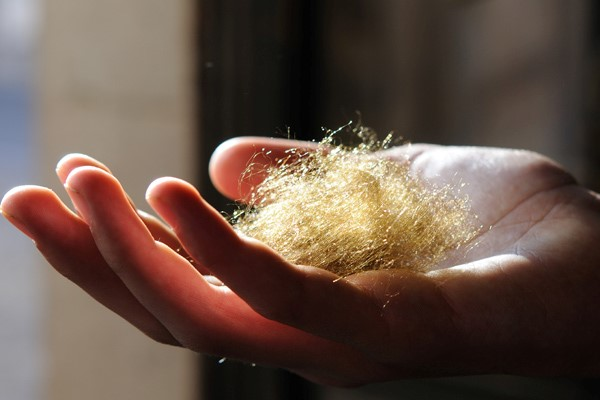
By turning seafood processing waste into a valuable textile fibre, the research demonstrates the potential of circular economy practices in material science. The process reduces waste while creating new economic opportunities and environmentally friendly products.
The durability of the fibre also contributes to sustainability. Fabrics that maintain their colour and strength over long periods can reduce the need for replacement and decrease the environmental footprint of clothing production.
Future Applications and Possibilities
The implications of this discovery extend far beyond the revival of an ancient luxury fabric. Scientists believe that the principles behind sea silk could lead to the development of new materials for modern industries.
Potential applications include long lasting textiles, advanced coatings, and innovative materials that mimic nature’s ability to produce colour without dyes. The research also highlights how interdisciplinary collaboration combining biology, materials science, and engineering can unlock new possibilities for sustainable design.
In the fashion industry, the development of dye free fabrics could transform production processes, reducing water consumption and chemical use. In technology and design, the structural colour concept could inspire new approaches to creating vibrant, durable materials.
Clear Cut Research Desk
New Delhi, UPDATED: Feb 12, 2026 05:30 IST
Written By: Ruchira Das