
As India’s groundwater has transformed into both a blessing and a ticking time bomb, very few have paid attention to it with the same patience as Dr. Himanshu Kulkarni. For more than thirty years, the Pune-based hydrogeologist has transformed data into dialogue and science into service. His journey from looking closely through the fractured basalt of Deccan traps to being at the forefront of the country’s participatory groundwater governance frameworks has to be one of the most remarkable scientific crusades in modern India.When the WATER Center at the Univer-sity of Oklahoma named Dr. Kulkarni the “2025 International Water Prize” laureate, the citation read: “For pioneer-ing the integration of hydrogeological science with community-based governance
to secure groundwater sustain-ability across developing regions.”For India, it was a proud moment; it was the first time in this country that a scien-tist with a rural field-based practice had been acknowledged in a global policy forum. But for those who know his work, it was not an apotheosis, but an affirmation of a quiet, field-based revolution that has been preceded for decades.
Early Years: A Scientist Rooted in the Ground Beneath His Feet
Dr. Kulkarni developed his love of geology, not in a laboratory, but on the craggy escarpments of Maharashtra. As a student at Savitribai Phule Pune University, he found himself fascinated by the metronomes of groundwater. His
Dr. Kulkarni developed his love of geology, not in a laboratory, but on the craggy escarpments of Maharashtra. As a student at Savitribai Phule Pune University, he found himself fascinated by the metronomes of groundwater. His
PhD in the late 1980s was dedicated to studying the pathways of water flow through India’s fractured geology, an enigma to traditional hydrology.
The belief that hydrogeology was not only a fitness program, but also an intricate language of relationships, shaped and subsequently formed the foundation of his professional pursuits.Throughout the early 1990s it quickly became apparent that demand for groundwater in India was increasing rapidly. The tube well proliferation multiplied; the farmers were drilling deeper every year, and India’s policy-makers expanded irrigation develop-ment and use without an understanding of aquifer processes. This progression paved the way for overshooting water supplies. While everyone else focused on
technology fixes and innovations, Dr. Kulkarni focused on unwrapping the mystery of the ground itself.
Building ACWADAM: The Science of Participation
In 1998, Dr. Kulkarni launched the Advanced Centre for Water Resources Development and Management
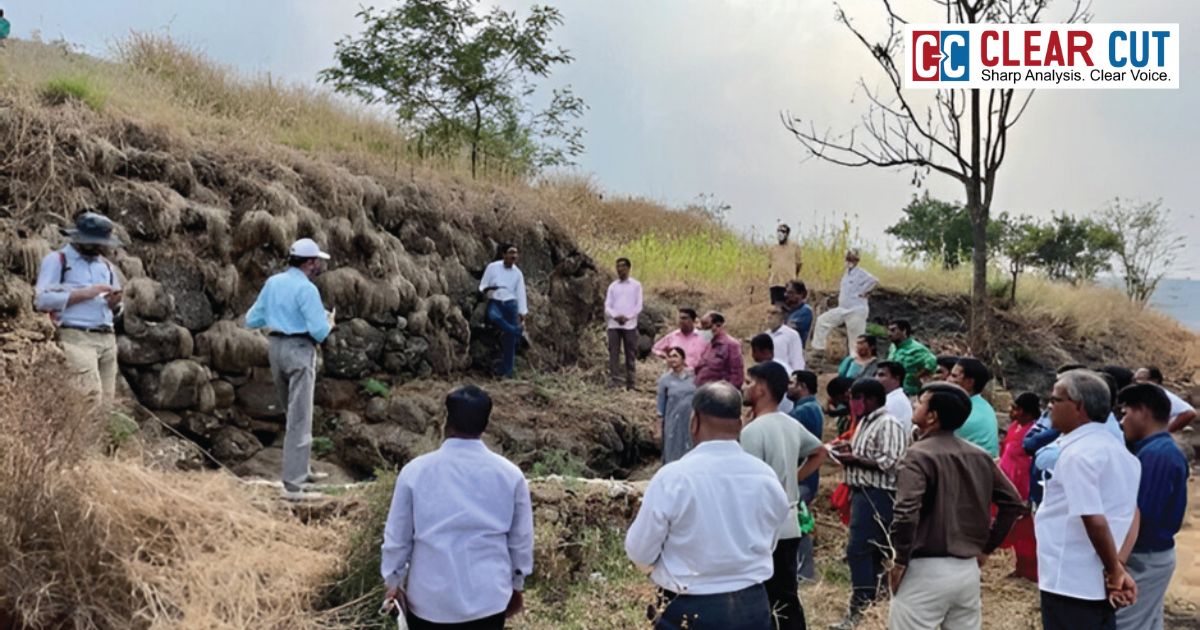
(ACWADAM) along with a small number of colleagues in Pune. They had a simple visionary yet radical agenda: to couple robust hydrogeological science with grassroots action. ACWADAM embarked on research in semi-arid Maharashtra, mapping aquifers found at depth, which was grounded in field surveys, community interviews, and local knowledge. Yet what made the work remarkable was very much a way of being – the research was not to be left in reports; the research was to be owned by the communities. Under his direction, ACWADAM coined the term “aquifer literacy” to educate villagers, NGOs, and local government about the invisible resource below them.
Farmers, women’s self-help groups, and the local schoolteacher became literate in how fractures both held and released water, how recharge was contingent on local geology, and in the importance of collective management. What followed was transformative: water-user associations began regulating their withdrawals based on the recharge level, villages stimulated water production through well recharge by repairing infiltration zones, and the very conversation about water shifted from ownership to stewardship.
Reviving Invisible Waters: Case Studies from India’s Secluded Villages
Dr. Kulkarni’s influence can be seen in the springshed and aquifer revival projects that ACWADAM carried out using India’s least mapped terrains. In a more semi-arid taluka of Maharashtra,
Purandar, close to Pune, ACWADAM scientists and farmers came together to identify two aquifers
supplying waters to community wells, one shallow and one deep. Through basic geological mapping techniques and participatory monitoring, farmers learned to make wise water-development decisions. Within a span of five years, as the farmers and community learned to manage their water supply for a mix of crops they couldn’t grow before, open wells would recover from being completely dry, crop variation
increased, and out-migration decreased.
Dr. Kulkarni had also sent his team to the isolated hills of Meghalaya where hills and communities had effectively cloaked more than 700 springs that provided water to tribal settlements, many so remote that they existed barely on maps of India. By bringing the best of traditional knowledge of the Khasi tribe and adapting hydrogeological maps of surface water, Dr. Kulkarni’s team mapped recharge areas, enlisted youth volunteers, taught elders how to build small percolation structures needed to recharge springs and learned where to locate them each season. After decades of relying on what little water springs did produce, many villages again had perennial flows.
Other projects, like one ACWADAM initiated in Jharkhand, focused on communities’ aquifers through grassroots NGOs, and linked aquifer mapping to livelihoods. Women’s groups were hired to monitor the water level of aquifers, and then reduce their water budget in order to manage planting seasons. This created unique water-management plans for agriculture and for many, their livelihoods. These demonstrations served as a model for scientific democratization and sparked change. Each of these projects carried the imprint of Dr. Kulkarni’s philosophy: science as dialogue, not dictate.
“Our work is not about taking science to people,” he said in India Water Portal interview, “but about bringing people into the science.”
Science Becomes Policy: From Aquifer Mapping to Groundwater
Governance
As ACWADAM’s field work escalated, ACWADAM began to gain traction among policymakers. By the early
2000s, Dr. Kulkarni was asked to serve on advisory committees to the Planning Commission and the Central Ground Water Board (CGWB). His central message, that groundwater should be managed by aquifer units and not administrative boundaries, began to foster change in dual policy discourse. Dr. Kulkarni played a key role in drafting frameworks that, subsequently, informed and guided the National Aquifer Mapping Programme (NAQUIM) when developed. The emphasis of NAQUIM under Dr. Kulkarni maintained throughout the programme, not simply mapping aquifers scientifically,but included people, as an astonishing change within the top-down approaches. In 2013, he served a critical role in drafting the Maharashtra Groundwater (Development and Management) Act which legally appropriated aquifers as
conglomerated resources which required community consent for extractions. The challenge of local
water governance councils to empower community stakeholders and highlight participatory and governance approaches provided unmistakable reflection and influence of ACWADAM’s philosophy.
Dr. Kulkarni’s work on committees drafting the National Water Policy (2012) and his technical inputs to the Atal Bhujal Yojana (Atal Jal) project, India’s flagship World Bank-supported programme on sustainable groundwater management, further contributed to transitioning hydrogeology from the laboratory to the panchayat and the beginning of what he often referred to as “the second freedom struggle – freedom from water insecurity.”
Aligning with the Sustainable Devel-opment Goals
Dr. Kulkarni’s scientific vision is aligned with the United Nations Sustainable Development Goals (SDGs), specifically SDG 6 (clean water and sanitation), SDG 13 (climate action), and SDG 15 (life on land). ACWADAM’s work has centered groundwater in rural sustainability and climate adaptation. For example, the springshed revival program in the West-ern Ghats met SDG 6.6, which seeks the protection of water-related ecosystems, by restoring natural recharge routes and wetlands. Through his methods in the Himalayan states, SDG 13 (climate action) is supported by increasing community resilience to unpredictable rainfall and glacial retreat. Similarly, forest resto-ration in recharge zones connects his work to SDG 15’s (life on land) focus on preserving terrestrial ecosystems. What distinguishes his methods is not the rhetoric, but the impact. In drought-prone villages in Maharashtra, groundwater levels are stable; in Jharkhand and Meghalaya, trained volunteers measure spring discharge rates. These micro-events accumulate into a macro-vision of sustainability, where every well and every spring serves as a data point for planetary health.
CSR Partnerships: Corporate Water Stewardship through Aquifer Literacy
As Corporate Social Responsibility (CSR) was growing in importance following 2014, Dr. Kulkarni realized that important changes could happen in water stewardship, if we could highlight industries’ responsibility. Dr. Kulkarni repositioned CSR water projects from charity to co-responsibili–ty within industries. In that time to come, ACWADAM partnered with a number of corporate foundations to embed hydrogeological science into CSR programs.
• With the Hindustan Unilever Founda-tion, Dr. Kulkarni led the design of “Water for Life,” a program that integrated aquifer mapping with community-recharge leader efforts in over 2,000 villages.
• With Tata Trusts, he co-developed frameworks of watershed water budget-ing in central India by ensuring CSR audits were designed to assess level of sustainability of groundwater use.
• Through ITC Limited’s Mission Sunehra Kal, he and a team contributed as farm cooperative trainers of efficient water use, tying CSR trust fund use to actual aquifer outcomes.These examples show the potential for CSR funding for collaboration and knowledge use about water. Instead of POLICY CHAMPION / Dr. Himan
These examples show the potential for CSR funding for collaboration and knowledge use about water. Instead of simply building check dams, companies learned to explain hydrogeological behavior, study recharge, and encourage community ownership of water sustainable programs. As a result, Dr. Kulkarni has become a sought-after mentor in corporate sustainability circles, advising firms on aligning their water programs with ESG (Environmental, Social and Governance) indicators and national SDG commitments.
Case Studies: When Science Meets Social Enterprise
One notable case is the collaboration between the Hindustan Unilever Foundation and ACWADAM in the drought severely affected region of Marathwada. Dr. Kulkarni’s group trained village committees to create water balance sheets – assessing recharge and discharge in the same way an accountant balances books. This process enabled communities to come to an agreement about when to irrigate and when to rest farmland from irrigation. Over the six year period the water table improved an average of 1.2 meters,
agricultural productivity increased 40 percent, and women who worked to fetch water cut their time in half.
In another initiative, ACWADAM partnered with ITC Limited to work on aquifer-based water budgeting in parts of Madhya Pradesh and Telangana. Local youth were trained as para-hydrologists and carried a smartphone with the groundwater monitoring app. The project showed how digital resources could support traditional science, and helped to bring transparency to resource governance.
These collaborations transformed Dr. Kulkarni’s educational material into living laboratories for sustainably driven by an organization’s CSR efforts. This method has been replicated by numerous Indian corporates under the National CSR Hub, and informed CII’s Water Stewardship Framework.
The Global Stage: Recognition through the International Water
Prize, 2025
On September 15, 2025, in front of an audience at the University of Oklahoma to receive the International Water Prize, Dr. Himanshu Kulkarni stepped up to the podium. The audience included some of the world’s most famous professionals in water science, humanitarian engineering, and global water policy. The prize that Dr. Kulkarni received is among the highest honors there is in water science, and he is the first winner of Indian nationality.
The prize committee highlighted Dr. Kulkarni’s “unique ability to bridge scientific inquiry and participatory
governance, translating hydrogeological complexity into community resilience.”
In receiving the award, Dr. Kulkarni redirected the attention away from himself:
“This award is for the infinite communities that taught me that water does not flow through only rocks, but also through relationships. They are the true guardians of the aquifers.”
This award is symbolic for more than the individual’s achievement, but a reflection of India coming of age in groundwater science – a shift towards empathy rather than extraction in regard to groundwater science from policy (as paperwork) to practice.
Additionally, his selection highlights how locally grounded innovations can change global debates. Agencies, including UNESCO-WWAP and UNDP-India, now cite his frameworks in their manuals for institutional capacity building and he has coined the term “aquifer stewardship,” illustrating how
Locally generated discussions are capable of entering the lexicon of global water governance and inspiring networks across Africa and Southeast Asia.
Mentorship, Education, and Institutional Legacy
In addition to his involvement with projects and policies, Dr. Kulkarni has also shepherded a generation of young scientists. Over the years, he has mentored students in field hydrogeology and participatory methods through ACWADAM’s fellowships and partnerships with universities such as IIT Bombay, Shiv Nadar University, and the University of Delhi.
His lectures focus less on formulas and more on humility to face complexities. “Nature is not bound to conform to our equations,” he tells students. “It is our job to understand her language, not to mpose ours on her”.
Some of his mentees are currently running groundwater programs in state agencies, NGOs, and CSR departments and so carry forward his intellectual legacy.
Policy Champion and the Sustainable Goal Compass
“Policy champion” is a fitting title for Dr. Kulkarni for his adeptness in taking science to policy and practice. His decades-long continuation of committee work – including but not limited to the Planning Commission Working Group on Water Resources and the National Springshed Management Task Force – has ensured the voices of both scientists and villagers form robust drafts of policy. His frameworks lay the foundation for India’s transformation from extracting resources to renewing them. When collaborating on the National Water Policy consultations in 2021-2025, his concept of “aquifer-based decentraliza tion,”
provided the background to engage local data collection, and expectations of accountable action with
collective responsibilities. Moreover, his focus on springshed restoration has impacted India’s Mountain Water Security Mission, merging climate adaptation with biodiversity and livelihoodsa clear contribution to SDG 13 and SDG 15. At the same time, Dr. Kulkarni’s activism has influenced the evaluation of corporate social responsibility CSR programs. He has helped companies shift from qualitative CSR and reporting on hydrogeological indicators into measurable sustainability indicators.
Science with a Soul: The Ethics of Groundwater
To Dr. Kulkarni, groundwater is about more than a scientific undertaking; it’s about ethics. His emphasis on Gandhi’s notion of trusteeship is frequently referenced when he says, resources are for all people, and science is to give life to that collective trustee. Many of his notebooks show the wear and tear of years spent in the field, and exhibit not only his sketches of fractures and recharge area mapping but the names of villagers who’ve mapped with him. This connection of data and dignity embodies his science. Colleagues say he is both detail-oriented, and contemplative. “He might observe a seep on an outcrop for an entire hour,” says one ACWADAM scientist, “before explaining how that tiny trickle is a representation of the region, and the entire watershed.”The capacity to narrate complexity in human terms has not only rendered him an admired scientist, but also a policy poet, someone who can talk to the lender of both banker and bank. Legacy: The Scientist of Policy Who Sat by the Water With India speeding towards a economy of $5 trillion, the pressures on aquifers deepens. Climate change, urban encroachment, agricultural intensification and plurality are shifting the hydrological calculus of the nation. Throughout
this upheaval, Dr. Himanshu Kulkarni’s legacy offers a compass to find the way forward: that science
should be participatory; policy should be compassionate and, and sustainability should be local, literally.
His frameworks are now being implemented in numerous states through programs like the Maharashtra Water Conservation Mission, or Himalayan Springshed Plans, while his ideas and lessons work on a further plane. Dr. Kulkarni influences policy discourse at Corporate Social Responsibility (CSR) board room tables, as a government advisor, and in communities, like sediment and water in aquifers. Three decades later when he first set off with a field book and hammer, Dr. Kulkarni is still following the same old difficult
stubborn paths while tracing aquifers that support life in places that are, quite literally, far away from headlines. The prize for him is not the formalizing of international recognition from right above the horizon or accepting awards or giving talks at conferences, but the sound one may hear from a spring that flows again after being dry for years.
As the world faces a future of water stress, his journey shows us that solutions will not only come from
technology but, from humility, collaboration, and a relentless respect for the living earth beneath us.
Clear Cut Livelihood Desk
New Delhi, UPDATED: Jan 20, 2026 09:00 IST
Written By: Antara Mrinal