
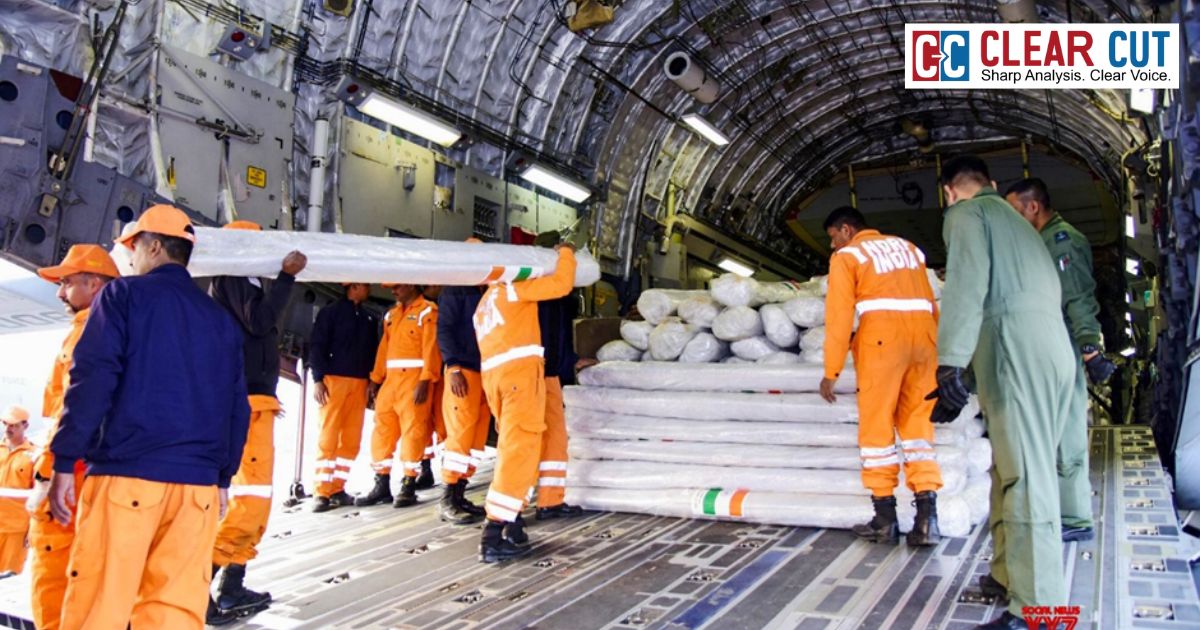
India has dispatched 30 tonnes of humanitarian assistance to the Philippines after a powerful typhoon caused widespread destruction across several parts of the country. The assistance was sent as part of India’s official disaster relief and humanitarian assistance framework, coordinated through government channels. Officials involved in the operation stated that the aim was to support immediate relief efforts while local authorities continued rescue and rehabilitation work.
The move reflects India’s expanding role as a humanitarian responder in the Indo-Pacific region and signals how disaster relief has become a key pillar of its external engagement.
A Severe Weather Event with Widespread Impact
The Philippines recently experienced a strong typhoon that brought intense rainfall, flooding, and destructive winds. According to assessments shared by the Philippines’ National Disaster Risk Reduction and Management Council (NDRRMC), several provinces reported damaged homes, disrupted electricity supply, blocked roads, and large-scale displacement.
Local disaster management authorities noted that evacuation centres quickly filled up as families fled low-lying and coastal areas. Health officials also raised concerns about access to clean drinking water and the risk of water-borne diseases following floods. The scale of the impact prompted calls for international assistance to complement domestic relief operations.
India’s Coordinated Relief Mission
In response to the situation, India mobilised emergency humanitarian aid through coordinated action involving the Ministry of External Affairs and disaster relief agencies. Officials familiar with the operation stated that the relief consignment was prepared and dispatched on priority to ensure timely delivery.
India’s decision to act quickly aligns with its stated policy of providing humanitarian assistance and disaster relief to countries affected by natural calamities. Senior officials have repeatedly emphasised that early intervention can significantly reduce suffering during the critical post-disaster phase.
Essential Supplies for Immediate Relief
The humanitarian consignment includes food items, essential medicines, medical supplies, and shelter materials. Officials involved in the relief effort explained that these items were selected based on standard emergency response requirements identified by disaster management agencies.
Food supplies help address shortages in evacuation centres where normal supply chains have broken down. Medical kits and medicines support treatment for injuries and help prevent the spread of infections, which often rise after flooding. Shelter materials provide temporary protection for families whose homes were damaged or destroyed, offering basic safety during recovery.
India’s Broader Humanitarian Assistance Framework
India’s assistance to the Philippines follows its established Humanitarian Assistance and Disaster Relief (HADR) policy framework. Over the years, India has provided similar support to countries affected by earthquakes, cyclones, floods, and health emergencies across Asia, Africa, and the Middle East.
Officials associated with India’s disaster response mechanism have pointed out that such missions are guided by principles of speed, neutrality, and respect for local coordination. This approach has gradually strengthened India’s reputation as a dependable partner during emergencies, particularly in the Global South.
Strengthening Bilateral and Regional Cooperation
Humanitarian assistance also carries diplomatic significance. India’s support reinforces its relationship with the Philippines, a key partner in Southeast Asia. Foreign policy experts note that disaster cooperation builds trust at both governmental and people-to-people levels.
India’s engagement fits into its broader Indo-Pacific outlook, which emphasises stability, cooperation, and collective responsibility. By responding to humanitarian crises, India demonstrates that regional partnerships extend beyond strategic dialogue to include support during moments of human vulnerability.
The Human Cost Behind the Crisis
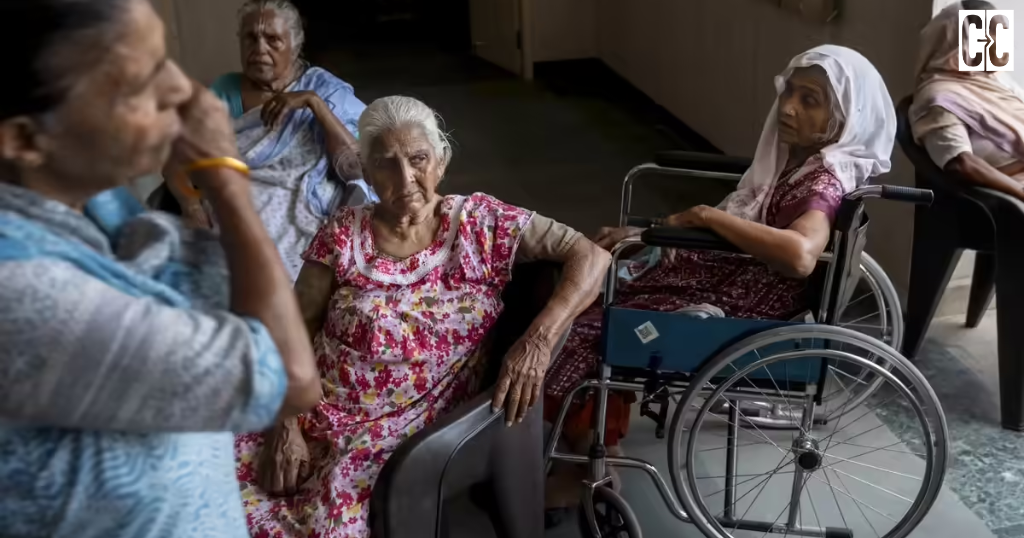
Beyond logistics and diplomacy, the humanitarian crisis has deeply affected ordinary people. Reports from local authorities and aid agencies indicate that women, children, older persons, and persons with disabilities face the greatest challenges during displacement.
Loss of shelter disrupts education, healthcare access, and livelihoods. Timely humanitarian aid helps reduce these risks by providing essential support during the most uncertain phase of recovery. Relief efforts play a crucial role in restoring dignity and stability while longer-term reconstruction plans are developed.
Climate Change and Rising Disaster Risks
The typhoon has also drawn attention to the growing impact of climate change on disaster frequency and intensity. Climate and disaster management experts have warned that warmer ocean temperatures are contributing to stronger storms in the region.
Countries like the Philippines, with extensive coastlines and high population density, remain particularly vulnerable. While emergency aid addresses immediate needs, long-term solutions require climate-resilient infrastructure, early warning systems, and international cooperation. India’s role in disaster response highlights how regional collaboration becomes increasingly important in a changing climate.
Key Highlights
- A powerful typhoon caused widespread damage and displacement in the Philippines.
- India dispatched 30 tonnes of humanitarian aid through official government channels.
- The aid includes food, medicines, medical supplies, and shelter materials.
- The mission aligns with India’s Humanitarian Assistance and Disaster Relief framework.
- The response highlights growing regional cooperation amid climate-related disasters.
Solidarity Beyond Borders
India’s humanitarian assistance to the typhoon-hit Philippines reflects a commitment to shared responsibility during times of crisis. By working alongside local authorities and disaster management institutions, India has contributed to immediate relief efforts while reinforcing regional solidarity.
As climate-driven disasters become more frequent, such cooperation will play an increasingly important role in saving lives and supporting recovery. India’s response underscores how humanitarian action can strengthen partnerships, uphold human dignity, and foster collective resilience across borders.
Clear Cut Research Desk
New Delhi, UPDATED: Jan 20, 2026 04:00 IST
Written By: Samiksha Shambharkar