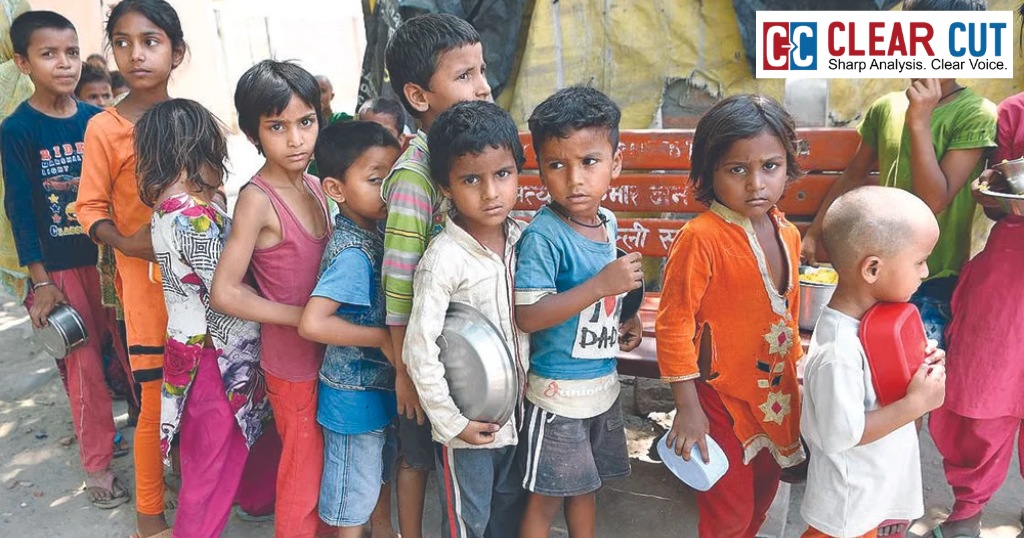


When UNICEF issued its latest alert on December 1, 2025, the message was not dramatic. It was disturbing. More than 23 million children under the age of five in fifteen countries now face acute malnutrition due to climate vulnerability. These are not projections. These are current numbers based on real-time nutritional and climate assessments carried out through the agency’s Early Childhood Nutrition Monitoring System.
The report points to a rapid rise in wasting among the children across regions that have been struck by droughts, floods and long dry spells. Together, these shocks have wiped out crops, cut household incomes and eroded the support systems that keep children healthy. To UNICEF, this is one of the clearest links between climate instability and childhood mortality in recent years. And when UNICEF warns that child deaths may rise sharply unless action is taken, the world has to pay close attention.
Climate and hunger are now interlinked
The same pattern is reported by the agency’s field teams in East Africa, the Sahel, Yemen, Afghanistan and parts of South Asia: Crops fail, Livestock die, Families migrate and food prices rise. Children lose weight first because their nutritional reserves are small. Women in many countries have less access to health care during climate emergencies, and this directly affects infants and toddlers.
UNICEF repeatedly makes one point clear: climate shocks are not just about rising temperatures. They are about the breakdown of systems that used to stabilize families. In places such as Ethiopia or Kenya households are confronted with consecutive droughts. It further slides more deeply into poverty. It is because the communities never had a chance to recover between climate events. In countries where the floods hit, like Bangladesh and South Sudan, agricultural land is left waterlogged and unusable for months. Children are the first casualties. Either way, their reliance on adults, health systems and public safety nets had already been stretched to a breaking point.
Why This Matters Outside These Countries
Although much of the current emergency is centred in Africa and parts of the Middle East, UNICEF’s warning has implications for countries far beyond those regions. Rising malnutrition triggers long-term social consequences. It reduces school performance, increases long-term disability, and lowers adult productivity.
This is not a problem of some faraway land. India has faced its own climate-linked nutritional challenges after heat waves and disruptions to crops. The global food system is today so interwoven that a failed season in one region pushes up prices in another. UNICEF’s report indirectly reminds middle-income countries that stability in the global south is deeply entwined with climate adaptation.
The Economic Cost of Inaction
While UNICEF focuses mainly on child welfare, economists have been sounding their own alarms. Acute malnutrition of under-five children lowers national GDP by an estimated 2 to 3 percent in highly affected countries. If a child becomes severely wasted, he or she is far more likely to be hospitalised for treatment and nutritional rehabilitation, the cost of which adds up and becomes a burden on the public purse.
According to UNICEF’s data, climate-related malnutrition emergencies are on the rise, increasing over the last five years. Unless climate patterns turn around, governments will continue to spend more on emergency programmes and less on long-term development. The agency warns that many countries now face a cycle of repeated humanitarian spending without being able to strengthen systems that prevent emergencies in the first place.
What UNICEF Says Must Happen Now
The alert from UNICEF is not just a warning; rather, it includes several practical recommendations. Countries need to expand child-feeding centres, reinforce community nutrition workers, offer antenatal care to pregnant women, and make clean water systems a priority to help avert diarrheal diseases, which exacerbate malnutrition. UNICEF is also calling for speeding up contributions by international donors to fund supplies of emergency therapeutic foods, already running short in various parts of the world. Another important message is the integration of nutrition programmes within climate financing. Most governments gain funds for renewable energy or coastal adaptation, but very few reach primary health or maternal and child services. UNICEF claims that climate resilience must commence with the protection of the youngest citizens.
A Quiet but Urgent Call
There is nothing sensational in this report. That is precisely why it feels more serious. UNICEF is not pointing to a single catastrophe but is documenting a gradual but dangerous shift where climate stress is weakening child health across several nations at once. This report is a warning for all policymakers, including those in India, that climate action is not only about emissions; it is about food, water, mothers, and everyday structures that keep children alive. UNICEF has sounded the alarm. Whether governments act in time will shape the health of an entire generation.
Clear Cut Child Protection Desk
New Delhi, UPDATED: Dec 04, 2025 04:30 IST
Written By: Janmojaya Barik