
The 25th World Sustainable Development Summit (WSDS 2026) in New Delhi showcased India’s progress in clean energy, agri-photovoltaics, and Himalayan innovations through Him-CONNECT, emphasizing that sustainability must be a civilizational commitment, not just a pledge.
The 25th edition of the World Sustainable Development Summit (WSDS) concluded in New Delhi, leaving behind more than a conference record. It left behind a mandate. Organised by The Energy and Resources Institute (TERI), the Silver Jubilee edition was held from 25 to 27 February 2026 at the Taj Palace, under the umbrella theme “Parivartan”.Transformations: Vision, Voices, and Values for Sustainable Development.”
The summit marked 25 years since its founding as the Delhi Sustainable Development Summit in 2001. This year, the tone was different. Leaders did not want pledges. They wanted proof.
From Pledges to Performance
The 2026 Silver Jubilee edition arrived at a pivotal moment, when the first Global Stocktake under the Paris Agreement underscored the urgent need for a 43% reduction in global emissions by 2030, and when progress on the Sustainable Development Goals remained uneven.
India’s own story offered some grounds for optimism. Mr Tanmay Kumar, Secretary, Ministry of Environment, Forest and Climate Change, stated that India achieved its 2030 target of 50% non-fossil installed power capacity in June 2025, five years ahead of schedule, with the share now exceeding 51%.He was unsparing about what is still at stake.
He said, “India is attempting something far more complex to grow, eradicate poverty, urbanize, industrialize, and decarbonize simultaneously. We refuse to solve yesterday’s poverty by creating tomorrow’s ecological crisis.”
Agri-Photovoltaics: Powering Farms, Not Just Grids
One of the most discussed solutions at WSDS 2026 was agri-photovoltaics, or AgriPV. The concept is simple and powerful. Solar panels are installed above or alongside farmland, allowing farmers to generate income from both crops and clean energy.
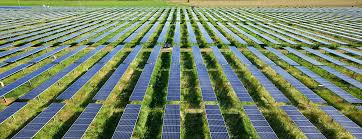
At the session “Accelerating AgriPV in India: From Pilots to Policy-Led Scale-Up,” Mr Ashish Khanna, Director General of the International Solar Alliance, delivered special remarks, saying, “Agrivoltaics will require a combination of policy clarity, standardised DPR approaches for different cropping systems, and blended finance mechanisms. These elements together can help move projects from concept to scalable investment opportunities.”
The economic case is real. The development and maintenance of agrivoltaics systems creates employment opportunities in rural areas, stimulating the local economy and fostering sustainable livelihoods. For India, where millions of farmers remain vulnerable to erratic monsoons and rising temperatures, AgriPV offers a way to stabilise income while contributing to national clean energy targets.
Him-CONNECT: Himalayan Solutions Go National
A defining feature of this year’s summit was the launch of Him-CONNECT. The Ministry of Environment, Forest and Climate Change unveiled Him-CONNECT as a dedicated innovation platform aimed at accelerating sustainable technologies and innovations emerging from the Indian Himalayan Region.
Mr Bhupender Yadav, Minister for Environment, Forest and Climate Change, stated, “Their collective effort has helped bring forward innovations and solutions from the Himalayan region and has strengthened the link between research and real-world impact. Him-CONNECT has been conceived as a structured platform to translate research supported under the National Mission on Himalayan Studies into solutions that can be implemented at scale.”
Key innovations showcased included AI-enabled real-time landslide prediction systems, disaster-resilient vernacular housing technologies, low-cost seismic vulnerability assessment tools, and solar-powered hydroponics using treated wastewater. These are not pilot projects. They are ready to deploy.
A Summit of Record Numbers and Bold Voices
Dr Shailly Kedia, Curator of WSDS and Director at TERI, noted that this year broke all records with 2,381 unique participants, 10 plenaries, and 14 thematic tracks.
The voices were equally striking. Ms Dia Mirza, Goodwill Ambassador for the United Nations Environment Programme, said, “Climate change is not gender neutral. Women and girls experience its impacts most acutely, even as they grow much of the world’s food and sustain families and communities. Yet they remain underrepresented in climate and energy decision-making.”
Ms Vaishali Nigam Sinha, Co-Founder and Chairperson of Sustainability at ReNew, observed, “Development and climate are no longer parallel agendas; they are the same agenda. Clean energy is not a nice-to-do; it is an economic imperative. The global South is no longer asking for permission; it is offering solutions.”
Sustainability as a Civilizational Ethic
The closing session was perhaps the most reflective. Twenty-five years of summits have produced dialogue, frameworks, and campaigns. The question now is whether those translate into daily governance and community action.
Dr Vibha Dhawan, Director General of TERI, said, “WSDS is about building pathways of opportunity, not merely responding to crisis. Partnerships are essential. We cannot reinvent the wheel. We must adapt existing research to our requirements and move forward collaboratively.”
Mr Nitin Desai, Chairman of TERI, added, “Sustainable development cannot be driven by uniform goals alone. Governments cannot act in isolation; progress requires shared learning among institutions, researchers, businesses, and communities working on the ground.”
Ms Isabelle Tschan, Deputy Resident Representative of the United Nations Development Programme, pointed to youth as central to this shift, noting that with nearly 65% of India’s population under the age of 35, youth participation and leadership are essential in shaping how sustainability is practised across communities and institutions.
The summit also announced that the 7th AgriVoltaics World Conference will be hosted in Delhi in October 2026, signalling India’s growing role as a global hub for dual-use clean energy innovation.
WSDS 2026 closed with a clear message. The world does not need another vision document. It needs transformation that is measurable, equitable, and rooted in the values of communities on the frontlines of climate change. Sustainability, leaders agreed, must stop being a subject of international negotiations and start being a civilizational commitment.
Clear Cut Climate, Livelihood Desk
New Delhi, UPDATED: March 07, 2026 01:00 IST
Written By: Ayushman Meena