
- The Union Cabinet has approved a ₹62,500 crore Mobile Phone Manufacturing Scheme (MPMS) to replace the PLI scheme from FY2026–27, offering incentives for local component manufacturing, R&D, and domestic sourcing to boost value addition and reduce import dependence.
- The government expects nearly ₹39 lakh crore in production and around 60,000 direct jobs over five years, while aiming to transform India from a mobile assembly hub into a globally competitive manufacturing and innovation powerhouse.
- The scheme also seeks to strengthen India’s position in global smartphone exports, encouraging domestic design and semiconductor-linked manufacturing while promoting greater participation of women in the electronics workforce.
July 15, 2024 – The Union Cabinet has approved the Mobile Phone Manufacturing Scheme (MPMS) at a budget outlay of Rs 62,500 crore in India. This move will eventually replace the existing 5-year PLI scheme for Large Scale Electronics Manufacturing (PLI-LSEM) by March 31, 2026. The MPMS, to be implemented from FY2026-27 to FY2030-31, provides manufacturers with differentiated incentives varying from 2.25 percent to 5 percent on eligible sales, up to an additional incentive of 1.5 percent related to domestic sourcing of parts, sub-assembly, and the balance on local product design and R&D in the interest of establishing Indian brands. The government forecasts cumulative production of approximately ₹39 lakh crore and creation of approximately 60,000 direct jobs over the five years of its operation.
The new scheme will represent a 52 percent increase over the 40,995 crores initially set for PLI-LSEM when the original scheme was announced in 2020. It had already achieved production and investment targets with a Rs 11.02 lakh crore output against the Rs 8.13 lakh crore target; exports of over Rs 6.2 lakh crore were in excess of the Rs 4.87 lakh crore target; yet it had created only about 1.85 lakh jobs against the 2 lakh job target; in 2025, the scheme put the world in second place behind the US, in terms of phone production, with smartphone manufacturing taking first place among exported products over diesel and cut diamond.
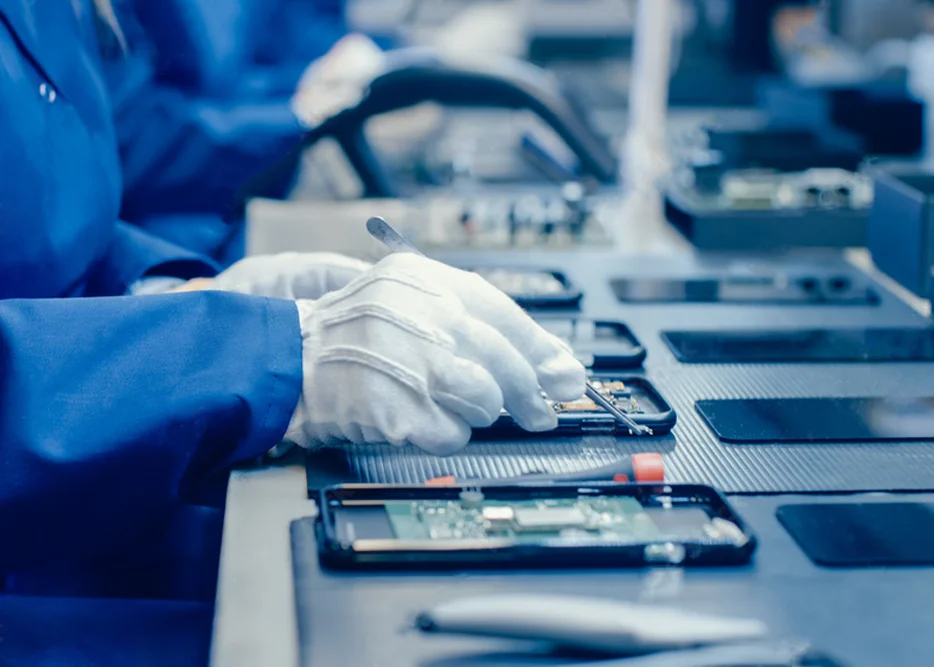
MPMS’s incentive structure also reflects a decades-long complaint about the PLI years, in which India gained manufacturing and assembly capabilities without simultaneously building a commensurate domestic components industry. Estimates for domestic value addition in mobile manufacturing during the PLI years were in the range of roughly 12%–20% – much lower than an internal government goal of 40% that was set for FY26, for example. Meanwhile, imports of high-value components, such as integrated circuits, grew from Rs 2.47 lakh crore in FY21 to Rs 3.96 lakh crore in FY23- growing, instead of shrinking, along with production. MPMS’s design and R&D incentive, and components sourcing bonus, are direct attempts to reduce this discrepancy, penalize external sourcing of the most complex parts, and encourage domestic design and engineering.
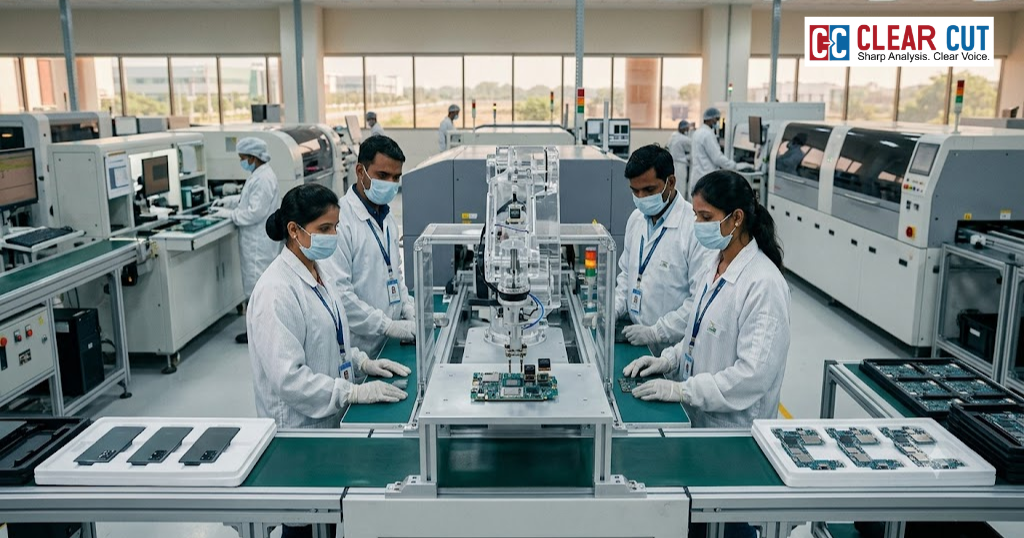
Who is employed on those factory floors matters too. About 70 percent of direct employment in mobile phone production, the fourth most women-intensive industrial sector in India, according to the Ministry of Electronics and IT, is held by women. As many as 90,000 women have been hired due to the PLI-LSEM, it says. Samsung’s plant in Chennai and other similar large campuses often run morning buses from surrounding villages to allow female workers to enter.
Many are stepping into formal factory jobs for the first time. But, that is not without a hitch: A major supplier of Apple’s key factory in Tamil Nadu illegally discriminated against married women when hiring assembly line workers for 2023 and 2024, a Reuters investigation and regulatory probe found, with the human rights commission in India reprimanding labour authorities for an insufficient probe into the allegations. Formal job creation is not the same as fair hiring practices in the sector, in other words.
Around the world, export value is still heavily weighted towards China, the source of almost 47% of all smartphone export value, with Vietnam second at 8% and India close behind at around 7%. Much of India’s gain reflects the “China Plus One” redeployment of manufacturing by Apple and Samsung. Still, whereas Vietnam’s competitive strengths are trade agreements and export capabilities, India’s reliance on imports for the core displays, processors, and other parts makes this structural deficit one that MPMS hopes to fill over the five years it will operate.
The industry has largely welcomed the move. India Cellular and Electronics Association chairman Pankaj Mohindroo said the scheme, along with the newly approved Semicon 2.0, would help in creating five lakhs direct and 15 lakh indirect jobs, and was intended to help increase India’s contribution to global mobile manufacturing “from 15-17 percent to over 30 percent.” Ashok Gupta, chairman of Optiemus Electronics, said it was a way to ensure India moved “from a mobile assembly hub to a globally competitive manufacturing and innovation powerhouse.”
The true test for the MPMS will, much like its predecessor, be more in the space between what the scheme announces and what it delivers upon audit than in its incentive rates, and it is a space that PLI-LSEM on jobs and on value addition did not altogether cover.
Clear Cut Startups Desk
New Delhi, UPDATED: July 15, 2026 09:52 IST
Written By: Yatharth Pathak