
- Delhi’s recurring urban flooding is driven by rapid urbanisation, poor drainage infrastructure, and increasing impervious surfaces—not just heavy monsoon rainfall.
- Blocked drains, inadequate stormwater management, and unmanaged solid waste worsen waterlogging, disrupting transport, public health, and daily life across the city.
- Experts recommend sustainable solutions such as rainwater harvesting, permeable pavements, rain gardens, and integrated flood-resilient urban planning to reduce future flooding.
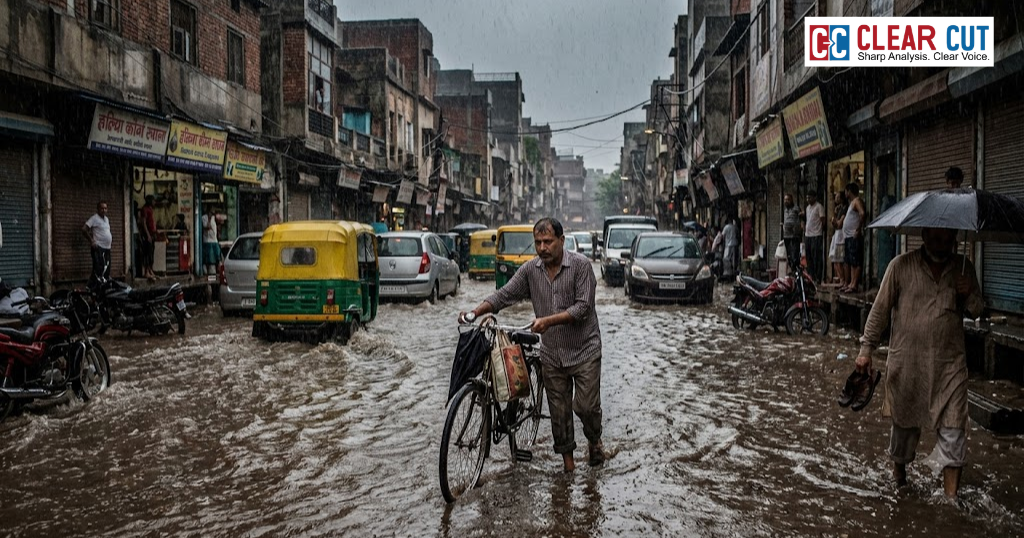
It takes only a few hours of rain every year for the major roads in Delhi to become miniature rivers, for people to be stranded for hours, for schools and workplaces to close. In the southwest monsoon of 2025, Delhi witnessed 902.6 mm of rainfall, when the long-period average was just 640.4 mm – a season that the India Meteorological Department categorised as “excess”, with the month of June itself recording 45% excess rainfall. But the real question is not about the extent of the rainfall; it’s about why the city can’t handle it.
More Than Just Heavy Rain
There is a huge difference between urban flooding and riverine flooding. As stated in the NDMA guidelines for urban flooding management, river-induced floods develop over a long period across a large rural catchment area, whereas urban flooding develops within minutes because rainfall flows off hard, impervious surfaces almost immediately, without penetrating the ground. The fact that NDMA clearly states the management of urban flooding separately from the management of river floods indicates the differences between urban flooding and riverine flooding, especially their nature and time of development, which require different approaches to drainage and warning system. Therefore, urban flooding in Delhi is not a smaller version of a river flood.
Why Delhi Floods
Part of the solution lies in the surface cover. According to research on stormwater management in Indian cities found in the Environmental Conservation journal, rapid urbanisation results in impervious surfaces, and climate change has resulted in intense and more frequent rainfall. A study on the land use in Delhi found in an international hydrology journal states that about 70% of Delhi’s surface area is impervious with an estimated runoff coefficient of about 0.9. Applied on Delhi’s surface area of approximately 1,484 square kilometres, this could lead to approximately 738,000 million litres of runoff water each year – water that cannot infiltrate and can only be drained.

It is here that the drains usually fall short. Research on Indian drainage systems in urban areas, as well as modelling of storm water drains under design storms, indicates that obstruction from solid waste and sediments could decrease the carrying capacity of a drain by up to 65 %, while slight increases in impervious surface area increase peak flow volume substantially. The Environmental Conservation study further points out that Indian cities have largely remained dependent on conventional drainage system infrastructure, instead of switching to sustainable urban drainage systems (SuDS), in the wake of increasing urban population density and prolongation of the rainy season. The NDMA also says that most Indian cities lack updated inventory of their stormwater drains on a catchment basis, which is a basic requirement for drainage capacity planning.
The Cost of Waterlogging
However, standing water has other implications apart from the resultant traffic congestion. According to a study conducted on vector breeding of dengue in Delhi, discarded containers and solid waste collecting rainwater were identified as important breeding grounds for the Aedes aegypti mosquito, thus making it clear that improper solid waste disposal is associated with disease threat during the monsoons. The process of waterlogging also affects transportation and productivity and, according to NDMA, urban flooding in India has many times disrupted transportation and electricity and even outbreaks of infections.
Can Delhi Become Flood-Resilient?
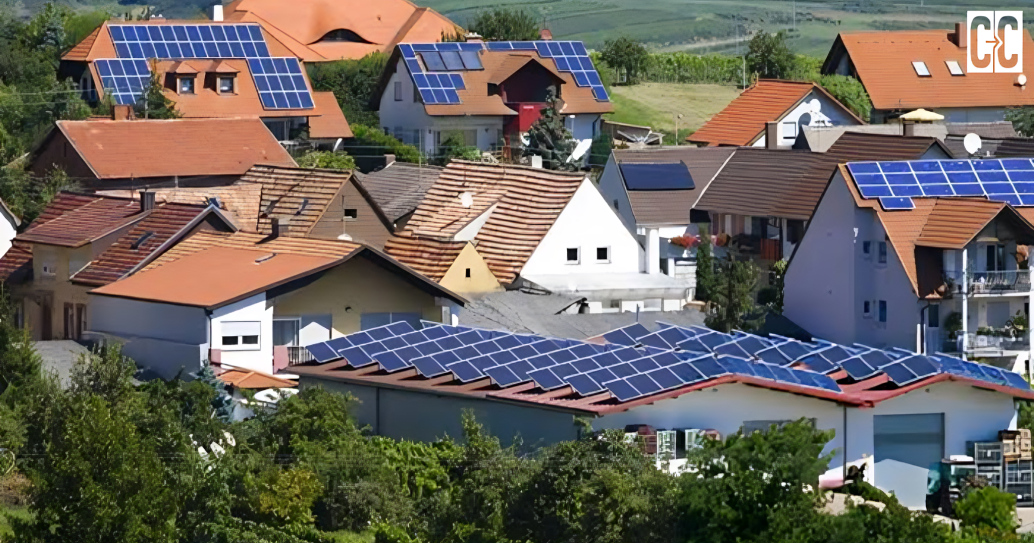
Around the world, there is a movement away from strictly engineered “grey” drains towards hybrid approaches. The World Bank urban flood resilience programme, which has funded 69 projects in 58 countries since 2019 at a cost of $4.4 billion, uses grey infrastructure along with nature-based solutions such as permeable pavement, restored wetlands, and rain gardens, as well as non-structural solutions including early warning systems and land-use planning. This programme’s research into “sponge city” methods in China demonstrates how a combination of green, blue, and grey infrastructure can be used to absorb and store water, as well as slowing its flow, rather than just diverting it quickly. This is precisely what NDMA guidelines also recommend for India, including mandatory rainwater harvesting in urban buildings, rain gardens in public spaces, solid waste separation by trash racks in storm sewers, and catchment-based drainage design.
Conclusion.
The repeated flooding in Delhi should not be seen as something unavoidable due to monsoon rains but rather as a result of the choices made by planners – how much paving has taken place, how well the drainage system has been maintained, and how dispersed the relevant agencies still are. Dealing with this problem will necessitate more than merely desilting drains every year before the monsoon season.
Clear Cut Climate Desk
New Delhi, UPDATED: July 16, 2026 17:30 IST
Written By: Dr. Jyoti Aggarwal
Designation: Senior Research Associate at Devinsights