

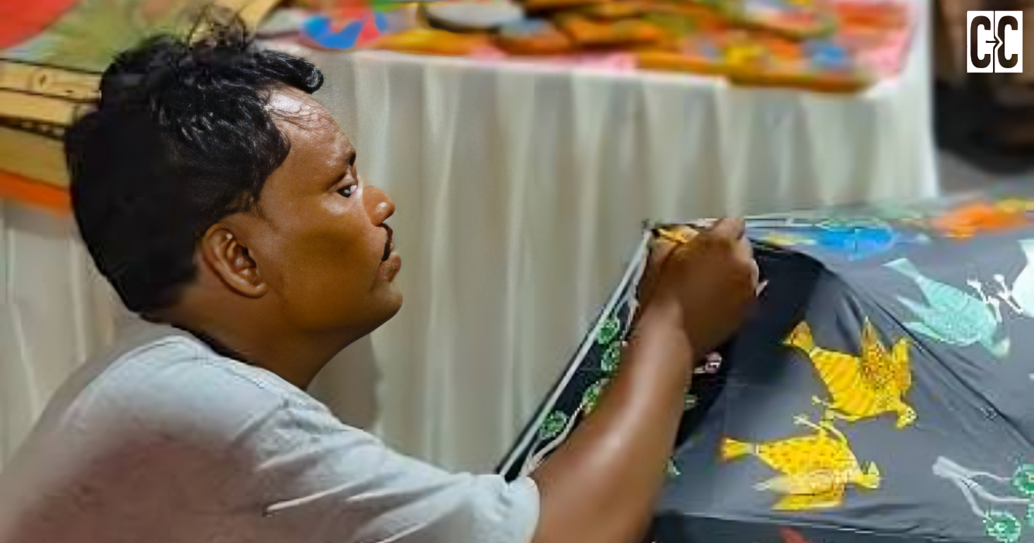
BRICS culture ministers have pledged fair compensation and traditional-knowledge protection against AI misuse. For the 200 million Indians whose livelihoods run through the country’s informal craft economy, the distance between that pledge and enforceable protection remains wide
On August 8, 2026, culture ministers from ten BRICS member states and four partner countries met in Bhopal. They adopted the Bhopal Declaration. This concluded the Culture Track of India’s BRICS chairmanship with a framework for cultural cooperation. The Declaration commits signatories to safeguard Traditional Knowledge Systems and Traditional Cultural Expressions, and to protect creators’ rights by ensuring fair and transparent compensation for artists when organizations use their copyrighted work to train artificial intelligence systems, alongside commitments on museum partnerships and the restitution of cultural property. As a first concrete step, India announced a pilot Voluntary Artist Registry meant to network creative practitioners across the bloc.
Union Culture and Tourism Minister Gajendra Singh Shekhawat viewed the meeting as an urgent call to action for everyone involved: save folk knowledge, languages, folk music, folk culture, and folk traditions now, while they are at risk, by acting together internationally, not just on a national scale. This point resonated most with India. For no other BRICS economy is the sheer number of livelihoods tied to folklore as enormous, the workforce as informal, or the workforce as vulnerable to AI training.
The handicraft and handloom sector contribute about 24.6 % of the country’s manufacturing workforce, 110 lakh people across 65 lakh establishments, according to an assessment by the Institute of Human Development and the Crafts Council of India made in 2016, projected for 2026. The average value-added is estimated at Rs 270 per worker per day, which is less than even the statutory minimum wage. According to G. C. Manna, the lead investigator of the study and former director-general of the National Sample Survey Organization, this figure represents the average household earnings in areas where single-person establishments are prevalent.
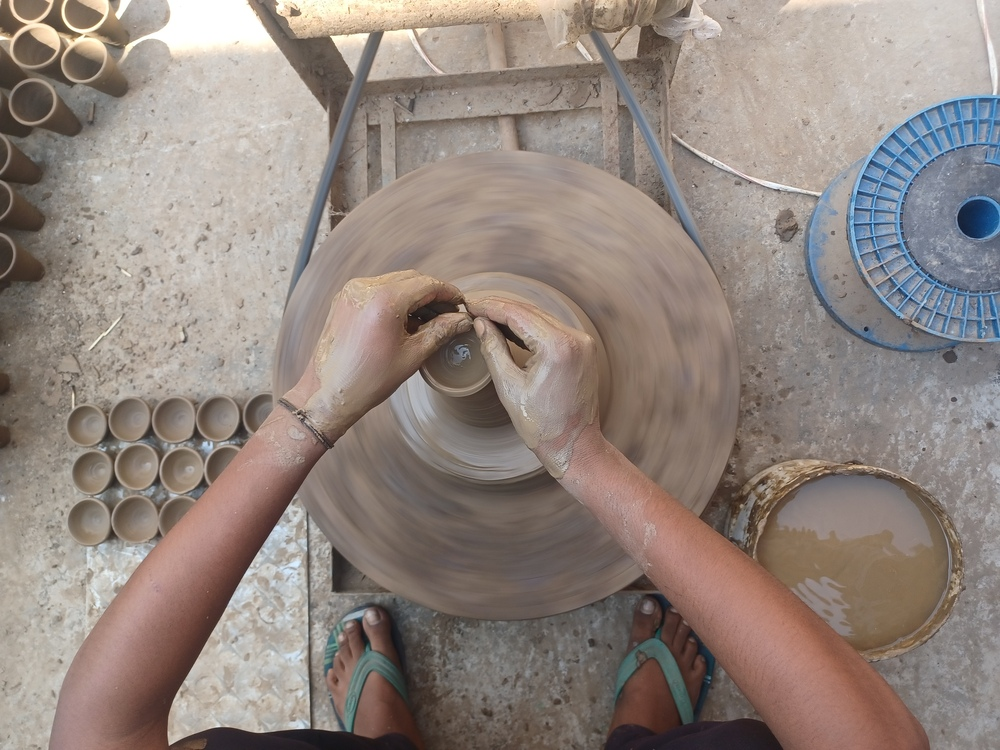
In fewer than 3% of units, more than five persons are employed, and it is the exception rather than the norm to be formally registered or to have health insurance and pension benefits. Priyanka Tyagi, chief executive of the IHD, argued that for the handicrafts sector and handlooms of India to be protected, there would have to be more than promotional initiatives – artisans had to be seen as workers, entitled to health care and economic security as basic human rights and not just as heritage preservers. This same study already pointed to design theft as one of the artisans’ foremost grievances – a concern that predates AI, but one that AI has the potential to scale to an industrial level.
And that ability isn’t hypothetical. The country’s Geographical Indications registry holds registrations for more than 820 products, more than half of which are handicrafts, and although Kanchipuram silk enjoys protected provenance based on its origin and motifs, its weavings, colour structure, and logic are not protected. And precisely those elements, which create its selling power, are precisely the type of design data that generative AI could learn and mimic without so much as hinting it had ever remotely set foot in Kanchipuram, let alone worked with real materials. Tracking the legislative lag, legal scholars say the artisan cooperatives and individuals awarded GI tags often lack the means to bring, let alone win, AI-related infringements, even though they are protected geographically.
But a more helpful comparison is China. After two decades, its “state inheritor of intangible cultural heritage” scheme now formally recognises holders of the traditional crafts, whereas India’s registry has not. Nevertheless, there are reports of entirely artificial-intelligence ‘inheritors’ hawking merchandise on behalf of state media, implying that formal certification does little to guard against the main hazard once any aspect of a tradition is translated into information: its human custodian will become nearly as easy for artificial intelligence to approximate.
What a broader multilateral record suggests to WIPO is that it should be similarly mindful. An April 2024 binding WIPO agreement on IP, genetic resources, and related traditional knowledge – to which India contributed – is awaiting ratification by 15 countries to enter into force. When last updated at WIPO’s General Assembly, just 4 countries – Uganda, Malawi, Albania, and Peru – had done so, not counting India, which hasn’t even signed this text.
In a commentary, one analysis of the Indian Government’s delay stated it wasn’t “hesitancy but rather a principled patience,” as WIPO rules will “require much less in terms of a national disclosure law than India has already enacted.”
India has not even supported a proposal within this same process to begin negotiating binding protection for traditional cultural expressions; no such treaty exists yet either. Set against that record, it becomes clear how aspirational and not binding the wording of the Bhopal Declaration is, and why its artist registry is voluntary and pilot only. This is not to diminish its stated purpose, but the gap between ministerial promise and a functioning instrument that can actually hit an embroiderer in Kutch or a weaver in Kanchipuram – complete with a stipend stipulation, a takedown provision, or a payment claim – is where India’s true test will begin.
Clear Cut Livelihood, Research Desk
New Delhi, UPDATED: August 11, 2026: 09:00 IST
Written By: Yatharth Pathak