
Aravind Eye Care System, founded by Dr Govindappa Venkataswamy, developed a sustainable healthcare model combining cross-subsidy, high-volume cataract surgery and rural outreach. Its approach has made affordable, high-quality eye care accessible at scale while influencing healthcare organisations in India and abroad.
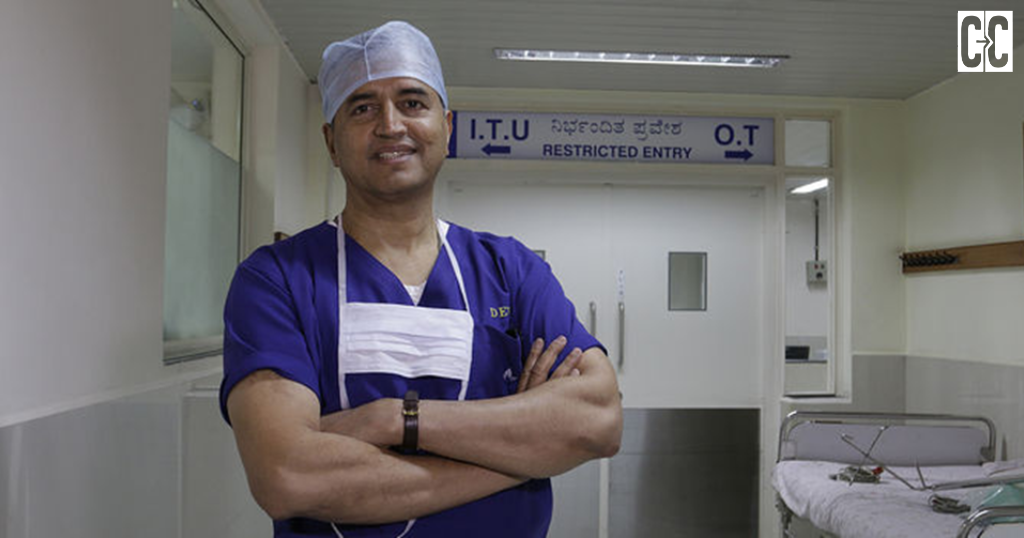
In 1976, at the age of 58, a retired government ophthalmologist with rheumatoid arthritis opened an 11-bed eye hospital in Madurai, Tamil Nadu. Dr Govindappa Venkataswamy, known to generations of colleagues simply as Dr V, wanted to build something more ambitious than a hospital dependent on charity alone: a financially sustainable system in which people who could not afford treatment could receive the same quality of care as those who could pay.
A business model built on cross-subsidy
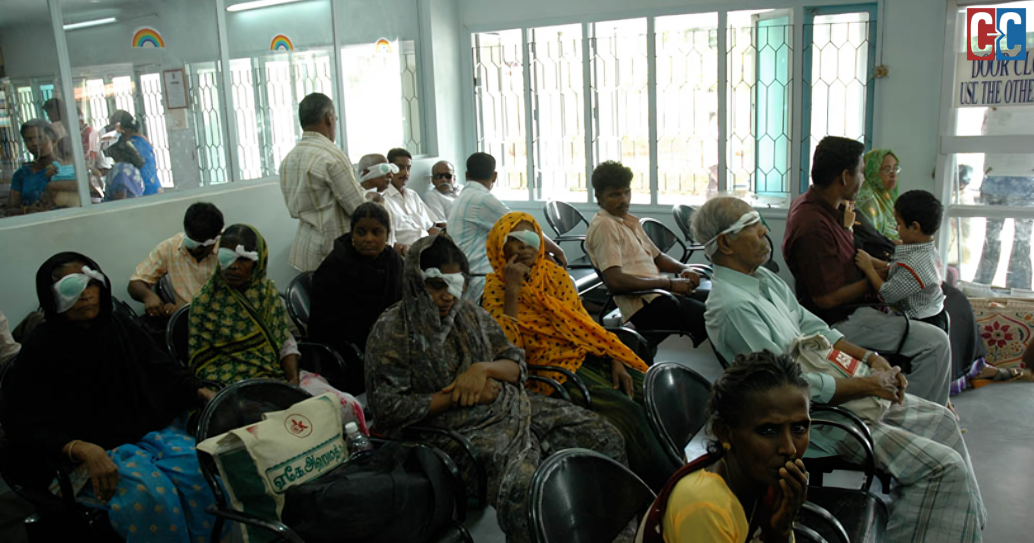
That idea became the foundation of the Aravind Eye Care System. The model combines high patient volumes, standardised processes, economies of scale and cross-subsidisation. Paying patients contribute to the cost of providing free and heavily subsidised care, while the system seeks to maintain the same clinical standards for both groups.
The oft-cited figure that more than 70% of patients receive free or heavily subsidised treatment needs some qualification. Historically, more than 70% of cataract operations for poor patients were provided free or at heavily subsidised rates. Aravind’s current description of its services says that about half of its patients receive services free or at steeply subsidised rates.
The model attracted international attention. In 1993, Harvard Business School published a case study on Aravind Eye Hospital, examining how a not-for-profit healthcare institution could combine social objectives with operational and financial sustainability.
Scale that changed the landscape of eye care
The scale of Aravind’s operations is extraordinary. By the late 2010s, the organisation had reported more than 55 million patient visits and more than 6.8 million surgeries. Those figures are historical rather than current cumulative totals: Aravind has continued to expand substantially since then.
The system’s hospitals in Madurai, Coimbatore, Tirunelveli and Theni became major centres for high-volume ophthalmic surgery. In 2016–17, for example, those four hospitals together performed roughly 347,000 surgeries and recorded around 2.9 million outpatient visits.
Aravind also played a significant role in Tamil Nadu’s broader reduction in avoidable blindness. A study published in 2008 noted that, over the two decades from 1988, Aravind had contributed roughly a third of all cataract operations performed in Tamil Nadu. By 2000, blindness prevalence in Tamil Nadu was estimated at 0.78%, compared with 1.11% nationally. Researchers have credited Aravind as one of the organisations that helped drive the state’s progress, alongside wider government and national eye-care programmes; the difference cannot be attributed to Aravind alone.
From camps to a manufacturing arm
Dr V also pioneered the large-scale use of eye camps, taking screening and treatment closer to rural communities rather than requiring patients to travel to a hospital. The approach remains an important part of Aravind’s outreach programme.
In 2018–19, for example, Aravind conducted more than 2,800 free eye camps, screened 555,006 patients and performed 92,510 surgeries through its outreach activities.
The organisation also tackled one of the structural costs of ophthalmic care: imported surgical supplies. Aravind established Aurolab in 1992 to manufacture intraocular lenses and other ophthalmic products at much lower costs than many imported alternatives. Aurolab has since grown into an international supplier, with its products reaching hospitals in more than 160 countries.
Aravind’s approach has also been designed to spread beyond its own hospitals. The Lions Aravind Institute of Community Ophthalmology (LAICO) trains eye-care professionals and hospital managers and provides consultancy to organisations seeking to adapt elements of the Aravind model. In 2018–19, for example, around 1,900 candidates received training through its programmes, while LAICO provided consultancy to hundreds of hospitals in India and overseas.
Cataract surgery as a national story
Aravind’s growth took place alongside a much broader transformation in India’s fight against preventable blindness. Cataract accounted for around 80% of blindness in India during the 1980s. The country’s national cataract-control programme subsequently expanded surgical capacity and outreach substantially. By 2000, the proportion of blindness attributable to cataract had fallen to about 62%.
National cataract-surgery volumes have continued to rise dramatically. India recorded more than 8.3 million cataract surgeries in the 2022–23 financial year alone. Aravind did not achieve this transformation on its own, nor was its model the sole reason for India’s progress. Its significance lies in the particular combination it demonstrated: very high surgical volumes, tightly managed processes, extensive patient counselling, outreach to rural communities, and a financing structure in which ability to pay does not determine the quality of clinical care. That combination has made Aravind a frequently studied example for health systems seeking to expand access while keeping costs under control.
A model beyond one founder
Dr V died in 2006, but Aravind continued to expand after his death. That continuity is important because the organisation’s methods were progressively embedded in its processes, training systems, manufacturing capabilities and institutional culture rather than remaining solely dependent on its founder.
The result is an organisation that has endured for decades while continuing to provide care at enormous scale. Its experience suggests that the principles behind the Aravind model standardisation, economies of scale, cross-subsidy, outreach and investment in training—can be institutionalised rather than remaining dependent on a single charismatic founder.
As India faces an ageing population, increasing demand for cataract surgery and persistent shortages in specialist eye-care capacity, the questions Aravind has spent five decades addressing remain relevant: how can high-quality healthcare be delivered at scale, how can costs be reduced without compromising clinical standards, and how can the ability to pay be separated from the quality of care a patient receives?
Clear Cut Health Desk
New Delhi, UPDATED: September 24, 2026 18:30 IST
Written By: Tanmay J. Urs