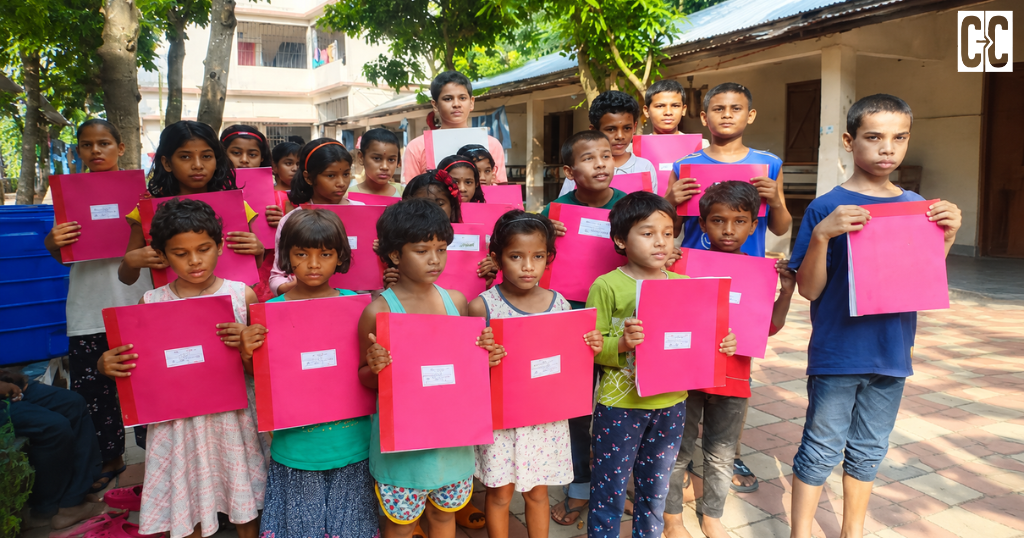
Books for All began as a small initiative to create a library for children in an under-resourced government school and has grown into a nationwide social-impact organization. Over 17 years, it has supported school libraries, student sponsorships, skill development, and Braille-based learning for thousands of young people.
I n September 2008, after more than five decades as a power project engineer building heavy infrastructure across India for leading multinationals, I relocated to Noida from Yamuna Nagar. Approaching 65, I was reaching the standard age at which corporate organizations retire their senior executives. Having lived an intensely active professional life leading mega-projects, the
sudden prospect of retirement brought an unsettling question: What next?
Doing nothing weighed heavily on my mind. I briefly considered standard post-retirement
pursuits—traveling, gardening, or taking up golf at a local club—but none of them felt
deeply fulfilling. I longed for a second chapter that carried genuine meaning, something that
could touch lives beyond my own family circle.
At that point, I had no background in social work, no formal training in the non-profit sector, and no grand blueprint to start an organization. My daily life was simply that of a senior citizen adjusting to a new neighbourhood in Noida, looking for a purposeful way to spend my days. The answer arrived unexpectedly.
While visiting a local government school to complete voter ID formalities, I asked to be shown
around the premises. What I saw left me shaken. The building was in disrepair, and classrooms lacked even the most basic seating. Children sat on bare concrete floors without mats or desks. With winter approaching, a dedicated teacher, Mrs. Sharma, explained that she routinely borrowed old blankets, bedsheets, and curtains from her housing society neighbours so the children wouldn’t freeze on the cold floor.
That moment stirred me profoundly. I immediately offered to provide jute mats, and two
neighbours who were with me stepped forward to share the expense. Within days, we supplied
enough mats for the children to sit with dignity. It was a small step, but it planted the seed for
what would eventually grow into Books for All.
The Spark and the Junk Room
After delivering the mats, I began visiting the school whenever time permitted. These visits offered an eye-opening look into the lives of the students—primarily children of migrant daily-wage earners. They were bright, curious, and eager to learn, yet the teaching methods were stuck in old-fashioned rote memorization.
It became clear to me that my post-retirement purpose had found its home: we needed to set up a library filled with storybooks that could spark genuine imagination and curiosity. Government schools already provided textbooks, uniforms, and mid-day meals under the Right to Education (RTE) Act. Literacy rates were improving, but I felt strongly that these children deserved more—the chance to explore quality literature, the kind readily available to students in private schools.
When I asked Mrs. Sharma if the school had a room to spare, she led me to a space piled high with broken benches, discarded books, and junk. It needed significant work, but I was thrilled. Compared to the massive power plants I had built during my career, this was a small project, yet one that promised immense human impact.
Building a Movement from a Bus Stop
My next step was to build a team. I began sharing my dream with friends, neighbors, and relatives. Most listened politely; some asked sceptical questions: What will you get out
of it? Where will the money come from? Won’t the books be stolen?
Perseverance paid off. Soon, two enthusiastic young women stepped forward: Deepali,
a Delhi University graduate from a business family, and Puja Nath, who ran summer camps in our residential society.
During our frequent brainstorming sessions, a simple idea emerged to collect books: we
printed fliers and distributed them to parents in the mornings as they returned from dropping their children off at the school bus near society gates.
The idea clicked instantly
Soon, our living rooms were filled with high-quality storybooks, toys, and educational games.
Better yet, young mothers began asking questions, offering to volunteer, and suggesting new
ideas—from art and drama workshops to public speaking and spoken English lessons.
On January 30, 2010, our very first library was inaugurated. Residents donated furniture, fans,
and tube lights; someone offered to paint the room; and we hired Shabana, a bright young woman from the local village, as our first paid librarian. The Village Pradhan opened the space alongside two dozen supportive neighbours. Books for All was officially alive.
Scaling Up: Embracing the New and Unknown
As word spread, requests poured in. We opened a second library at the nearby Nav Jeevan Inter College, and soon expanded to six locations, including one in Delhi’s Sarita Vihar. To manage running costs legally and sustainably, we registered Books for All as a Trust. Our first major corporate breakthrough came unexpectedly. After I recorded a short voice clip for a radio segment on Teachers’ day with anchor Richa Anirudh on Big FM, the Managing Director of Sopra Steria happened to hear the 8:00 AM broadcast while driving to office. He invited us to present our work, leading to our very first corporate sponsorship.
Despite having no background in running a non-profit, we adapted quickly. We launched
a Facebook page, designed an HTML newsletter, set up a website, and embraced digital
tools. In the early years, our NGO operated entirely out of my flat. Like a diligent startup founder, I personally handled everything— from depositing checks at the bank and standing in line at the post office for couriering documents, to buying stationery—until we hired our first part-time office assistant in 2014.
Challenges were plenty, but they never deterred us. Sitting outside government offices for hours in the scorching summer heat or facing occasional cynical comments about NGOs meant little compared to the growing respect and tangible impact we saw in the community.
17 Years of Impact: What We Have Built
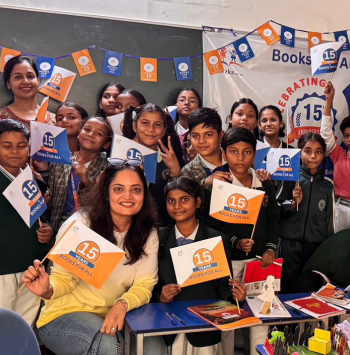
Today, in our 17th year of operation, Books for All has evolved into a multi-faceted organization driving five core Impact Missions:
- School Libraries: Creating vibrant learning and creativity centres in under-resourced schools.
- Student Sponsorships: Funding bright, deserving students to attend better private institutions.
- Skill Development: Training urban youth to become job-ready in sectors like beauty, paramedical and IT.
- Wall-Hung Libraries Each wall-hung library contains 100 beautifully illustrated story books, in the language of the region, ideal for schools with no room to spare.
- Sparsh (Visually Impaired): Providing thousands of custom Braille books, tactile learning
kits, and Braille games (like Ludo and Chess) across India.
What Worked for Us
Our growth has been anchored by strict operational discipline:
- Volunteer Power: The organization remains largely volunteer-driven, with passionate community members leading management roles & mentoring students
- Financial Integrity: 100% digital transactions, zero cash donations, meticulous accounting, and early FCRA approval.
- Transparent Communication: Regular donor reports, weekly progress reviews, and published annual reports.
The Lessons Learned
No journey is without its missteps. We faced hurdles along the way—over-reliance on volunteer bandwidth, difficulty in scaling individual retail donations, and the painful necessity of closing our Sankalp adult female literacy program after a year due to low enrolment. Yet, every setback taught us how to refine our focus and build for long-term sustainability.
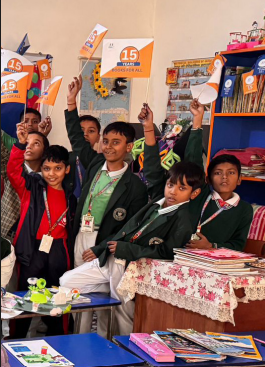
Full Circle: Changing Lives, One Story at a Time
Looking back, I often describe Books for All as an “accidental NGO.” An engineer planning for a quiet retirement never imagined building an organization with a nationwide footprint touching
thousands of young lives. None of this would have been possible without the unreserved support of my wife, Kanchan Ji, who backed the vision financially in its infancy and patiently supported the endless hours of meetings, school visits, and corporate pitches that kept me away from home. The true reward, however, lies in the stories of the children themselves.
I think of Priyanka, who resisted immense pressure from her daily-wage-earning parents to marry young. Supported by our mission, she cleared the CUET exam, graduated from Delhi University, and is now thriving in a corporate career at a leading IT firm. I think of the dozens of young women from nearby villages whom we trained as beauticians or Paramedics, now employed and earning independent incomes and supporting their families.
Watching first-generation learners—children who grew up without academic guidance at home
learn to dream big about a better tomorrow is a deeply humbling experience. As I reflect on these 17 years, I bow with immense gratitude to every volunteer, donor, teacher, and well-wisher who chose to believe that every child deserves a book, a mentor, and a chance to fly.
Reflections
What started as a quiet post-retirement search for purpose has grown into a movement that
has touched tens of thousands of young lives across India. Books for All stands as proof that meaningful social change does not require grand corporate budgets from day one—it simply requires seeing a gap in human dignity, stepping forward to bridge it, and trusting that your community will walk alongside you.
“I spent fifty years building power plants, but helping a first-generation learner dream big has been the most fulfilling project of my life. True empowerment begins the moment a child realizes that their background does not define their future.”
About the Author
Pravin Bhasin is the Founder President of Books for All, A former engineer and professional
manager with over five decades of experience building power plants across India and abroad,
he now dedicates his life to helping children develop reading habits and skilling urban youth to
become job-ready. To learn more about their programs or to volunteer, visit www.booksforall.in or contact the team at contact@booksforall.in
Clear Cut Education, Child Protection Desk
New Delhi, UPDATED: October 01, 2026 15:30 IST
Written By: Pravin Bhasin