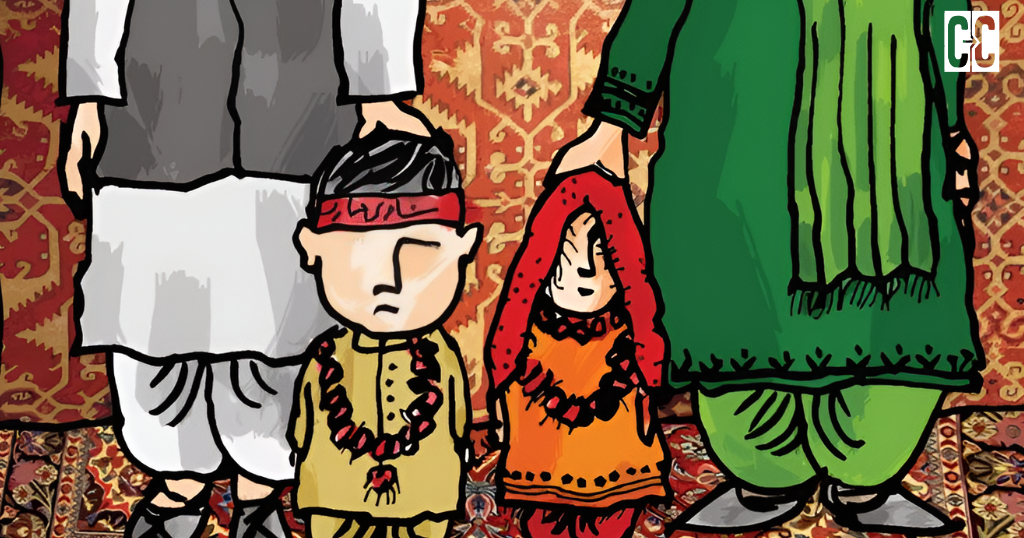
India has reduced child marriage substantially, but the latest NFHS data show that one in five young women were still married before 18. A new UN observance puts the issue back on the global agenda. It also gives India a significant annual marker for measuring progress.
India has made decent progress on child marriage. The latest National Family Health Survey, NFHS-6 (2023–24), finds that 20.1 per cent of women aged 20–24 were married before turning 18. This was 23.3 per cent in NFHS-5 (2019–21). In rural India, the rate fell from 27 per cent to 23.3 per cent. Even so, roughly one in five young women nationally still experienced marriage during childhood.
But at the state level, the gap is wide. Kerala cut the rate from 6.3 per cent to 2.9 per cent. Karnataka reduced the rate from 21.3 per cent to 15.3 per cent.
West Bengal remains a concern. Its rate fell from 41.6 per cent to 36.4 per cent, but it still records the highest rate among states. Bihar also improved, from 40.8 per cent to 34.6 per cent. Yet it remains among the highest-burden states. The direction is positive, but progress is uneven.
27 November: A new global marker
The United Nations General Assembly adopted Resolution A/RES/80/309 on 4 September 2026. It declared 27 November as the International Day for the Elimination of Child, Early and Forced Marriage. Sierra Leone led the resolution. The General Assembly adopted it without a vote and India joined as a co-sponsor.
The date also matters to India. The Government of India launched its Bal Vivah Mukt Bharat campaign on 27 November 2024. The national campaign and the new global observance now share the same date.
Why child marriage persists
A detailed answer comes from Child Marriage in India: A Research Study, published by Child Rights and You (CRY), with DevInsights as its research partner. The mixed-method study covered Andhra Pradesh, Uttar Pradesh, Odisha and Maharashtra. It included 1,938 respondents, as well as qualitative interviews and community discussions.
The findings show that poverty alone does not explain child marriage. Fifty-nine per cent of surveyed parents and parents-in-law considered it an important social custom. Families cited several reasons for marrying girls early. They included easier access to a groom, lower dowry and easier adjustment to the marital home. Community pressure also mattered. So did concerns about girls’ safety, relationships and family “honour”.
A woman interviewed in Chandauli, Uttar Pradesh, linked child marriage directly to poverty: “The main reason behind child marriage of girls is poverty, and due to this reason, children don’t get an education.”
DevInsights’ field evidence for CRY closely matches findings from organisations such as UNICEF. UNICEF identifies poverty, limited educational opportunities and deep-rooted gender norms as key drivers. It sums up the consequence simply: “Child marriage ends childhood.”
What child marriage takes away
The CRY-DevInsights study shows what happens after that childhood ends. Among child brides who had attended school, 86 per cent dropped out after marriage. At least 59 per cent experienced teenage pregnancy. Another 42 per cent could not visit health facilities alone. Seventy-two per cent had no say in contraceptive use. The study also found sharp limits on mobility and social interaction. Forty-four per cent could not socialise outside the home with friends.
The World Health Organization also documents the health risks. Adolescent mothers aged 10–19 face higher risks of eclampsia, infections and other complications than women aged 20–24. Their babies also face greater risks of premature birth and low birth weight. WHO also links child marriage with early pregnancy. Young married girls often have limited control over contraception and childbearing.
There is also a larger question of agency. School dropout, economic dependence and early motherhood can reshape a girl’s life. Restricted mobility and limited reproductive choices deepen that loss of control. UNICEF also links child marriage with social isolation, fewer job opportunities and greater risk of violence, exploitation and abuse.
Why 27 November matters for India
When Sierra Leone introduced the resolution at the UN General Assembly, its First Lady Fatima Maada Bio made an important point: “An international day cannot by itself end child marriage.” The observance instead creates an annual platform for political commitment, public awareness and accountability. It can also help keep action on child marriage visible.
India’s decline from 23.3 to 20.1 per cent shows that progress is possible. But West Bengal and Bihar show how national averages can hide deep-rooted vulnerability.
For India, 27 November can become more than a symbolic date. It offers an annual point to measure progress. The test should go beyond marriages prevented. It should include more girls staying in secondary school, fewer adolescent pregnancies, stronger protection systems and greater control for girls over education, mobility, health and their futures.
The UN resolution gives child marriage a global date for action. India now has an opportunity to make that date a measure of progress. The real test will be whether the numbers continue to fall.
Clear Cut Child Protection Desk
New Delhi, UPDATED: September 27, 2026 12:30 IST
Written By: Paresh Kumar