
Inclusive education in India continues to face barriers for children with disabilities and other disadvantaged groups, limiting meaningful access to learning. The Clear-Cut Education Summit 2026 highlighted gaps in accessibility, foundational learning, invisible disabilities and education support, with experts calling for systemic changes in education policy and inclusion to ensure no child is left behind.
NEW DELHI: Exclusion from learning takes many forms, and not all of them can be seen. At the Clear-Cut Education Summit 2026, speakers examined which children are still being left behind and what must change for foundational learning to be genuinely inclusive.
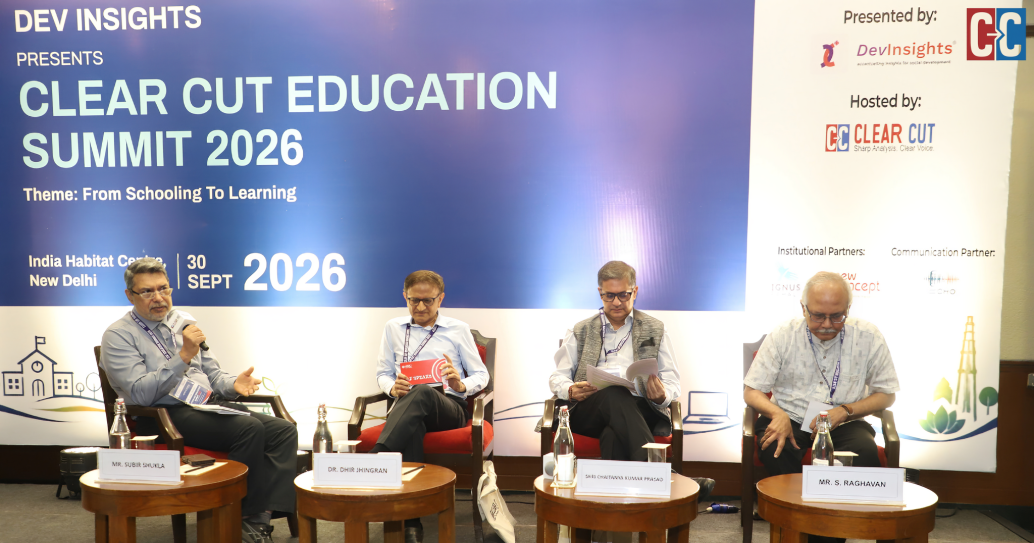
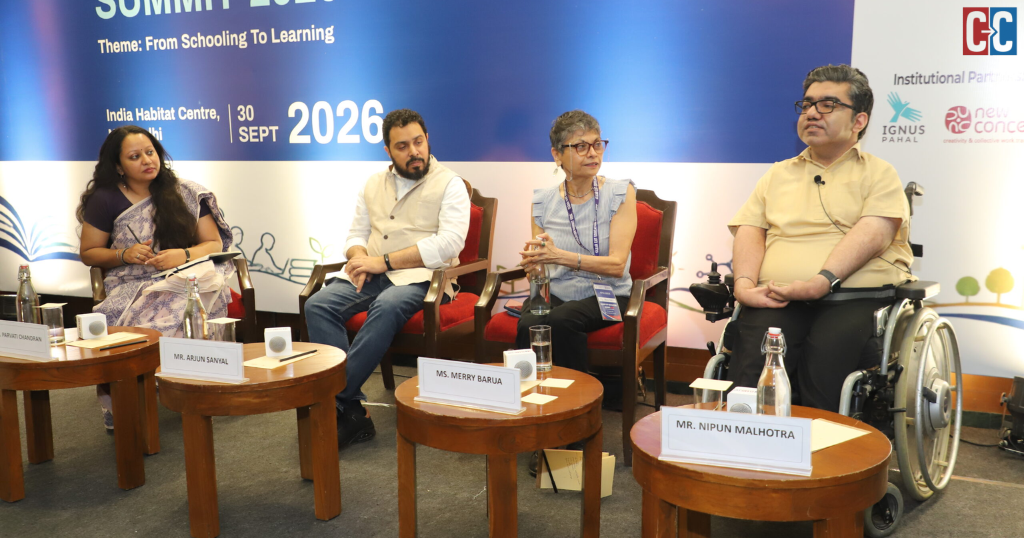
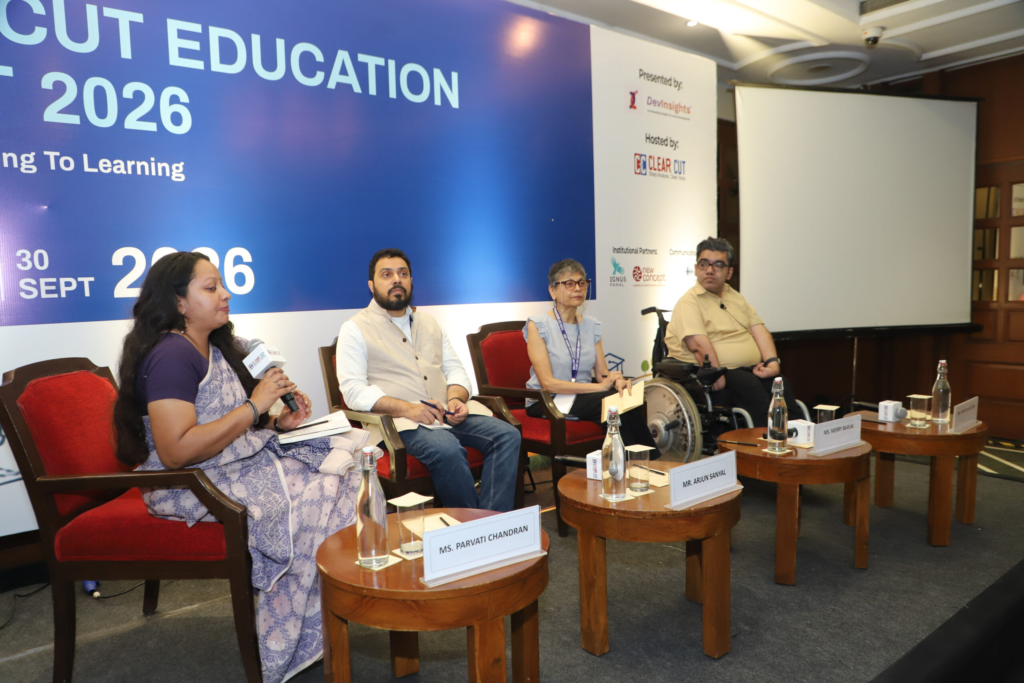
The session, held on 30 September under the theme “Leaving No Child Behind: Equity, Inclusion and Foundational Learning,” was moderated by Parvati Chandran, Senior Social Sector Advisor. It brought together Arjun Sanyal, Program Lead, Early Childhood Development and Education – India at Echidna Giving; Merry Barua, Founder Director of Action For Autism, National Centre for Autism; and Nipun Malhotra, co-founder of the Nipman Foundation and Director, Policy and Programmes (Disability Rights and Inclusion) at The Quantum Hub and Young Leaders for Active Citizenship.
Inclusion, the panel said, has to address physical, intellectual and social barriers, because children face different obstacles to participation and learning. The numbers show how stubborn these are. UNICEF’s global analysis found that children with disabilities are 49 percent more likely to have never attended school and 47 percent more likely to be out of primary school than other children. It also found that children with difficulty communicating or caring for themselves are the most likely to be out of school at every level. In India, UDISE+ 2024-25 data, analysed by The News Minute, show that 79 percent of schools have ramps but only 35.6 percent have accessible toilets, and that enrolment of children with special needs falls 54 percent by higher secondary, against 26 percent for all students.
Foundational learning is where such gaps first show. ASER 2024 found that only 23.4 percent of Std III children in rural India could read a Std II-level text.
Attitudes emerged as a major barrier. Change is needed not only within schools, the panel said, but across education boards, regulatory bodies and society more broadly.
Invisible disabilities need greater attention. The lack of visible signs makes it harder for children to get the support they need, and the panel noted a tendency to overlook these needs rather than look for solutions. “Accommodations are not provided when disability is invisible,” Malhotra said. India’s Rights of Persons with Disabilities Act, 2016 recognises 21 disabilities, including autism and specific learning disabilities, and calls for inclusive education in government-funded and recognised institutions. The panel’s concern was that needs which cannot be seen are often overlooked in practice.
Policy and regulation, it added, must enable inclusion, and regulatory bottlenecks need to be identified and addressed. The discussion also pointed to gaps in the basic systems and practices that make education genuinely inclusive, and argued that these foundations must be built before inclusion can be achieved at scale.
Marginalisation takes different forms, the panel noted, so responses must be built around the specific barriers different children face rather than a single approach. Children affected by migration were part of the discussion, with a reference to the Inter-State Migrant Workmen Act, highlighting how mobility can disrupt access to and continuity of education. The 1979 law was repealed on 21 November 2025 when the Occupational Safety, Health and Working Conditions Code came into force. On the ground, the barriers are often practical. Agrasar Foundation, honoured at the summit’s awards, found children of migrant workers in Gurugram out of school because the government school was far away, admissions asked for documents their families lacked, and private school fees were out of reach.
Overall, the panel’s message was that inclusion requires systemic change rather than isolated interventions: shifts in attitudes, policies, regulations and education systems, working together, so that children facing different forms of disadvantage are not left behind. For the children most easily overlooked, including those whose disabilities cannot be seen, that may decide whether being enrolled turns into being included.
Clear Cut Awards & Events, Education Desk
New Delhi, UPDATED: October 08, 2026 17:29 IST
Written By: Yatharth Pathak