
Tata Trusts’ menstrual hygiene programme has reached over 51,000 women and girls across Rajasthan, training more than 1,650 women to stitch reusable cloth menstrual pads. However, only a handful have turned this skill into businesses. Limited demand, raw material costs and the 2026 Supreme Court ruling raise questions about the long-term sustainability of these women-led enterprises.
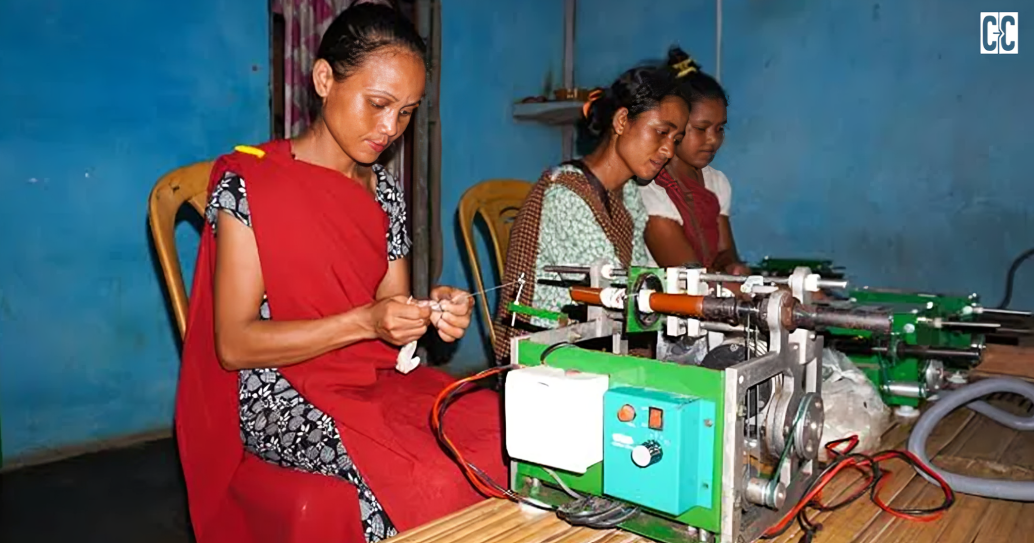
In the two years after September 2020, more than 1,650 women in Rajasthan’s Sirohi and Pali districts attended workshops on stitching reusable cloth menstrual pads. Most learned the skill to make pads for themselves. A handful turned it into a business, according to Tata Trusts’ own account of the programme.
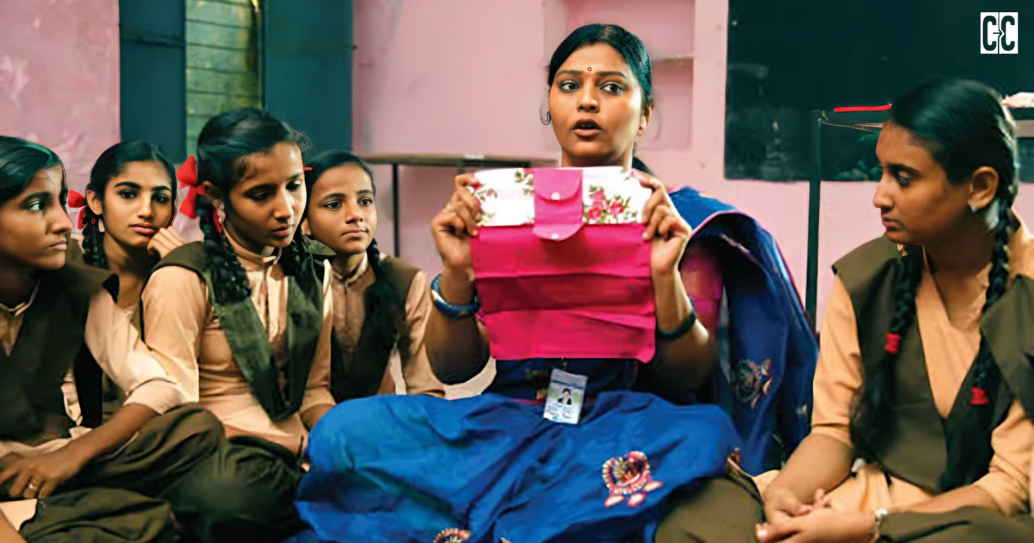
That gap between a skill taught widely and a business sustained by few is the most instructive feature of the Trusts’ menstrual hygiene management (MHM) programme in Rajasthan. It began in 2018 as part of the Trusts’ water, sanitation and hygiene work. The Trusts report that it has reached more than 51,000 women and adolescent girls in about 200 villages, trained around 800 student peer mentors and held sessions in 160 schools. These are reach figures. The Trusts’ magazine also reports shifts in community attitudes, such as men attending counselling sessions, but it draws these from interviews with participants, not from survey data.
One entrepreneur, documented
The documented example is Sheela Soni of Swaroopganj in Sirohi. Until 2020 she had no business background, according to the Trusts’ magazine Horizons. She volunteered for the pad-stitching training and travelled with her husband to Gujarat to buy fabric because local sourcing was difficult. She later tied up with a wholesaler to hold down costs. She sells at places where women gather, such as village council meetings and factories that employ women, and hires saleswomen on commission. The magazine reports that she made a profit of more than ₹1 lakh over two years and plans to move into cloth bags and readymade clothing.
That figure is self-reported through the Trusts’ publication. Spread over two years it averages to a little over ₹4,000 a month, a useful second income but not a transformation of a household’s finances. The account does not say how many hours the work takes or what the profit figure includes.
The economics of a reusable product
A reusable product has a built-in limit. A customer who buys one set of pads may not return for months or years. The Trusts acknowledge that price remains a barrier to alternatives to cloth. For the women who run businesses, the MHM team subsidises the cost of raw materials until they can operate independently, according to Horizons. A subsidy shows that the model needed support in its early stage. The sources do not report whether the subsidy has ended or how many of the businesses are profitable without it.
Another Tata Trusts update reports that MHM entrepreneurs in Sirohi stitched 13,000 reusable pads in 18 months. Set against the 51,000 women and girls reached, that is a modest volume, though the update does not say how many pads were sold, at what price, or to whom.
A court ruling changes the market
On 30 January 2026, the Supreme Court held in Dr Jaya Thakur v. Union of India that the right to life includes the right to menstrual health. It issued a continuing mandamus directing the Union and the states to ensure free sanitary napkins and separate toilet facilities in schools. Commentary on the judgment says the directions cover government, aided and private schools and require safe disposal and menstrual health education.
The ruling changes the setting for cloth-pad enterprises in two opposite ways. State supply of free pads to school-going girls could reduce demand from that group. At the same time, the scale of procurement the ruling implies, and the disposal requirements attached to it, could open space for local producers if states choose to buy from women’s groups. The summaries of the judgment reviewed describe standard-compliant napkins and safe disposal mechanisms. They do not mention reusable products or self-help group procurement. Any role for enterprises like Soni’s would therefore depend on decisions by individual states.
Evidence on the programme’s effects is thin. No independent evaluation of its impact on health, school attendance or income was identified in the sources examined, and the published accounts come from the Trusts and its associates.
The practical questions are narrow and answerable. What share of the 1,650 women who trained sold pads regularly a year later? How does the cost of a reusable set compare with a year of disposable pads? If states must now buy pads for millions of girls, will any of that procurement be open to local women’s enterprises, and will reusable options be allowed?
Clear Cut Livelihood, Health Desk
New Delhi, UPDATED: November 21, 2026 23:00 IST
Written By: Tanmay J. Urs