PepsiCo India and the Mrida Heart ‘N’ Soil Foundation have launched an Eri silk Development Hub in Chengnoi, Assam, providing solar-powered spinning machines, looms and livelihood training for women. However, the hub’s long-term impact will depend on market access, stable pricing, sustained earnings and women’s continued participation.
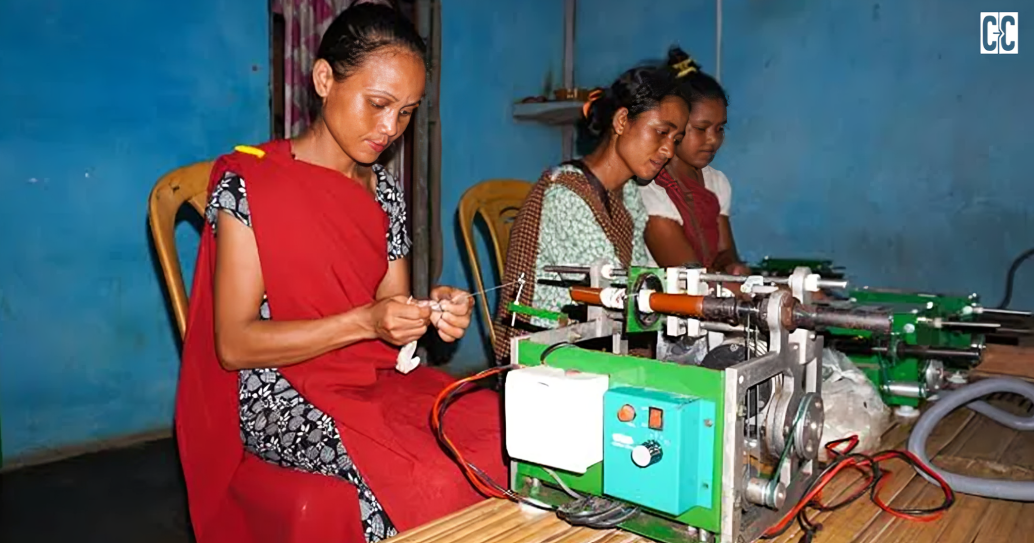
Chengnoi, a village in Nalbari district, Assam, now has ten solar-powered spinning machines and two looms for Eri silk. PepsiCo India and the Mrida Heart ‘N’ Soil Foundation opened the Development Hub, known as a D-Hub, in mid-October as part of the company’s RevolutioNari programme for women’s livelihoods. Assam’s minister Jayanta Mallabaruah described it on 15 October as a boost to the state’s handloom heritage.
The figures in the announcements form a funnel. Awareness and community mobilisation programmes have reached more than 3,510 women. Over 100 women have been trained in five livelihood trades. Thirty have been trained across the Eri silk value chain. Eligible households can seek yarn subsidies through formal handloom systems and collateral-free MUDRA loans of ₹50,000 to ₹5 lakh, according to a summary of the launch. The company describes a “village-as-a-hub” model, with Chengnoi as the first location. The launch followed PepsiCo India’s announcement of a new food manufacturing facility in Nalbari.
A craft with real scale
Eri silk is not a marginal product. Central Silk Board data cited in a SELCO Foundation value-chain study put India’s Eri production at 7,364 tonnes in 2022, about 21 per cent of the country’s silk output and the second largest type produced. An editorial in The Sentinel (Assam) says Assam produces nearly 60 per cent of India’s Eri silk, but that Eri is still treated largely as a supplementary household activity rather than a primary livelihood. Eri silk from Assam carries a Geographical Indication tag, according to a state current-affairs summary. The moth is allowed to emerge from the cocoon, which is why the fabric is often called peace silk.
Equipment has been tried before. The Sentinel’s editorial notes that the largest Eri spinning mill in the north-east, in Baksa district, depends on a steady supply of quality cocoons. The comparison is instructive. Spinning capacity alone does not make a viable chain. Cocoon supply, yarn buyers and weaving demand have to line up.
Questions the announcements leave open
The materials reviewed describe training, equipment and finance. They do not describe markets. They do not say who buys the yarn or cloth, who sets prices, what share of the final price reaches the spinner or weaver, or how many orders the hub has secured. Those answers decide whether the hub raises income. The SELCO study is organised around exactly this issue: it maps each stage from rearing to market and aims to formulate recommendations for improving income.
Thirty trained women is a pilot-scale number, and the partners present it as a pilot. A speaker quoted by NE Now said he hoped the D-Hub would become a successful and sustainable pilot that could be replicated across Nalbari and other districts. The same coverage says the PepsiCo and Mrida partnership remains committed to supporting the hub on its path to sustainability and scale. The announcements do not state how long that support will last, or what level of revenue would make the hub self-sufficient.
RevolutioNari itself is a national programme. PepsiCo India launched it in June 2024 with a goal of improving livelihood prospects for one million women, mainly in non-traditional roles in the FMCG sector. The Nalbari hub is a craft-based project under the same banner, a different kind of intervention from factory or sales roles. Whether it counts toward the national target, and how, is not stated in the sources reviewed.
The hub sits in a district where the company is also building a factory. The two undertakings are separate, and the sources do not link them. The hub should be judged on its own outcomes: whether women earn more from Eri work than from the alternatives available to them, and whether the pricing they receive is stable.
Three measures would settle the question over the next year: the earnings per working day of the spinners and weavers compared with alternatives, the share of output sold at a stable price, and how many of the 30 trained women remain active twelve months after training. Until they are published, the hub is best described as a promising set of machines and a plan for a market.
Clear Cut Livelihood Desk
New Delhi, UPDATED: November 20, 2026 23:00 IST
Written By: Tanmay J. Urs