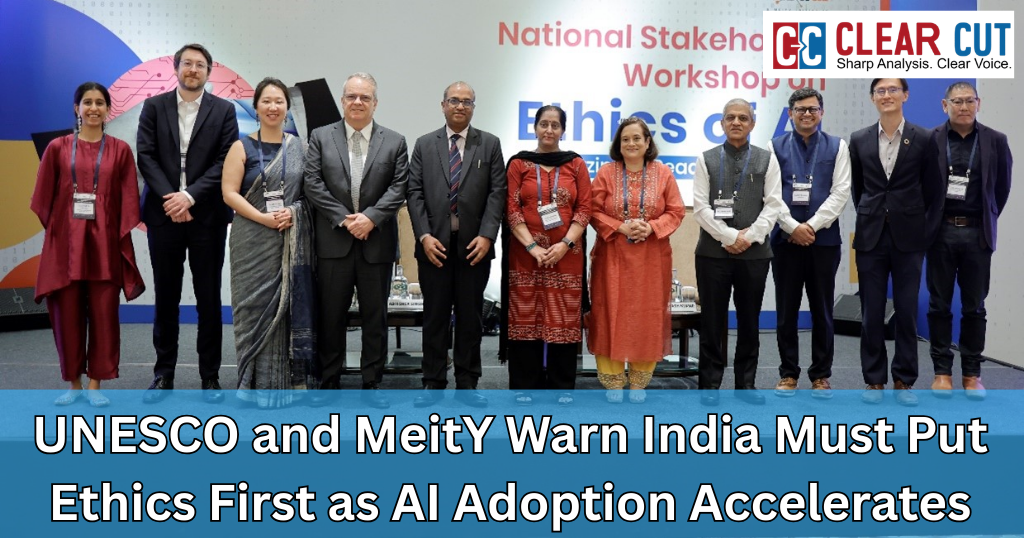
The UNESCO–MeitY India AI Readiness Assessment Report emphasizes that India’s AI adoption must prioritize ethics, inclusive governance, workforce transition, and protection for informal sector workers, not just technological growth.
India commands 16% of the world’s AI talent. But a landmark new report warns that raw talent alone will not build a fair AI future.
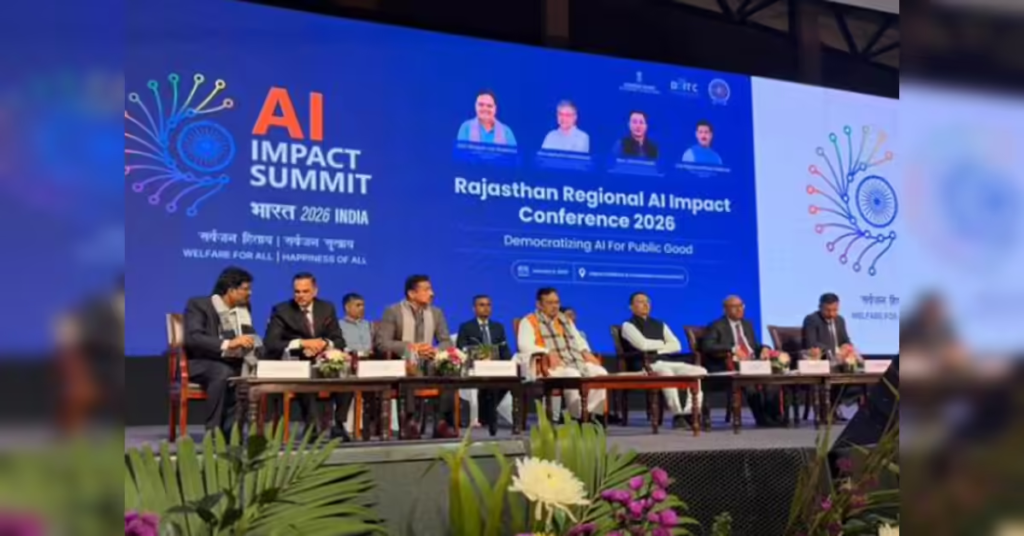
UNESCO and the Ministry of Electronics and Information Technology (MeitY) jointly launched the India AI Readiness Assessment Report at the India AI Impact Summit 2026 in New Delhi on February 16. The report is the result of 18 months of research, five regional consultations, and input from over 600 stakeholders across government, academia, industry, and civil society.
Its central message is direct: India’s AI readiness cannot be measured by infrastructure or patents alone. It requires ethical governance, inclusive participation, and a workforce transition plan that leaves no one behind.
What the Report Found
The assessment examined governance, workforce readiness, and infrastructure development across India’s growing AI ecosystem. It found significant progress, but also critical gaps.
The report flags the informal sector as the most vulnerable. Millions of workers in gig work, agriculture, and blue-collar industries face potential displacement without clear policy protections. The report calls for a comprehensive legal gap analysis and the immediate adoption of “ethics by design” practices across the AI development lifecycle.
India’s AI policies must reflect the country’s labour reality, where a large proportion of people work in the informal sector with varying skill levels. The report urges that before adopting AI, its impact on jobs must be assessed, with concrete plans to manage transitions.
Leaders Speak at the Summit
The launch drew some of India’s most senior policymakers. Their statements set a firm tone.
Dr. Ajay Kumar Sood, Principal Scientific Adviser to the Government of India, did not mince words. “Public trust in AI depends on a rights-based approach aligned with constitutional principles and international ethical standards,” he said. He also stressed that speed must not override responsibility. “AI is here to make an impact. The question is not how fast we adopt AI, but how thoughtfully we shape it,” he said.
S. Krishnan, Secretary of MeitY, called for a broader coalition. “AI readiness goes beyond infrastructure. It requires skilling at every level, converting use cases into real-world solutions, and ensuring that institutions are prepared to adopt and deploy AI responsibly. Government alone cannot shape the AI ecosystem and for this, broad stakeholder engagement is essential,” he said.
Tim Curtis, Director and Representative of the UNESCO Regional Office for South Asia, pushed for a human-centred vision. “We should aim for AI that listens before it decides. AI that performs well not only in demos, but in the lived complexity of real communities,” he said.
Tawfik Jelassi, UNESCO’s Assistant Director-General for Communication and Information, added a global perspective. “The future of AI lies not only in technology, but in the values that shape it, human rights-based governance, ethics, and capacity building that together ensure lasting impact for people and planet,” he said.
Ethics by Design: What It Means
The report’s key recommendation is embedding ethics at the beginning of AI development, not as an afterthought. This includes co-developing guidelines for AI developers, strengthening coordination between central and state governments, and expanding access to high-quality datasets through India’s AIKosh platform.
Abhishek Singh, Additional Secretary at MeitY and CEO of the IndiaAI Mission, has been direct about India’s unique challenge. “India is a complex society with much more diversity in terms of languages, communities, castes, religions. So, whenever we look at developing AI models, we need to cater to these realities; and have more nuanced, contextual, and responsible AI,” he said.
He also pushed back on the idea of heavy-handed regulation. “AI regulation is important, but it should not stifle innovation. A balanced approach is of utmost importance,” he said.

A Global Benchmark, a Local Test
UNESCO’s Recommendation on the Ethics of AI establishes a global baseline for trust, accountability, and human rights. India’s report translates those global principles into domestic recommendations, with assigned institutional responsibilities and a policy roadmap.
India’s current approach to AI governance is guided by the IndiaAI Governance Guidelines released in November 2025, with the IndiaAI Mission under MeitY steering overall policy direction.
The report also calls for targeted interventions to improve diversity within the AI workforce and research ecosystem.
What Comes Next
The report is not a conclusion. It is a starting point. UNESCO and MeitY have committed to translating its recommendations into concrete policy actions.
The report concludes that AI readiness extends beyond technological infrastructure and requires ethical governance, inclusive participation, and responsible innovation.
India has the talent. The question now is whether it has the will to build AI that works for its most vulnerable citizens, not just its most connected ones.
Clear Cut Research, Startups Desk
New Delhi, UPDATED: March 11, 2026 01:00 IST
Written By: Ayushman Meena