
India’s digital activism has occasionally influenced political accountability, as seen in M.J. Akbar’s resignation during the #MeToo movement, but most online outrage fails to create lasting policy change. The article argues that India needs stronger digital accountability laws and institutional mechanisms to turn viral public pressure into meaningful democratic reform.
The Hashtag that did cost a minister his job
In October 2018, M.J. Akbar, a BJP Minister of State for External Affairs, celebrated journalist, and author, resigned from his cabinet post after multiple women came forward under the #MeToo movement with allegations of sexual harassment. For years, these allegations had no public forum. In the compressed, interconnected space of Twitter and online publications, they found one. Akbar’s resignation was described by the GIGA Institute’s analysis as a novelty for male-dominated Indian politics. Something so rare in institutional terms that it qualified as a landmark. A hashtag had, credibly and consequentially, changed a political outcome.
It happened once. It should not be the benchmark for how often it happens. Because the uncomfortable truth about online outrage and public policy in India is that the M.J. Akbar story is the exception, not the template. For every moment when digital fury produced institutional accountability, there are dozens where trending hashtags, viral videos, and millions of reactions produced nothing policy-relevant at all.
The Scale of Digital India’s Voice
India’s digital political ecosystem is among the largest and most active in the world. By the 2024 general elections, India had 911 million broadband connections, 750 million active internet users, and a political social media infrastructure that dwarfed most democracies. The BJP’s IT cell has built a messaging operation described by analysts as the most sophisticated of any political party globally, sending personalised letters from the Prime Minister to millions of WhatsApp groups. Prime Minister Modi has 23.3 million YouTube subscribers. The Congress party and AAP trail significantly at 4.6 million and 1.3 million Instagram followers, respectively.
And yet, the 2024 general election produced a result that should give pause to anyone who conflates social media dominance with electoral or policy outcome. Despite a coordinated, synchronised, and cohesive social media campaign that projected otherwise, the BJP was unable to secure an absolute majority in Parliament. This result surprised many digital analysts who had been watching engagement metrics. As Jumle and Rajahmani documented in their June 2025 LSE South Asia analysis, popular discursive perceptions on social media may not necessarily lead to actual votes. Online narratives and offline democratic choices are not the same thing.
When Outrage Does Not Become Policy
India’s digital public sphere produces enormous quantities of indignation. Air quality alerts become viral threads. Farmers’ distress generates trending hashtags. Environmental crises generate petitions with hundreds of thousands of signatures. The policy response to most of this is silence, delay, or cosmetic acknowledgment. The Broadcasting Services Regulation Bill was shelved not because of parliamentary opposition but because content creators and digital civil society pushed back vocally online. The Digital India Bill similarly stalled. These are genuine cases of online pressure altering government timelines. But altering a timeline is different from changing a policy. The bills did not become better laws. They simply did not become laws yet.
What online outrage rarely produces is the thing that policy change requires: sustained, organised, institutionally channelled pressure applied over time. India’s Twitter storms typically last 72 hours. Policy change, in a parliamentary democracy with a complex federal structure, requires months or years of sustained engagement, legislative drafting, committee hearings, and administrative follow-through. The viral moment and the policy moment operate on fundamentally incompatible timelines.
Censorship, Deepfakes and Manufacturing Outrage
India’s digital democracy has a shadow. The government has sharply increased content removal demands to social media platforms, particularly content critical of the Prime Minister and the ruling party, according to the Washington Post’s 2024 investigation. The Columbia Journalism Review documented how Twitter was compelled to remove content through legal demands that were never made publicly accessible, violating basic due process. Aakar Patel, former Amnesty International India director, was arrested for tweets. Journalist Auqib Javeed documented the disappearance of Twitter accounts critical of India’s actions in Kashmir.
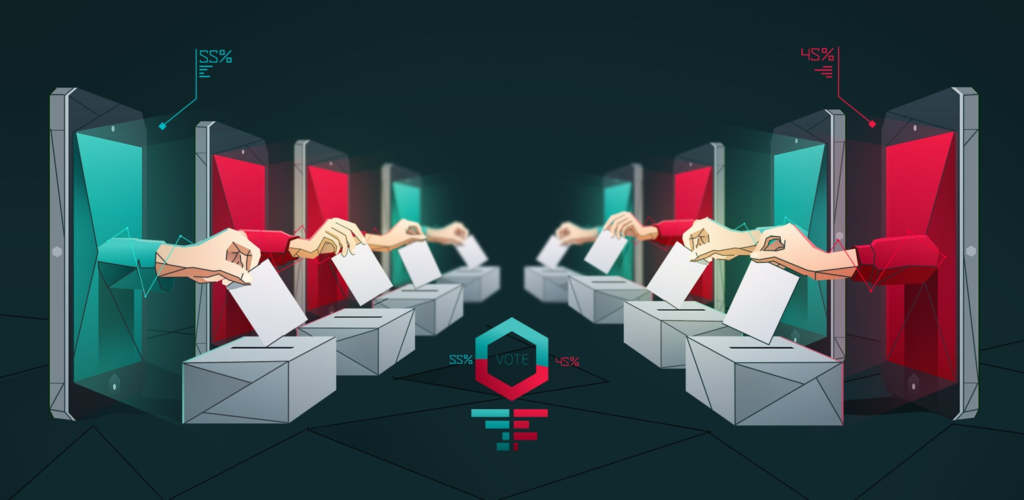
The 2024 election also surfaced AI-generated deepfakes of political leaders, deployed by parties to impersonate opponents. India’s information technology minister himself called AI-generated audiovisual content a threat to democracy. The regulatory response such as fact-check units, IT Rule amendments were blocked by courts on free speech grounds, leaving a vacuum that deepfakes and disinformation continue to fill.
Conclusion
Digital democracy in India is not a mirage. It is a partial reality, often powerful when it connects to institutional structures that are open to citizen input, hollow when it does not. The M.J. Akbar case matters not because a hashtag brought down a minister, but because underlying institutional norms, such as journalistic norms, party reputational concerns, parliamentary accountability expectations were activated by the online campaign. The hashtag was a trigger. The institutions did the work.

India needs a Digital Political Accountability Act: mandatory disclosure of political advertising on digital platforms, a statutory fact-check ombudsman independent of government, transparent content removal processes, and legally enforceable prohibitions on deepfakes used in electoral contexts. Online outrage is real. It represents real people with real concerns. But it needs infrastructure to be heard, not just trended. Build the infrastructure. Make the outrage count.
Clear Cut Climate Desk
New Delhi, UPDATED: May 11, 2026 09:00 IST
Written By: JAY