Online civic engagement in India is creating powerful momentum for urban change, from Bengaluru’s footpath activism to citizen-led climate initiatives. But lasting impact only happens when digital activism is backed by strong local institutions, accountability, and grassroots participation.
The footpath mayor of Bengaluru
Arun Pai did not set out to become a civic activist. He began walking the streets of Bengaluru 2 decades ago, because he loved the city’s heritage neighbourhoods. He brought diplomats, corporate executives, and residents along on those walks. Over 50,000 people joined across 20 years, through the BLRWalkFest and dozens of informal tours. Over time, the walks became something more. When footpaths were dug up and not restored, Arun posted photographs. When pedestrian infrastructure disappeared, he documented it. His walks became advocacy. His social media posts became pressure. The Bruhat Bengaluru Mahanagara Palike noticed. Some footpaths got fixed. Some did not.
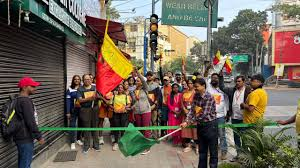
Arun is a self-declared Bengaluru Footpath Mayor. He was one of the standout voices at the India Civic Summit 2025, hosted by Oorvani Foundation and Citizen Matters in February. The summit saw over 150 changemakers, urban experts, and active citizens gathered under one theme. Citizen Action for Climate-Resilient Cities. The summit is itself a product of online organising. It recognised 26 community and citizen initiatives working on waste management, water bodies, mobility, and urban forests. Most of them started on WhatsApp groups or Instagram pages. The question the summit did not fully answer is the question this article asks: does any of it last?
The Scale of Engagement
A 2024 TGM Research survey of 18,985 respondents across 34 countries found, that over 96% of Indian respondents expressed concern about climate change. 86% of them believed it will seriously affect future generations. Community-focused civic engagement was identified as a key behavioural trend. Indians expressing willingness to take part in collective environmental efforts, not merely individual lifestyle changes. Yet the same report flagged the persistent gap: awareness does not always guarantee depth or consistency in action. Many consumers face barriers ranging from inflated costs to limited access to sustainable options. The journey from intention to meaningful change is ongoing.
This gap between concern and sustained structural change is where online civic engagement lives and sometimes dies. India’s civic tech tools have expanded considerably. The Right to Information Act, 1005 portal enables online RTI filings, demystifying a powerful accountability tool. The MyGov platform invites citizen feedback on draft policies. Urban bodies in Bengaluru, Chennai, and Pune have experimented with participatory budgeting and ward-level grievance portals. Citizens like Charu Govindan of Voice of People have made RTI filing approachable, teaching workshop participants at India Civic Summit 2026 exactly how to submit one and what qualifies.
Where It Works & Why
The most compelling examples of online civic engagement creating durable change share a structural feature: they are not purely online. The lake restoration groups of Bengaluru use social media to document encroachment, rally volunteers, and pressure the BBMP. But the outcome is boots in mud, legal notices filed, and citizen-submitted evidence presented in court. Similarly, Indore’s famous waste management model, which made the city the Swachh Survekshan champion for seven consecutive years, was built on a combination of citizen participation in waste segregation, municipal enforcement, and community accountability, not a campaign.
UNDP’s Civic Tech Innovation Challenge, active across Asia and the Pacific, has documented how youth-led digital innovations open new pathways for participation and transparency. But UNDP’s own analysis is clear: civic tech reshapes the relationship between citizens and governments only when institutions are structurally open to that relationship. In India, the 73rd and 74th Constitutional Amendments mandate devolution of power to local bodies and ward sabhas. In many states, these structures exist on paper but not in practice. Online civic energy flows in but finds no institutional vessel to hold it.
The FCRA, Shrinking Space and the Digital Divide
India’s civic space faces structural headwinds. The Foreign Contributions Regulation Act creates administrative burdens that most grassroots organisations cannot manage, constraining the civil society ecosystem that translates online energy into institutional change. Bond’s 2024 analysis noted that local grassroots CSOs operating on shoestring budgets are most affected, while large national NGOs and INGOs can absorb FCRA compliance costs. This creates a flat pyramid: many voices at the base, very few organisations with the capacity to convert them into sustained policy change.
There is also a digital divide that civic tech discourse often ignores. The citizens most active on Instagram and X calling for better urban infrastructure are not the citizens living in the most degraded infrastructure. The ward Sabha participant who knows exactly where the drain backs up every monsoon has no Twitter account. Online civic engagement risks becoming an echo chamber of the already-engaged rather than a genuine expansion of democratic participation.

Conclusion
Online civic engagement can and does drive sustainable change, but only when it completes the circuit from digital to institutional. Arun Pai‘s footpaths get fixed when his photographs become complaints logged in a municipal system, followed up by ward representatives, reviewed by commissioners with accountability timelines. The India Civic Summit’s 26 honoured initiatives are proof that citizen energy is abundant. The deficit is not motivation. It is the institutional architecture to receive it.
The demand is clear and must be made loudly: ward sabhas must be met mandatorily and regularly, with outcomes published online. Municipal grievance portals must have time-bound, publicly tracked responses. MyGov consultations must translate into disclosed policy changes with reasons where suggestions are rejected. And the FCRA must be reformed to enable small, local, grassroots organisations to receive and use funding without bureaucratic destruction. The click is not enough. The protest is not enough. Build the architecture that turns both into change.
Clear Cut Climate Desk
New Delhi, UPDATED: May 10, 2026 09:00 IST
Written By: JAY