

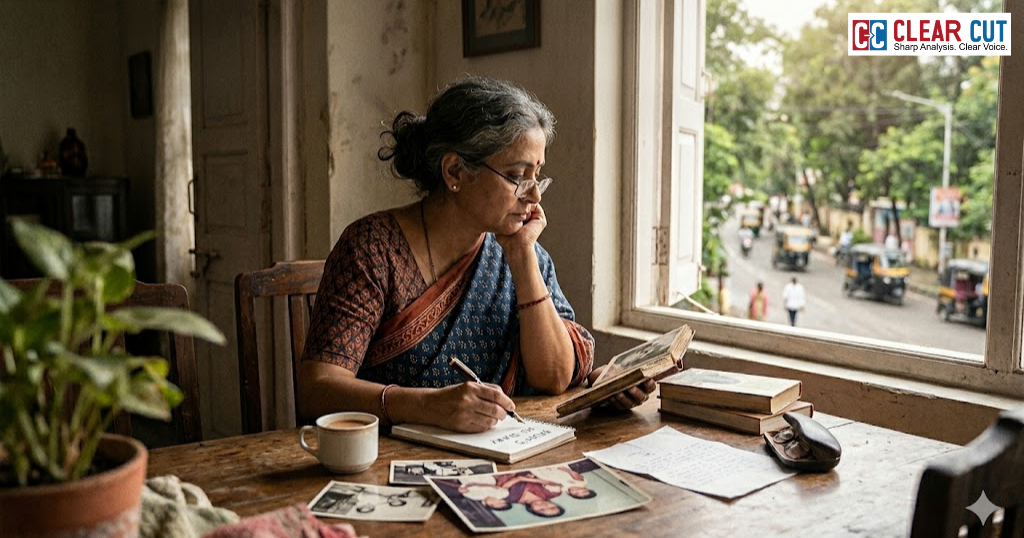
- India is witnessing a major demographic shift, with over 100 million women experiencing menopause each year, yet menopause care and awareness remain severely under-addressed in healthcare and policy.
- The article highlights the physical, mental and economic impact of menopause on midlife women, especially as their participation in the workforce continues to rise.
- It calls for urgent research, better public health systems, trained healthcare support, and AI-driven information access to ensure women receive informed and equitable menopause care.
The Scale of the Shift
India is in the midst of a demographic transition. Within the next five years, for the first time in human history, the number of Indian women aged 40 -55 years will exceed the number in peak childbearing age of 20-35 years. More adult women will be in a non-reproductive phase of life than a reproductive one. Almost all Indian women above the age of 40 are either peri- or post-menopausal, and the average age at menopause in India is just 46.6 years. This year, more than a 100 million women; a population the size of Egypt or the Philippines will undergo menopause.
The social, cultural, economic and health implications of this shift are profound and yet they remain dramatically under addressed.
This large and unprecedented cohort of midlife women represents not only valuable social capital but enormous economic significance. Women make up 33.6% of the Indian workforce (PLFS, December 2025) and contribute 18% of GDP (Niti Aayog). Notably, women’s employment rate peaks among those aged 40 – 50 years, with over half in this group engaged in paid work. In the absence of robust local research, the full social and economic cost of menopause-related health challenges in India is difficult to quantify. Studies in Western economies suggest that mothers can face workforce withdrawal or wage penalties, while loneliness and social isolation are strongly associated with poorer mental health outcomes.
The rising participation of midlife women in the labour market makes their health and wellbeing a matter of national economic concern; yet their needs remain chronically underserved.
What Menopause Actually Is
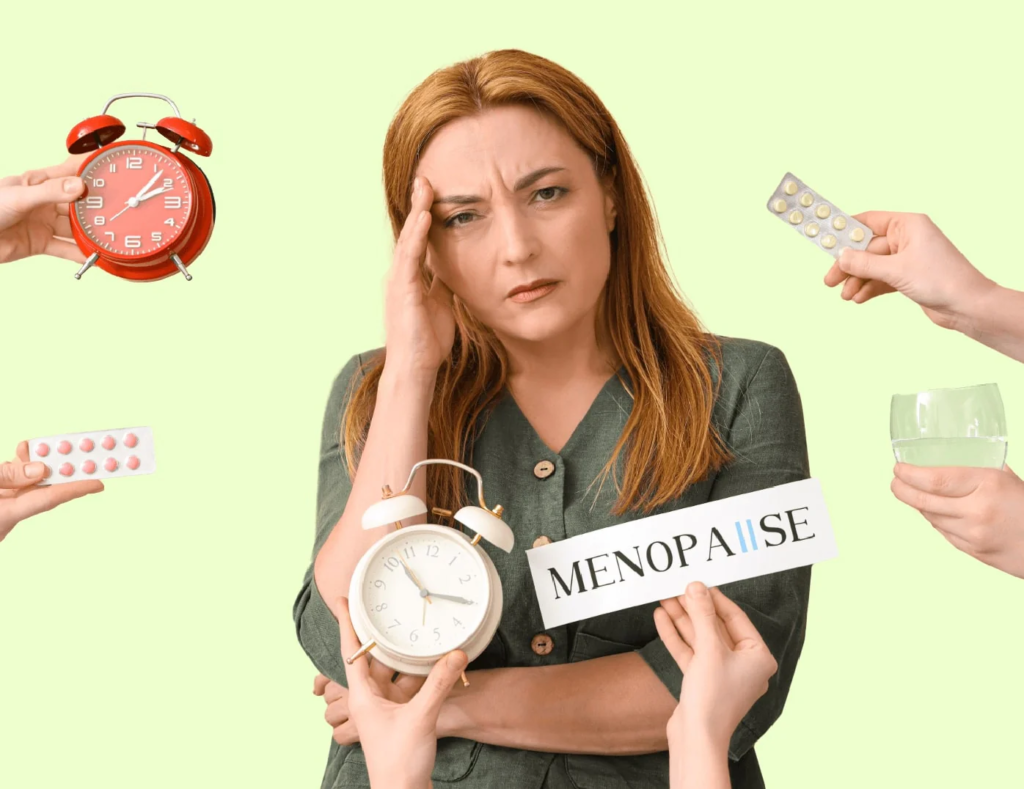
Menopause is technically a retrospective diagnosis: it is confirmed only after 12 consecutive months without menstruation. But it is far more than the absence of periods. It is the culmination of years of hormonal change, driven by declining oestrogen and progesterone – hormones that influence not just the reproductive system but every organ in the body, including the brain, digestive system, cardiovascular system, bones and joints.
Better-informed women may be familiar with vascular symptoms such as hot flushes and night sweats, or with joint and bone pain. Far fewer are aware of declining bone density and muscle loss, which can also carry cognitive and psychological costs, including fear of falling, loss of independence, reduced confidence, depression, anxiety, and social withdrawal. Apart from a fortunate few, every woman faces profound bodily change during the seven to eight years before and after menopause.
How Women Experience It
For women with greater economic resources, menopause can feel liberating: freedom from the monthly management of bleeding, pain and discomfort. For those with fewer resources, the relief is often framed differently; the end of fear about unintended pregnancy, and savings on sanitary products.
Whatever form this sense of liberation takes, it should be accompanied by informed preparation and proactive management of the bodily transformation. Knowledge-based readiness is the single biggest determinant of whether a woman navigates the peri- and post-menopausal years in relative health or slides into confusion, unnecessary medication, inadequate treatment or, in extreme cases, unnecessary hysterectomy performed at the first sign of inconvenience.
Where the Information Should Come From
Acknowledging the fact that medical courses barely touch upon the subject of menopause, The Indian Menopause Society (IMS), a body of OBGYNs, has designed a mid-career course containing detailed clinical and management protocols for peri- and post-menopause. Practitioners who complete the course and pass a certification examination are recognised as menopause experts. These protocols guide a trained clinician to assess where a woman is in her menopause journey, gauge the severity of her symptoms, and determine an appropriate hormonal or non-hormonal course of action. Recognising that every woman’s experience is unique – with symptoms drawn from a list of up to 60 currently documented presentations – the IMS model emphasises individualised, personalised care, including tailored guidance on nutrition, exercise, spiritual health and stress management.
The problem is low and inequitable access. Rural India suffers immense shortage of OBGYNs. Government data reports a OBGYN to population ratio of 1:5-6 lakhs. In this context, trained and certified menopause experts are likely to be counted on the fingertips. Even in urban India, the small number of menopause experts are concentrated in urban private centres, at substantial cost to patients.
At the state level, Kerala and Maharashtra have introduced menopause clinics within public health facilities, which is a promising development whose utilisation and outcomes are yet to be formally evaluated.
To improve access in rural area, as done for other ailments, menopause information and management protocols may be served to women by the large army of field health workers (FLW) – ASHA and ANM. Doing this would entail substantial simplification of the protocols, stratification of what can or cannot be passed on to FLWs and strategizing on the programmatic design, implementation and roll out approaches.
Artificial intelligence offers another route to expanding access to information. A recent OpenAI report places India’s ChatGPT user base at 20 million, a significant proportion of whom are women above 35. The Government of India’s AI and Health Strategy (SAHI and BODH) has opened formal pathways for AI engagement in health information sharing and counselling. Some private entities have launched AI backed bots designed to respond to menopause related health queries. In the absence of large Indian data sets to feed the AI models, the information being shared by the AI may be wanting in terms of context and accuracy. Equity and confidentiality concerns will need to be carefully addressed, but the potential is considerable.
What Is Needed Now
What India requires is a genuine policy shift: one that addresses women’s health across the full life course, rather than in isolated, piecemeal fashion. And that shift must be driven by evidence.
Ground-level research is urgently needed to understand how women are currently navigating the turbulent years of midlife. This means studying symptom patterns, information needs and current sources of support; documenting treatment-seeking behaviour and expenditure; assessing social support networks, economic impact and coping strategies. Intersectionality of geography, socio-economic status, culture, age and literacy will need attention.
This evidence base would, in turn, guide policy shift to develop a coherent strategy – one that integrates digital systems (perhaps by expanding the recently launched JANANI application beyond its current maternity focus), AI-powered tools and other innovative strategies in service of India’s midlife women.
A hundred million women a year are passing through one of the most significant biological transitions of their lives. They deserve more than a patchwork of responses. They deserve a plan.

Dr. Amrita Misra is a physician and public health specialist working on public health issues for more than two decades. Her focus is on women’s health, maternal and child and adolescent health and climate and health. Currently, she is a freelance consultant. She has earlier worked for large national and international development organisations, UN bodies and the WHO.
View expressed our personal and do not reflect the official position of the Clear Cut Magazine
Clear Cut Health, Gender Desk
New Delhi, UPDATED: May 23, 2026 09:00 IST
Written By: Dr. Amrita Misra

Thank you for your observation. You are absolutely right that symptoms such as decreased bone density, joint discomfort, insomnia, anxiety, depression, memory issues, and chronic fatigue can begin during perimenopause, often years before menopause itself. For more insightful articles on health, gender, climate, livelihoods, and social development issues, stay connected with Clear Cut.