- India is shifting from traditional crops like rice to high-value horticulture crops such as coconut, cocoa, cashew, and agarwood to boost farmer incomes.
- Budget 2026–27 supports this transition through crop-specific schemes, value-chain development, and export-focused branding.
- Despite strong growth, challenges like poor cold storage, weak price discovery, and lack of certification still limit farmer earnings.
The Farmer Who Stopped Growing Rice
Govind Nair farmed rice on three acres in coastal Kerala for most of his working life. In 2022, following a government horticulture scheme, he converted one of those acres to coconut cultivation and intercropped it with cocoa. By 2025, the intercropped acre was generating nearly twice the income of the remaining two rice acres combined. He had not increased his landholding. He had increased the value of what it grew.
Govind’s story is the argument for India’s high-value crop diversification strategy in miniature. And the Union Budget 2026-27 has placed that argument at the centre of India’s agricultural policy for the next five years.

The Scale of What Is Already Happening
India’s horticultural output reached 370.74 million tonnes in 2024-25, up from 277.35 million tonnes in 2013-14. Horticulture contributes 37% of agricultural Gross Value Output. The sector has grown at 4.45% annually. This is the fastest rate in Indian agriculture.
[PIB / Ministry of Agriculture, April 2026]
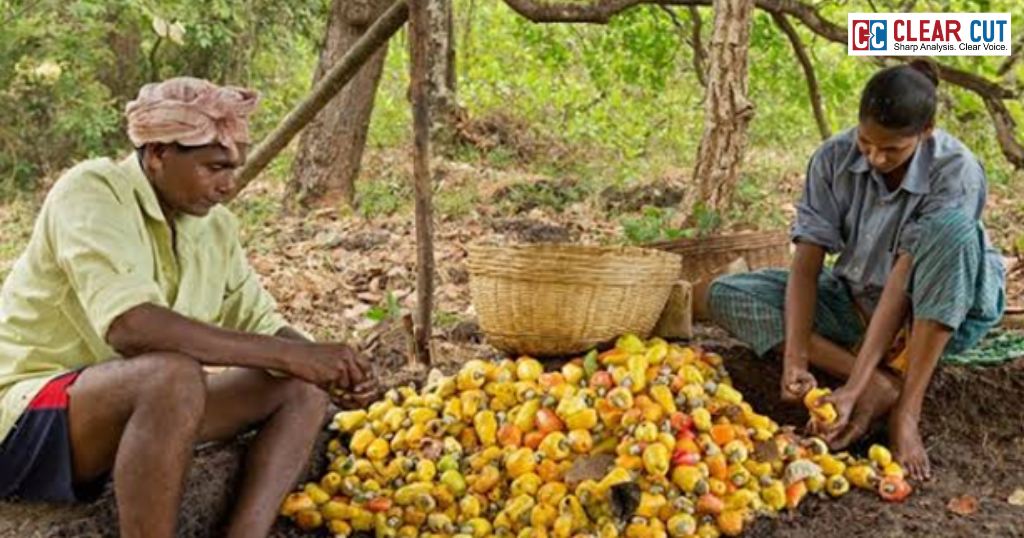
India is the world’s largest producer of onions and shallots, contributing 22.42% of global production. It ranks second globally in vegetables, fruits, and potatoes. Fruits account for 9.18% and vegetables 8.18% of global production. In the coconut sector alone, India supports 30 million livelihoods across 10 million farming households. Coconut exports reached ₹4,349.03 crore in 2024-25, growing 25% year-on-year. Cashew exports stood at USD 369.17 million and cocoa exports at USD 295.58 million in 2024-25.
In the Northeastern Region, agarwood (Oud) is a transformational opportunity. India hosts 150 million agarwood trees, 90% of them in the Northeast, primarily in Tripura and Assam. Tripura’s agarwood market alone carries a potential annual turnover of ₹2,000 crore. Yet regulatory complexity under CITES (Convention on International Trade in Endangered Species) and underdeveloped processing infrastructure have constrained the sector’s realisation of that potential.
The Strategic Shift in Budget 2026-27
The Union Budget 2026-27 introduces a crop-specific, regionally differentiated framework that is the most structurally coherent agricultural policy signal in recent memory. For coastal regions: a Coconut Promotion Scheme to replace ageing and low-yielding trees with high-yielding varieties, a dedicated programme for Indian cashew and cocoa targeting self-reliance and premium brand positioning by 2030, and sandalwood promotion in southern states. For the Northeast: an expanded agarwood cultivation programme within existing forest systems, linking tribal economies to global luxury markets. For Himalayan regions: high-density cultivation rejuvenation for walnuts, almonds, and chilgoza pine nuts.
Crucially, these are not standalone crop-support schemes. They are embedded in a value chain logic: the budget explicitly signals post-harvest management upgrades through MIDH, FPO formation for fragmented sectors, and brand-building initiatives to position Indian Cashew, Indian Cocoa, and Indian Sandalwood as premium global identities.
The Gaps That Policy Has Not Yet Closed
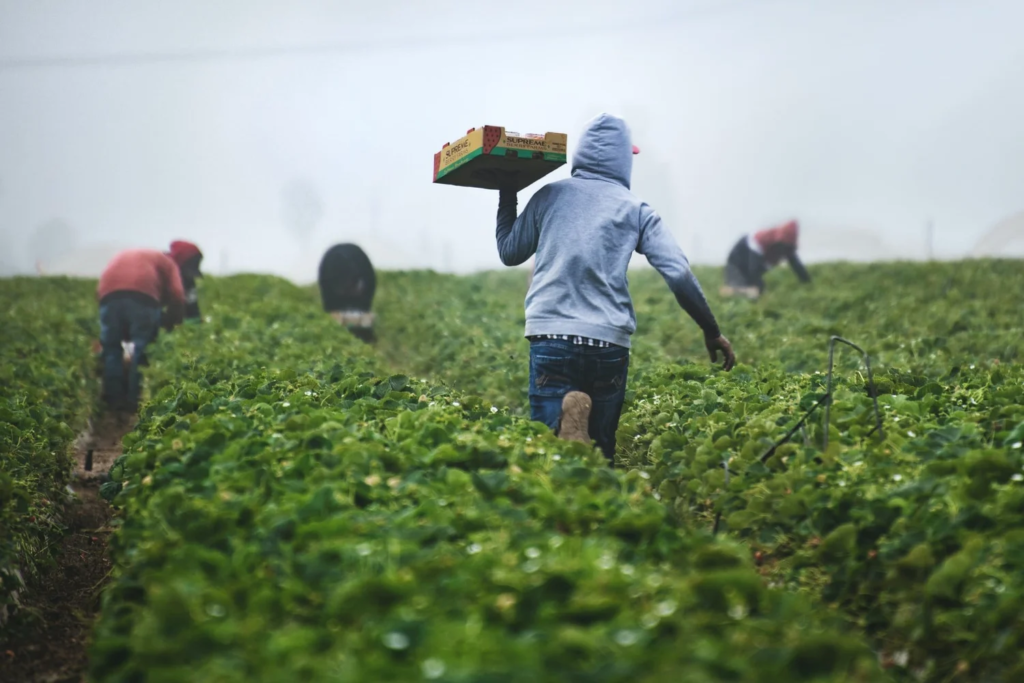
Three structural problems limit the sector’s potential. First, cold chain infrastructure stays inadequate: roughly 40% of fruits and vegetables are lost post-harvest due to poor storage and logistics. Second, price discovery for farmers in remote tribal areas including Oud cultivators in Assam and cashew farmers in Odisha’s interior. This is dominated by intermediaries who absorb the margin the farmer should capture. Third, global quality certification for premium Indian products like virgin coconut oil, fermented cocoa, Kashmiri walnut is slow and expensive for small producers. This blocks access to the premium pricing that justifies the investment.
Farm Income as India’s Next Export Story
Govind Nair’s intercropped acre is, in economic terms, a preview of what Indian agriculture can be when policy aligns with agro-climatic potential, infrastructure supports post-harvest value retention, and global markets recognise Indian origin as a premium rather than a commodity. India’s USD 2 trillion export target by 2030 cannot be achieved without a thriving, value-added agricultural export sector. The Budget 2026-27 has pointed in the right direction. Now build the cold chains, certify the products, empower the FPOs, and give Govind’s coconut the market price it has earned.
Clear Cut Livelihood Desk
New Delhi, UPDATED: May 22, 2026 01:00 IST
Written By: Tanmay J Urs