
- India’s wind energy capacity reached 56.09 GW in March 2026, with a record 6.05 GW added in FY 2025-26, making the country the world’s fourth-largest wind power market.
- New policy measures, including Contracts for Difference (CfD) and offshore wind funding, are helping accelerate investment and support the goal of reaching 100 GW of wind capacity by 2030.
- Despite strong growth, achieving the 2030 target will require faster progress in transmission infrastructure, grid expansion, land acquisition, and offshore wind development.
THE SOUND OF PROGRESS
There is something deeply honest about wind energy. Unlike a coal plant, it needs no fuel. Unlike a dam, it does not submerge valleys. It simply spins quietly, relentlessly and converts movement into electricity. On June 15, 2026, the Global Wind Day Conference convened in Goa under the theme ‘Wind Energy: From Ambition to Acceleration.’ The title is precise. India’s wind story has long been rich in ambition. The question every analyst, every investor, and every grid planner is now asking is whether the acceleration is real.
The answer, at least by the numbers from March 2026, is yes. But conditionally so.
| 56.09 GW Installed Wind Capacity (Mar 2026) | 6.05 GW Annual Record Addition (FY26) | 100 GW 2030 Target | 1,163.9 GW Gross Potential @150m Hub |
A DECADE OF QUIET GROWTH
India’s installed wind capacity has grown from 21.04 GW in March 2014 to 56.09 GW in March 2026. This was a 2.66-fold increase over twelve years. More strikingly, the annual addition in FY 2025-26 reached a record 6.05 GW, surpassing the previous best of 4.15 GW. An additional 28 GW is currently under implementation.
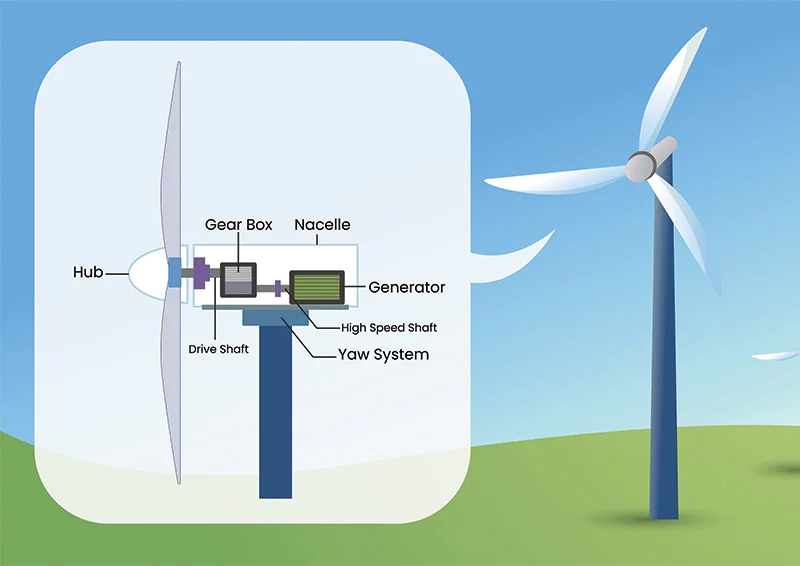
India now ranks 4th globally in installed wind capacity. Its turbine manufacturing capacity has grown from 10 GW (2014) to approximately 24 GW (March 2026), with indigenisation reaching 70-80% across blades, towers, and gearboxes. This is not just an energy milestone. It is an industrial one.
Critically, nearly 45 per cent of wind generation occurs during peak demand hours — a profile that complements solar power and strengthens grid reliability. The combination of wind and solar, properly integrated, offers something neither can provide alone: round-the-clock clean power.
| “India holds 1,163.9 GW of gross wind potential at 150 metres. It has tapped 56 GW. The gap between what it has done and what it could do is not a gap in resources — it is a gap in urgency.” |
NEW POLICY INSTRUMENTS
The government has moved beyond rhetoric. Contracts for Difference (CfD). It is a mechanism providing revenue certainty to developers against price volatility. These have been introduced for a 500 MW wind pilot. A Viability Gap Funding (VGF) of Rs 6,853 crore has been approved for 1,000 MW of offshore wind, split between Gujarat and Tamil Nadu. A dedicated wind Renewable Purchase Obligation (RPO), Green Energy Open Access Rules, and the ALMM framework round out an incentive architecture designed to de-risk private investment.
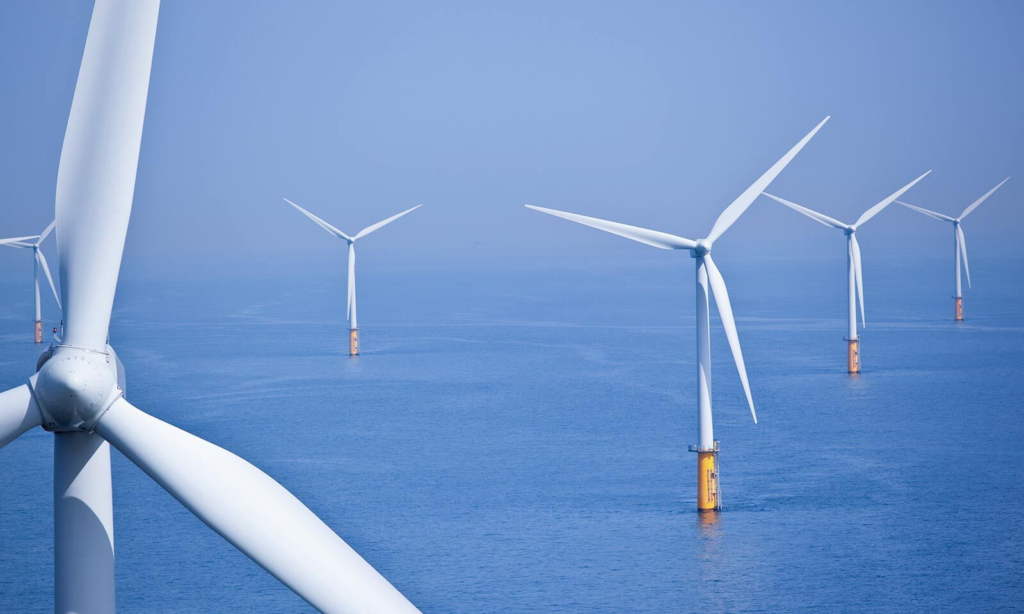
On the international front, the India-UK Offshore Wind Taskforce, launched in February 2026 under Vision 2035, is developing joint frameworks for market design, port infrastructure, supply chains, and blended finance. The India-Denmark MoU, renewed in May 2025, supports power-system modelling and variable renewable integration. This is exactly the technical cooperation that grid management at scale requires.
THE ROAD TO 100 GW
The 2030 target of 100 GW requires nearly doubling current capacity in under 5 years. That is steep. Land acquisition, transmission evacuation infrastructure, inter-state grid expansion, and AI-based generation forecasting must all accelerate simultaneously. Offshore wind, which remains nascent in India despite vast potential, must move from a pilot to a pipeline.
Eight states hold the bulk of India’s assessed wind potential. Rajasthan leads with 284.2 GW at 150m, followed by Gujarat at 180.8 GW and Maharashtra at 173.9 GW. Grid concentration in these states creates evacuation pressure that must be addressed through proactive transmission planning. The Ministry of New & Renewable Energy and Grid India must publish quarterly grid readiness dashboards. Ambition without infrastructure is just a number on a ministry website.
Clear Cut Climate, Research Desk
New Delhi, UPDATED: June 17, 2026 03:15 IST
Written By: Tanmay Urs