

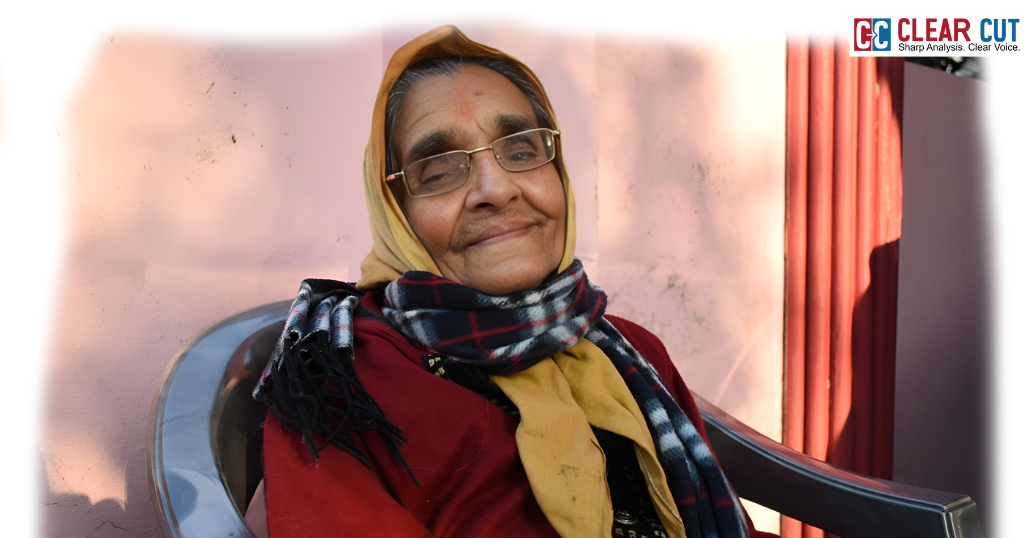
- Vimla Bahuguna was a pioneering environmental activist who played a key role in the Chipko Movement, mobilizing village women to protect Himalayan forests from deforestation and ecological destruction.
- She also led campaigns against alcoholism, domestic violence, and the Tehri Dam project, combining grassroots social work with environmental resistance throughout her life.
- Her legacy continues to inspire movements for forest conservation, climate justice, and sustainable development across India.
Vimla Bahuguna (1932- 2025), the veteran environmentalist, combined grounded constructive work with far-reaching sociopolitical activism. From her home in the Himalayas, she built up resistance to deforestation, big dams, destructive mining, commercial forestry, violence and abuse. During the 1970s,
along with thousands of local women, she created the Chipko movement, which reverberated across the globe. Today, when lakhs of trees are under threat in Hasdeo, Lakshadweep, Andamans and elsewhere in our country, it is apt to recall Chipko — and a tiny woman who was one of its tallest leaders.
Vimla Bahuguna turned village women into defenders of the Himalayas—sparking Chipko, challenging destructive development, and inspiring generations of environmental resistance
I first met Vimla Bahuguna in 1988, in Silyara village, Tehri Garhwal. We conversed in her simple home, which also housed the Parvatiya Navajivan Ashram, a grassroots organization she set up in the 1950s, with her husband Sundarlal Bahuguna. She shares:
“I was committed to social action. Sundarlal ji agreed to join me. The aim of all our work—on education, health, livelihoods–is to bring about change, to generate new life in the hills.”
Calm, thoughtful, her wiry frame belies the tough activism she is committed to. She describes her daily concerns: “I teach girls, walk from village to village, meet with the women’s collectives, and tackle different problems people bring up.” Sundarlal ji is away, invited to speak about the Chipko movement. I wonder: “Do you not sometimes feel like traveling the world, as he does?” Firmly, she replies: “It is important to travel out, meet people and give them an idea of what we think. But the everyday grassroots work has to carry on. Long years ago I dedicated my life to constructive work in the hills, and I do not like to leave this even for one day.”
But leave she did, time and again, for tasks even more acute, ever more urgent. She was out for weeks during Chipko agitations. And the next time I meet her, in 1992, she is on dharna in Tehri town, protesting the disastrous giant dam being built on the Bhagirathi (Ganga) river.
Her Early Education: the Gandhian Way
Vimla Nautiyal was born in Malideval village, Tehri Garwhal. Her mother, Ratna Devi, opposed practices such as polygamy and ‘kanya vikray’ (sale of girls for marriage). Her father Narain Dutt Nautiyal worked in the Forest Department. They sent her to Lakshmi Ashram, a Gandhian school in Kausani. It was run by Sarala behn, who had taught at Wardha and Vidya Bhavan, Udaipur, before coming to Uttarakhand. She set up Lakshmi Ashram (also called Kasturba Mahila Uthhaan Mandal), with the aim of empowering hill women: the backbone of the hill economy.
At Lakshmi Ashram, Vimla absorbed the philosophy of ‘Nai Taleem’ (‘New Education’), emphasising self-reliance, bread-labour, and community work. It was (and still is) a residential school with an all-female campus. Girls and women teachers ran the show, taking care of the dairy, vegetable patch, fruit trees, learnt spinning, weaving, cooked and ate nutritious meals. They engaged in community outreach, in the spirit of sarvodaya (welfare of all). After completing her schooling, Vimla began teaching at Lakshmi Ashram.
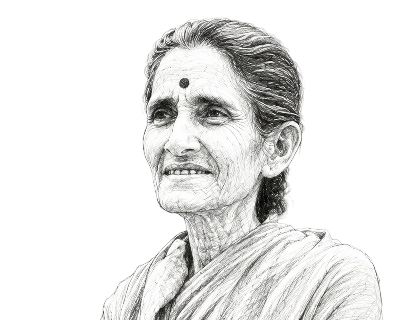
When Vinoba Bhave’s call for Bhoodan went out, Lakshmi Ashram responded. The entire staff and students walked from village to village, persuading landowners to donate land for the landless. During 1953-55, Vimla went to Bihar, where she managed to get big landowners to gift land to the landless. Vinoba Bhave extolled her extraordinary abilities, writing to Sarla behn: “I have not seen a girl activist like her. She is not just a girl from the hills, she is a devi from the hills”. Already, the young woman was a force to reckon with– focused, fearless. In time, she carved out new paths in the rugged Himalayas.
The Life She Chose
When Vimla Nautiyal received a proposal for marriage from Sundarlal Bahuguna, she rejected it, for she did not want to marry a politician. He was then Secretary of the Uttar Pradesh Congress Party. Hailing from Maroda village, Tehri Garhwal, he had met her in Tehri town when she put up a play on Bhoodan. Their parents were keen on the match. Then Vimla set a condition—that he leave party politics and join her in constructive work. He agreed!
Their marriage in 1955 inaugurated a long, fruitful partnership. They moved to Silyara, and built a cottage home, with space for a few young students to reside on-campus. Students came from Silyara and near-by villages, and were educated on the Nai Taleem pattern. Vimla Bahuguna initiated health work, and ignited women’s collectives—Mahila Mangal Dals. Both she and Sundarlal worked on livelihoods, and ecological sustainability. They had three children—Madhu, Rajeev and Pradeep.
During the 1960s, Vimla Bahuguna along with hundreds of women initiated a powerful movement against male alcoholism, and domestic violence. They were peaceful, firm satyagrahis, winning public support, picketing liquor vends, staging dharnas. Vimla di was arrested and sent to Saharanpur jail, 6-year old Pradeep with her. They were interred for fourteen days. Despite repression, the agitation continued, until a ban was imposed on liquor sale within Tehri district.
Chipko: to Save Nature and Ourselves
During the 1970s, people’s opposition to deforestation came to the fore. Forests, along with subsistence agriculture, are vital to the life and livelihood of local communities. As commercial forestry made forays into the area, their survival came under threat.
In Reni village, Pithoragarh, Gaura Devi led a group of women to surround and embrace trees, preventing their being axed for timber. In Tehri Garhwal, Vimla Bahuguna and women from Mahila Mangal Dals jumped into the fray. They knew, from experience, the power of collective struggle.
Women hugged trees, tied rakhis signifying that trees were their sisters, and mothers. They conducted sit-ins and gheraos, to protect forests. In 1979, Vimla and Sundarlal Bahuguna, Mangsiri Devi, Nanda Devi, Satyeshwari Devi, Bhuri Devi and Jupli Devi, all from Silyara village, set up vigil to save Bandyargarh forest, which was marked for felling. Sundarlal ji was arrested, but protests continued, until the timber contractor finally left the forest.
As agitations raged across Uttarakhand, the government was compelled to set up committees, carry out surveys, and, in 1981, announced a ban on tree-felling above 1,000 metres. The Appiko movement to save the Western Ghats was directly inspired by Chipko. During 1981-83, Sundarlal ji and others went on padyatra from Kashmir to Kohima, to raise consciousness about preserving Himalayan ecology.
Opposing Tehri Dam: ‘Save Ganga, Save Himalayas’
Plans were afoot since the mid-1970s to build a big dam at Tehri, on the Bhagirathi River, source headstream of the Ganga. There was massive opposition to the dam, and in 1977, local people formed Tehri Baandh Virodhi Sangharsh Samiti. In June ’78, “…350 women from Khaand village walked with dhol-bajas 20 kilometres to the dam site, which was packed with protesters. Police, Provincial Armed Constabulary and women police were present” (Yugvani newspaper). Over a hundred demonstrators were arrested during ongoing protests. After the government promised to set up a review committee, people dispersed. The movement dwindled.
A decade later, tunnels had been built, coffer dam was under construction, and seventeen villages evacuated. In 1989, Sundarlal Bahuguna sat on dharna at the dam site. Hundreds of people joined the dharna in Tehri town, amid swirling construction dust. Vimla Bahuguna camped here for months on end. The dam would displace over one lakh people, destroy 123 villages, Tehri town, precious flora and fauna, and risk dangerous flooding. Environmentalists and activists proposed alternatives such as run-of-the-river small dams, which would benefit local people and the plains.
In October 1991, an earthquake in Tehri Garhwal caused massive destruction. The Bahugunas’ place in Silyara was severely damaged. Vimla di plunged into rehabilitation work across the area. People kept joining the anti-dam protest. On December 14, 1991, some 5,000 people gathered at the site. Vimla di described: “We marched up to the machines and men. We weren’t violent. We simply surrounded the machines and requested the workers to leave.” The workers left, work on the dam came to a halt. It was an incredible coup. Batches of local women, men and children came every day, keeping vigil.
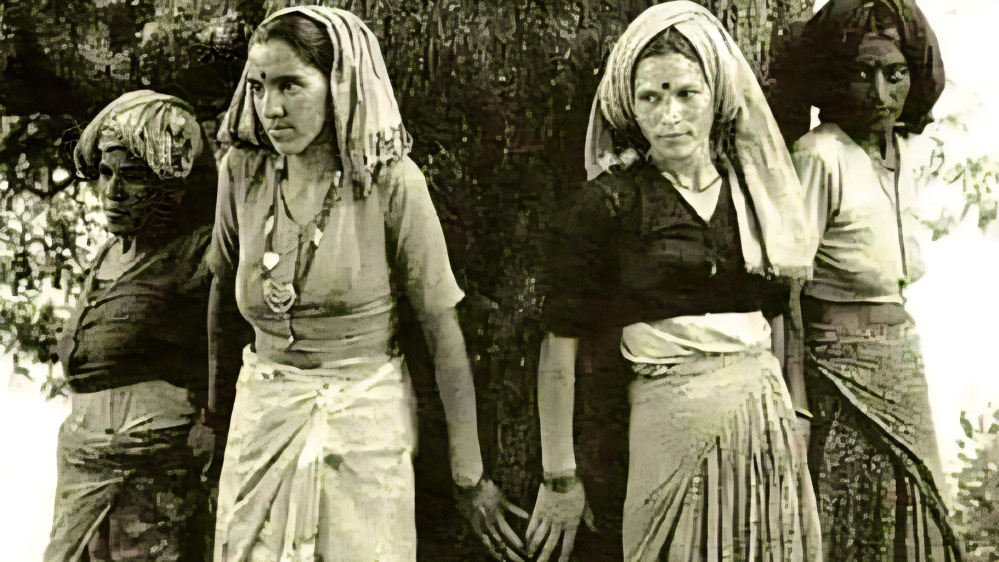
This stalemate, a tremulous victory, lasted 76 days. On February 28, 1992, Vimla Bahuguna was arrested from the dam site, with 40 others, including 8-year-old Guddi and 84-year-old Mangsiri Devi. Construction of the dam resumed. In jail, Vimla di undertook a protest fast, over eleven days. All 41 protesters were released, and the agitation carried on.
In April 1992, when I met Vimla di at the dharna site in Tehri, she spoke of the issues at stake. She was in charge of preparing meals for up to 30 persons, with her sister Urmila Bhatt, college student Sunita Chamoli, and children like Guddi, Saraswati, Pushpa, Cooking in makeshift conditions, the small stove had lost its pin, the pressure cooker gasket didn’t fit properly.
Gendered division of labor meant that women were hard-pressed for time. Yet they were fully aware of wider events and issues, engaged in discussion on issues and events, and commanded deep respect. Sundarlal Bahuguna was on a long fast, which continued for 73 days. In May ’92, the government halted dam construction, and set up a review committee. However, this was an eyewash; and soon after the dharna wound up, construction of the dam soon resumed. Activists went to court and won a stay order, but finally the court ruled that the government could go ahead and complete the dam. Dam construction resumed in 2001.
Undying Relevance
The anti-Tehri dam movement may have failed in its central objective, yet it succeeded in educating people, and shaping public discourse in solidarity with similar struggles such as the Narmada Bachao Andolan. In Uttarakhand, the struggle to ‘save Ganga, save the Himalayas’ carries on, helmed by activists like Radha Bhatt, who headed Lakshmi Ashram for decades, and others.
As Vimla and Sundarlal Bahuguna pointed out, within fifty years following independence, the Himalayan foothills lost half their forest cover. The consequences are soil erosion, landslides, dried-up springs and streams, terrible forest fires, floods, avalanches, and subsidence of entire towns and villages. Hundreds of ghost villages exist, emptied out because life there is no longer sustainable.
In her later years, spent in Dehra Dun, Vimla Bahuguna urged young people to oppose environmental destruction and create sustainable alternatives. “If we hadn’t started Chipko,” she reminds us, “the mountains would have been hollow.” Wisdom such as she embodied might still save us, though we teeter at the edge of global destruction. Ongoing struggles against forest destruction in Hasdeo, bauxite mining in Sijimali Hills, the Chita Andolan in Jharkhand, are imbued with a similar impulse, and thus rekindle hope.
About the Author:
Dr Deepti Priya Mehrotra is a political scientist, teacher, and consultant with specialization on gender, education and social issues. She writes in English and Hindi, has authored several books including acclaimed biographies of Irom Sharmila, Gulab Bai, stories of single mothers, and a history of street theatre in India.
Case Study / Vimla Bahuguna
Views expressed our personal and do not reflect the official position of the Clear Cut Magazine
Clear Cut Climate, Research Desk
New Delhi, UPDATED: June 17, 2026 09:00 IST
Written By: Dr. Deepti Priya Mehrotra