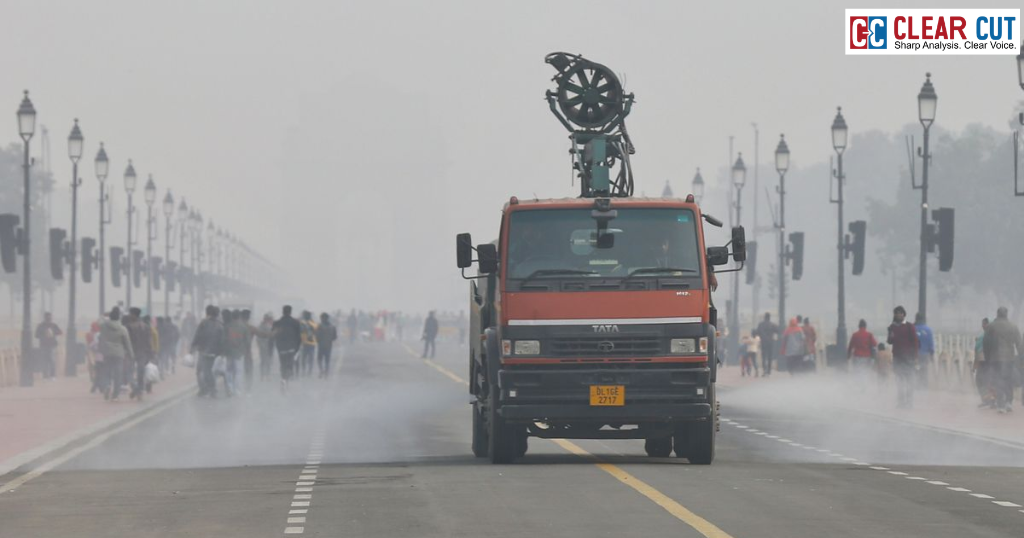
- The June 2026 CAQM review assessed enforcement against major pollution sources in Delhi-NCR, including industrial emissions, construction dust, waste burning, and diesel generator usage.
- Despite years of regulations and monitoring, Delhi continues to face severe air pollution driven by vehicles, industry, dust, and seasonal crop residue burning, resulting in significant public health impacts.
- The article argues that stronger accountability, transparent enforcement data, and timely action are essential to prevent another severe pollution season and improve air quality in the capital.
THE AIR IN THE ROOM
Delhi’s air problem is not a mystery. It has been studied, modelled, mapped, and legislated over for two decades. The Commission for Air Quality Management in the National Capital Region and Adjoining Areas (CAQM) IS a statutory body established in 2021 with powers overriding all state agencies. It exists precisely because everything else was tried and the air kept getting worse. On June 14–15, 2026, CAQM conducted a comprehensive review of enforcement measures across key pollution sectors in Delhi-NCR. The review is urgent, but so is the question of why it is still necessary.
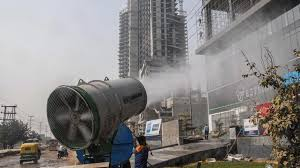
Delhi’s air quality is among the worst of any capital city in the world. The World Health Organization’s 2025 Global Air Quality Report noted that Delhi exceeded WHO PM2.5 annual guidelines by a factor of more than ten. The human cost is not abstract: a 2024 Lancet Planetary Health study estimated that chronic air pollution exposure reduces life expectancy in Delhi by an average of 5.5 years.
| 5 µg/m³ WHO PM2.5 Guideline | ~55 µg/m³ Delhi Annual PM2.5 (2025) | ~5.5 Yrs Life Years Lost (Delhi) | 2021 CAQM Established |
WHAT CAQM’S REVIEW COVERS
The June 2026 review examined enforcement across the key source sectors of Delhi’s pollution burden: industrial units operating without valid consent or using prohibited fuels; construction activity not complying with dust control norms; road dust and solid waste burning; and diesel generator sets operating in non-emergency conditions.
CAQM’s enforcement mechanism operates through district-level task forces coordinating between state pollution control boards, municipal corporations, traffic police, and industrial area associations. The Graded Response Action Plan (GRAP) is a tiered framework that activates progressively stricter restrictions as air quality deteriorates. It is CAQM’s primary real-time management tool. Its limitations are well-documented: GRAP is reactive, not preventive, and its effectiveness depends entirely on pre-condition compliance that is rarely achieved.
THE STRUCTURAL SOURCE PROBLEM
Delhi’s air pollution does not have a single cause. Source apportionment studies by IITM Pune, IIT Delhi, and TERI consistently identify a mixed contribution from vehicles (about 28-30%), industry and diesel generators (25-30%), dust from road construction (about 20%), biomass burning and crop residue (15-25% seasonally) and other urban sources.
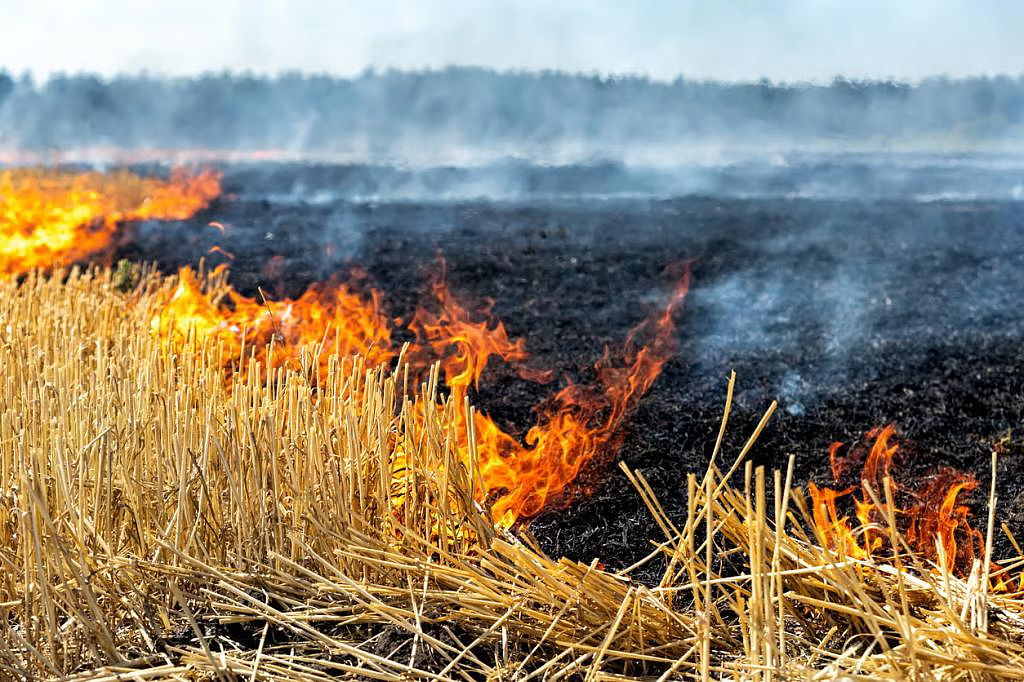
Crop residue burning in Punjab and Haryana, while seasonal, contributes disproportionately to Delhi’s worst air quality episodes in October and November. Despite repeated court orders, satellite-monitored fire counts in those months remain in the thousands each year. The political economy of stubble burning involving farmer incomes, alternative crop management costs, and state government incentives. This issue cannot be resolved by enforcement alone. It requires compensatory policy for farmers who adopt in-situ crop residue management.
THE ACCOUNTABILITY THE CRISIS DEMANDS
CAQM must move from annual reviews to monthly published enforcement data. Every major pollution source such as industrial, vehicular, construction must be mapped, monitored, and penalised with visible, public consequence. The real-time Air Quality Index dashboards exist. The satellite fire count data exists. The source apportionment science exists. What does not exist consistently is follow-through.
Delhi’s air is a public health emergency that has been normalised. Children in the NCR carry lungs shaped by pollution exposure from their first breath. Elderly residents are medically advised not to step outside for months at a time. This is not acceptable in a country building world-class infrastructure and calling itself Viksit Bharat. The CAQM review of June 2026 must produce a published action-completion report by September 2026, before the next pollution season begins. The air of the capital is a measure of the seriousness of the state. Right now, it is failing that test.
Clear Cut Climate Desk
New Delhi, UPDATED: June 18, 2026 03:00 IST
Written By: Tanmay Urs