
- Research shows that forests and the communities living around them thrive together, as poverty and lack of livelihood options often increase pressure on forest resources.
- Conservation efforts are more effective when local communities are included as partners through alternative livelihoods, clean energy access, and economic opportunities.
- Examples from Ladakh, Maharashtra, and Arunachal Pradesh demonstrate that community-led conservation can protect biodiversity while improving local livelihoods and reducing human-wildlife conflict.
For decades, environmental protection and poverty reduction were often seen as opposing priorities, as though supporting one meant sacrificing the other. Forests were these fragile spaces, supposedly safe only if people stayed out, while raising rural incomes was some separate struggle. But recent research tells a different story.
According to the International Forestry Resources and Institutions (IFRI), involving community-based tropical forests conducted recently, there emerges an observation that is both profound and self-evident but often tends to be ignored: Forests and people who live in and around them thrive together. Researchers who conducted the study found a pattern in the results obtained by comparing different sets of data from the many tropical forests that were part of the study. It was found that communities living in forests that were poorer had to rely significantly more on forest resources like wood for their sustenance needs, thus making a heavier burden on the forests themselves. Therefore, it is not surprising that such forests were home to fewer types of trees compared to forests where the communities had alternative sources of earning their livelihoods.

When families don’t have choices, they have to take what the forest offers firewood, fodder, timber- whatever puts food on the table. In those cases, the forest turns into a crutch, and pressure on it just keeps building. It’s not poverty alone doing damage, it’s poverty without options.
India’s a perfect example. For years, conservation here basically meant fencing people out of protected areas. Sure, blocking access brought back some wildlife and made patrolling easier. But at the same time, it cut local communities out. For many, life just got harder. Most people living near forests still depend on them, so building walls just cuts them off. Protected zones become little islands, surrounded by people who still need resources to get by.
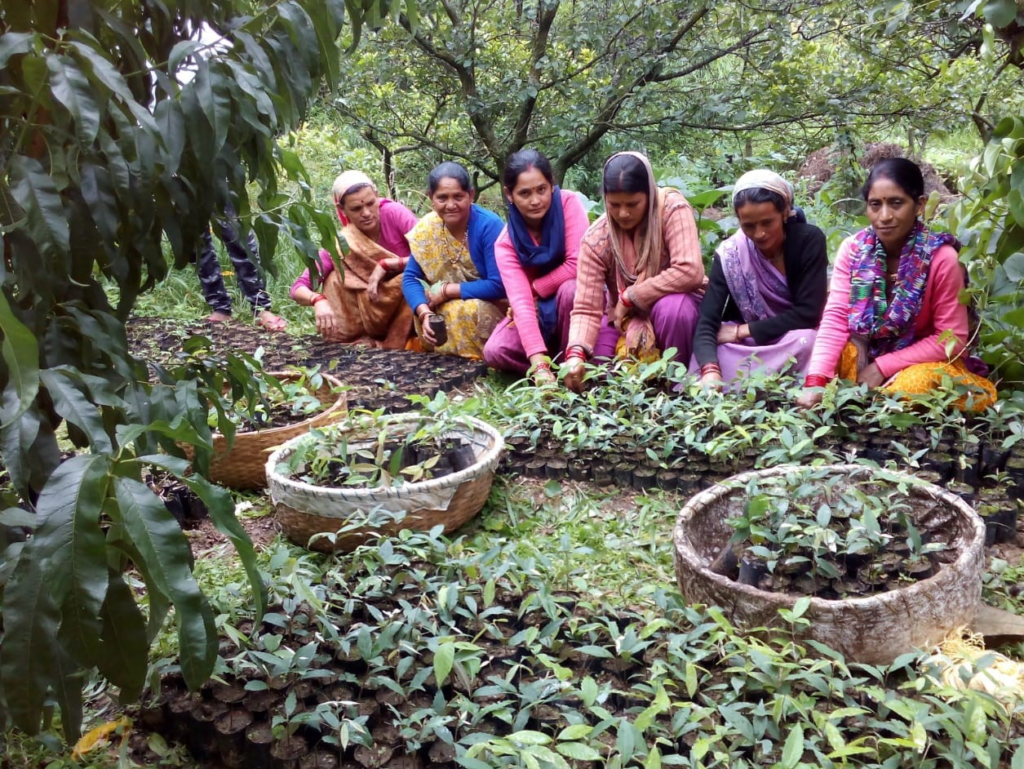
When you lock out local communities, you run into fresh problems. People get frustrated, fights break out with forest guards, and support for conservation dries up. Worst of all, those policies don’t actually stop people from relying on the forest they simply have no alternative.
A better approach? Bring communities in as partners, not obstacles. Give them access to clean energy, help them find new ways to earn, and offer real jobs. When people don’t have to chop down the forest to survive, they leave it alone. We’re already seeing how this works with subsidized LPG, better stoves, and fresh income sources, communities use less wood.
For example, the initiatives on community tourism and insurance concerning livestock in Ladakh contribute to minimizing the problems of human-wildlife conflict, especially when snow leopards are concerned, because they provide the community with financial compensation for the economic losses incurred by them. Additionally, in Maharashtra, the conservation practices carried out by local villages not only contribute to the improvement of the ecosystem’s conservation, but they also provide alternative income sources such as fishing, ecotourism, and sustainable use of natural resources. Furthermore, conservation initiatives in Arunachal Pradesh have succeeded in ensuring that former poachers become guardians of nests of hornbills.
Thus, empowering local communities plays an essential role in achieving sustainable conservation.
Equally important is economic equity. Wildlife tourism brings in lots of money; however, only a minor share of this income reaches local communities that live close to wildlife areas.
However, what should be done to address the discussed issues? Strict laws and fencing would not help; besides, they would not solve the problem.
That old belief that nature and people can’t get along? It just doesn’t hold up. Forests and communities are tied together. Policies that understand these links give us the best shot at healthy people and healthy nature, side by side.
The evidence is pretty hard to ignore you can’t save forests just by locking them up. The real solution is to make sure people don’t get stuck with no options except using up the forest. Combine poverty reduction and conservation, India can lead by showing, that we don’t have to pick between people and the planet. You can help both.
Clear Cut Climate Desk
New Delhi, UPDATED: June 18, 2026 09:00 IST
Written By: Tanmay Urs