
- The National Institute of Urban Affairs (NIUA) marked its 50th anniversary by launching a vision for Resilient Urban India @2047, focusing on urban planning, housing, water management, mobility, and technology-driven governance.
- A key highlight was the introduction of the Modified DEGURBA framework, which aims to better identify and plan for India’s rapidly expanding urban and peri-urban areas beyond traditional Census definitions.
- The discussions emphasized that achieving resilient cities will require stronger urban financing, empowered Urban Local Bodies (ULBs), and greater decentralisation of governance and decision-making.
A CITY IS NEVER FINISHED
There is a particular kind of civic grief that belongs to Indian cities. It is the grief of being perpetually almost-there. Almost-planned. Almost-drained. Almost-resilient. On June 13, 2026, at Vigyan Bhawan, New Delhi, the National Institute of Urban Affairs (NIUA) turned 50. It looked forward, with the urgency of a country that knows its cities are becoming home to half its population within two decades.
The theme of the golden jubilee ‘Resilient Urban India @2047’ carries both a promise and a deadline. India is roughly 35% urban today. By 2047, the centenary of independence, that proportion is projected to cross 50%. The infrastructure, governance, and financing decisions made in the next five years will determine whether that transition is managed or chaotic.
| 1976 NIUA Established | ~35%+ India Urban Population (2026) | ~50% Projected Urban by 2047 | 127 Graduates of Urban Tech Programme |
WHAT THE JUBILEE LAUNCHED
The event was substantive. NIUA released ‘Vision for a Resilient Urban India‘, this was a policy framework spanning planning, housing, construction, water and urban mobility. It also launched ‘Understanding the New Geography of India’s Urbanisation’, introducing the Modified DEGURBA methodology to India.
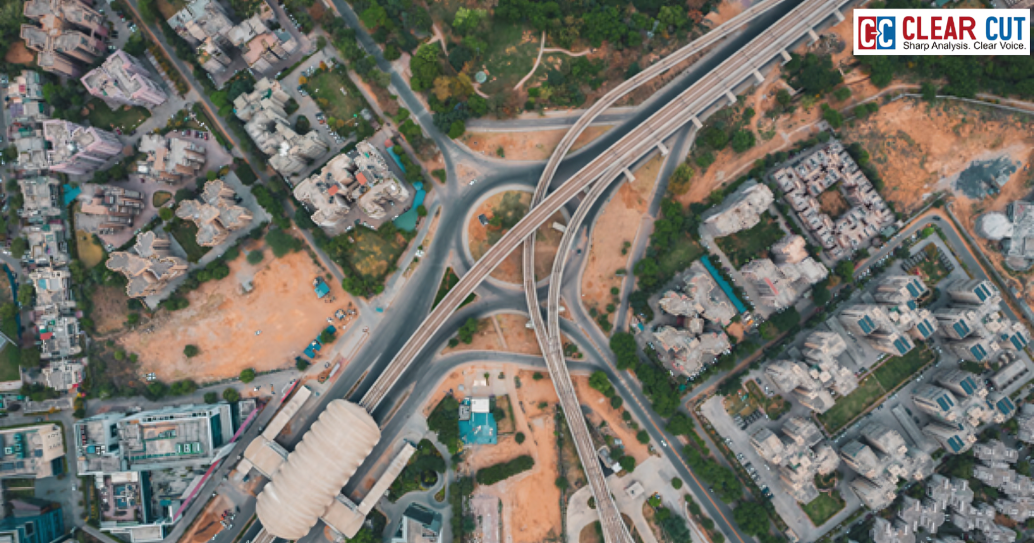
DEGURBA the Degree of Urbanisation framework developed by the UN and EU classifies settlements by population density and contiguity. India’s existing Census-based urban definition is rigid and outdated. It misses the fast-growing peri-urban zones around Tier 2 and Tier 3 cities where industrial growth, migration, and infrastructure investment are rapidly changing the ground reality. The Modified DEGURBA framework corrects this blind spot, offering planners and policymakers a sharper map of where India is actually urbanising.
The National Urban Learning Platform was also launched — the urban arm of iGOT–Mission Karmayogi — delivering 4 new courses in technology-led urban governance. It was designed to reach frontline urban local body functionaries across states.
THE FINANCE PROBLEM NO ONE CAN IGNORE
Nine thematic deliberations at the jubilee touched on climate-responsive planning, circular resource systems, and urban livelihoods. But the most urgent thread running through all of them was finance. India’s urban local bodies are chronically underfunded. Most depend on state grants rather than own-source revenue. The municipal bond market remains shallow. Green bond issuance by cities is still an exception, not a norm.
The Urban Challenge Fund consisting a Union Budget instrument supporting city infrastructure transformation — must be scaled. Blended finance models, public-private partnerships, and ESG-linked municipal instruments must be mainstreamed at the district level, not just piloted in eight smart cities.
THE ACCOUNTABILITY CALL
NIUA’s publications are advisory. Impact depends on uptake by state governments and urban local bodies. The Modified DEGURBA framework must be embedded into official Census and planning systems, without that statutory integration, it remains an academic exercise. The Mission Karmayogi urban platform must track completion rates and certification by ULB staff, not just course launches.
Fifty years of research have taught NIUA one thing above all: Indian cities do not fail because they are ungovernable. They fail because governance stops at the state capital. The next fifty years must push capacity, money, and decision-making to the city itself. Build the city that governs itself. That is the only city resilient enough for 2047.
Clear Cut Research Desk
New Delhi, UPDATED: June 18, 2026 08:00 IST
Written By: Tanmay Urs