

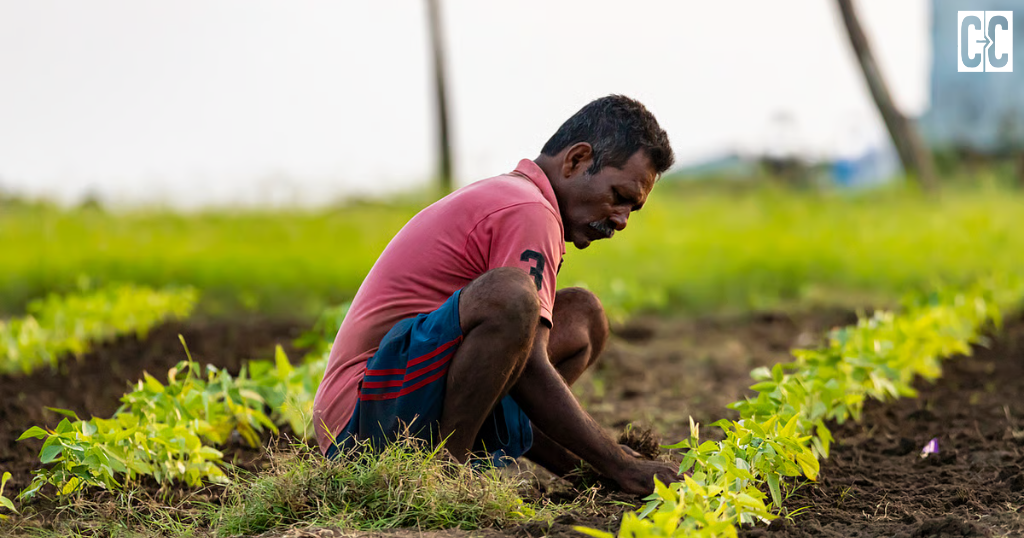
- Nearly 29.7% of India’s land (about 98 million hectares) is degraded, affecting rainfed agriculture, small farmers, and food security, while increasing rural distress and migration.
- The government is addressing the crisis through initiatives like the Soil Health Card Scheme, natural farming, and soil conservation, but implementation challenges continue to limit their impact.
- With a target to restore 26 million hectares by 2030 under the UNCCD, India faces the challenge of ensuring these measures effectively reach vulnerable farmers and improve long-term soil health.
Almost 98 million hectares of land in India are degraded – 29.7% of its total geographical area- and on August 4, the government informed Parliament about how it plans to fight back. Minister of state for agriculture & farmers welfare Ramnath Thakur mentioned seven ongoing interventions, ranging from free soil-testing cards to natural-farming subventions, that together make up India’s response to a crisis that satellite data has been documenting for two decades.
The immense threat faced by these projects can be glimpsed in the ISRO Space Applications Centre’s Desertification and Land Degradation Atlas of India, which charted degradation on 28.76 percent of India’s land during 2003-05. This had risen to 29.7 percent in 2018-19. As much as 21 million of these degraded hectares, located mostly in Rajasthan, where wind erosion caused most damage, happened to be farmed in rainfed agricultural land and forested land – essentially, the tracts that India’s poorest cultivators and forest-dwelling communities struggle to till, not its irrigated, better-endowed tracts.
The concentration is significant since about 86% of the country’s farmers are small or marginal, who do not have enough capital to get irrigation or endure a bad year. Indian researchers have repeatedly linked the deterioration and division of farmland to increased distress migration from rural backyards, with households lacking options as members head towards cities in search of wage labour.
And the nutritional challenge is equally straightforward. ‘We had 35.5% kids below 5 who are under-nourished in the latest National Family Health Survey (NFHS-5) and above 53% of women in the age of 15-49 years are suffering from anaemia,’ he said at a soil-health workshop held in March in Delhi at the Kisan-Vigyan Foundation, pointing out to Food available, not good quality food, which again depends on what soils yield, was more serious food crisis in India.
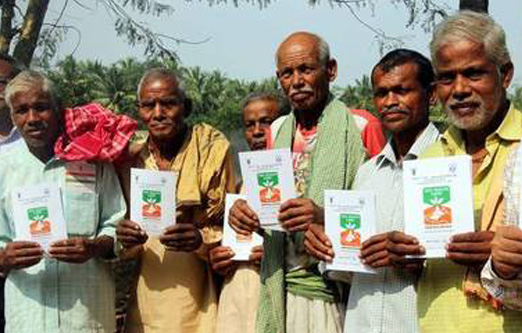
“Soil Health Card Scheme has so far been implemented and issued more than 26.09 crore soil health cards with an average of more than 130,000 trained farmers per training under the Scheme (2014-15 onwards), replied the minister’s ministry to this paper”. The Scheme has also resulted in an 8-10% reduction in chemical fertilizer use among farmers practicing according to recommendations, the National Productivity Council said. Nevertheless, the rollout of the Scheme has faced hurdles such as poor laboratory infrastructure, delayed reporting that renders recommendations outdated, and grid-based sample collection, which may not accurately reflect variability even within a small agricultural field.
R G Agarwal, Chairman Emeritus, Dhanuka Agritech, at the same roundtable, remarked that farmers who cultivate high-value crops like vegetables readily access detailed soil fertility and nutritional recommendations for their fields through hired consultants, a practice the country needs to emulate to ensure information is accessible to all farmers.
This situation is not limited to India. The FAO’s State of Food and Agriculture 2025 report said there are now 1.7 billion people worldwide living in places where soil degradation from human activities hinders crop productivity. “Urgent decision-taking is required,” FAO Director-General Qu Dongyu declared in the report, calling for better environments to support long-term investment in land.
Other Governments have gone even further than India’s scheme-based system. The Black Soil Protection law, which China implemented in 2022, requires soil surveys and imposes penalties for construction on farmland and for unauthorized soil trade. There is a new EU Soil Monitoring Law implemented in December 2025 for all 27 countries on soil health reporting to reach a 2050 goal- nothing legally defined yet for India.
Africa’s Great Green Wall is a comparison that works differently by going directly to small holders, local women’s groups, young people, and farmer organizations involved in making decisions on the restoration activities in the Sahel, where nearly 18 million hectares of land have been restored and 350,000 jobs created to finish in 2030.
India has pledged under the UNCCD to ‘halt degradation and ensure availability’ of 26 million hectares by 2030. Unlike those of China and the EU, this pledge hinges on people choosing a voluntary scheme. Whether Parliament is informed of yet more projects being launched, or whether such schemes will actually reach the rainfed marginal farmers, our own government data says, are most vulnerable, remains to be seen.
Clear Cut Climate Desk
New Delhi, UPDATED: August 06, 2026: 18:30 IST
Written By: Yatharth Pathak